RABAT
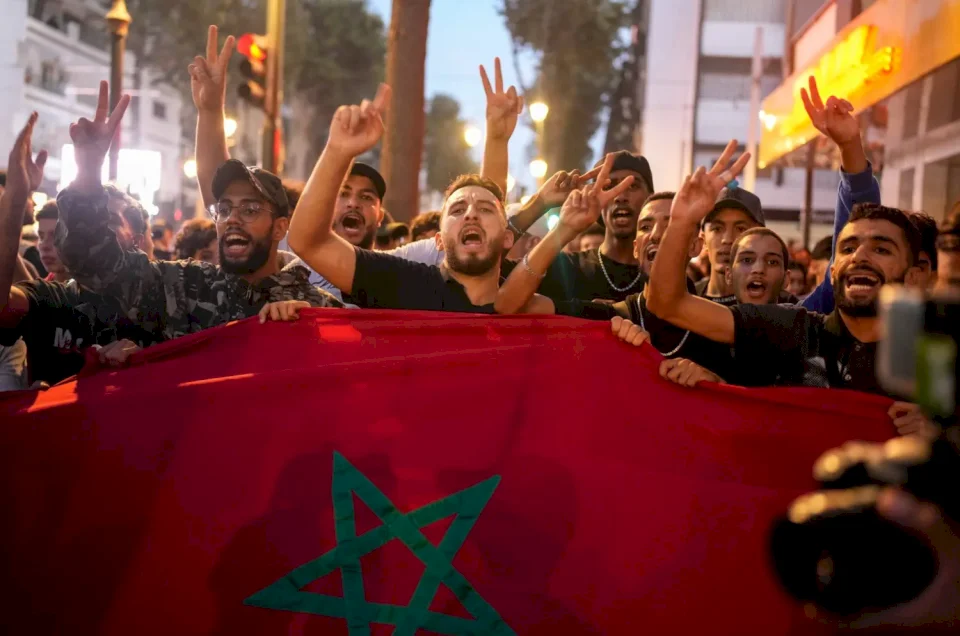
Morocco's legislative campaign passed its midpoint on Tuesday, with eight days left before voters elect the 395 members of the House of Representatives on Sept. 23. Twenty-seven parties are competing. The governing coalition is defending its record. The Islamist opposition is attempting a comeback from near-annihilation. And hanging over all of it is a question none of the parties can answer for itself: whether the young Moroccans who filled the streets a year ago will translate that energy into votes, or withhold it.
This is the kingdom's first national vote since the Gen Z 212 protests of autumn 2025, and the movement's first anniversary falls on Sept. 27 — four days after the polls close. The timing gives the election an unusually literal test. If turnout holds and youth participation rises, the establishment can argue the ballot box absorbed the anger. If it does not, the argument that formal politics is the channel for Moroccan grievance becomes harder to make.
What Produced the Protests
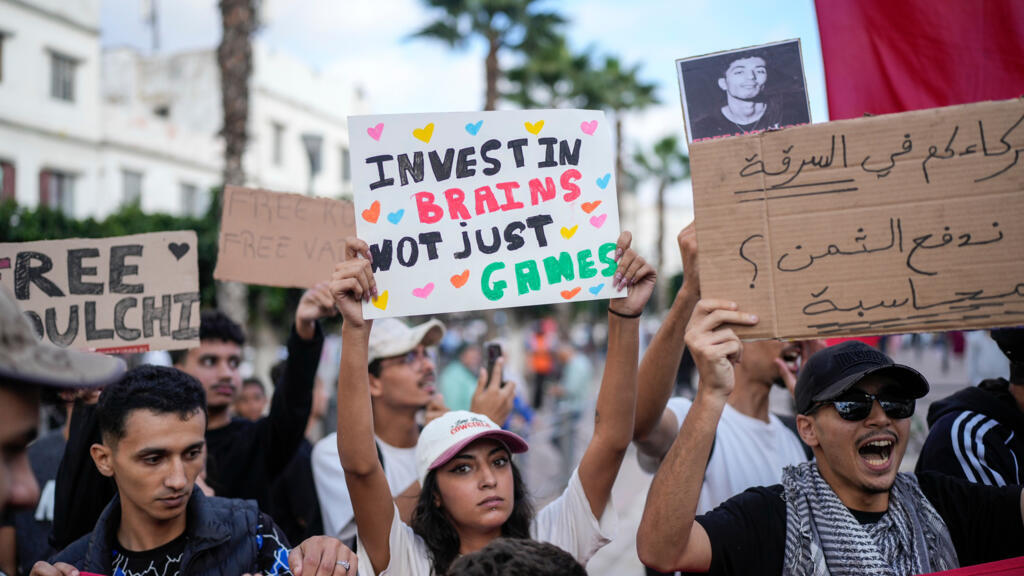
The Gen Z 212 movement — named for Morocco's international dialing code — erupted in September 2025 after the deaths of eight women following cesarean sections at a public hospital in Agadir. Organized largely through Discord by an anonymous youth collective and sustained for roughly three weeks, it targeted the quality of public health and education, particularly in rural areas, alongside corruption and graduate unemployment.
The state responded with money and promises. King Mohammed VI directed the government to raise health and education allocations in the 2026 budget by 18 percent, to 140 billion dirhams, about $15 billion. Authorities pledged 8,000 new health jobs, 19,000 new education jobs and the renovation of 90 hospitals. Separately, the government moved to pull young people into electoral politics, funding up to 75 percent of campaign costs for candidates under 35 and requiring new parties to include younger members among their founders.
The delivery has been slower than the announcements. Of 3.3 billion dirhams — roughly $350 million — promised for hospital construction and renovation, only the 2026 tranche is programmed. In Casablanca-Settat, the sole region to publish a calendar, no renovation is scheduled for completion before the vote. Data from the Court of Accounts, the kingdom's state audit institution, shows that compulsory health insurance, known by its French acronym AMO, has not meaningfully reduced out-of-pocket costs, which still averaged 34 percent of total costs in 2024, and that 91 percent of AMO reimbursements flow to private clinics even though most citizens are treated in public hospitals. A 2022 law creating regional health groups to decentralize hospital governance has not yet produced operating entities.
The Mechanics of the Vote
The lower house is elected by direct universal suffrage under a list system across 92 local districts and 12 regional districts, with no minimum vote threshold for a party to win a seat. The official campaign opened at midnight on Thursday, Sept. 10, runs 13 days and closes at midnight on Sept. 22. Candidacy filing, conducted through an electronic platform, closed Sept. 8.
Organic Law 53.25 governs the contest, and its provisions are unusually granular. Posters and unofficial campaign material may not carry red or green, or combine the two. Campaigning is barred inside places of worship, schools, vocational training centers and public administrations. Marches and the use of loudspeakers require written notice to local authorities at least 24 hours in advance, specifying route and timing. Publishing or distributing campaign material on voting day — explicitly including through social media, open broadcast networks or artificial intelligence tools — carries three to six months in prison and a fine of 20,000 to 50,000 dirhams, roughly $2,000 to $5,000. Public officials who distribute candidate material or steer voters while on duty face six months to a year and fines of 50,000 to 100,000 dirhams. Campaign accounts must reach the Court of Auditors within 90 days of the results. More than 3,000 observers, drawn from Moroccan non-governmental associations, the national human rights council and international organizations, will follow the process.
Moroccans living abroad cannot vote in person where they live but may vote by proxy through a fully digital service open since Aug. 24.
The Numbers That Worry the Parties
The electoral roll carries 15,801,162 registered voters — 54 percent men and 46 percent women, 55 percent urban and 45 percent rural. That is roughly 2.2 million fewer than in 2021, when turnout was likely inflated by concurrent local elections.
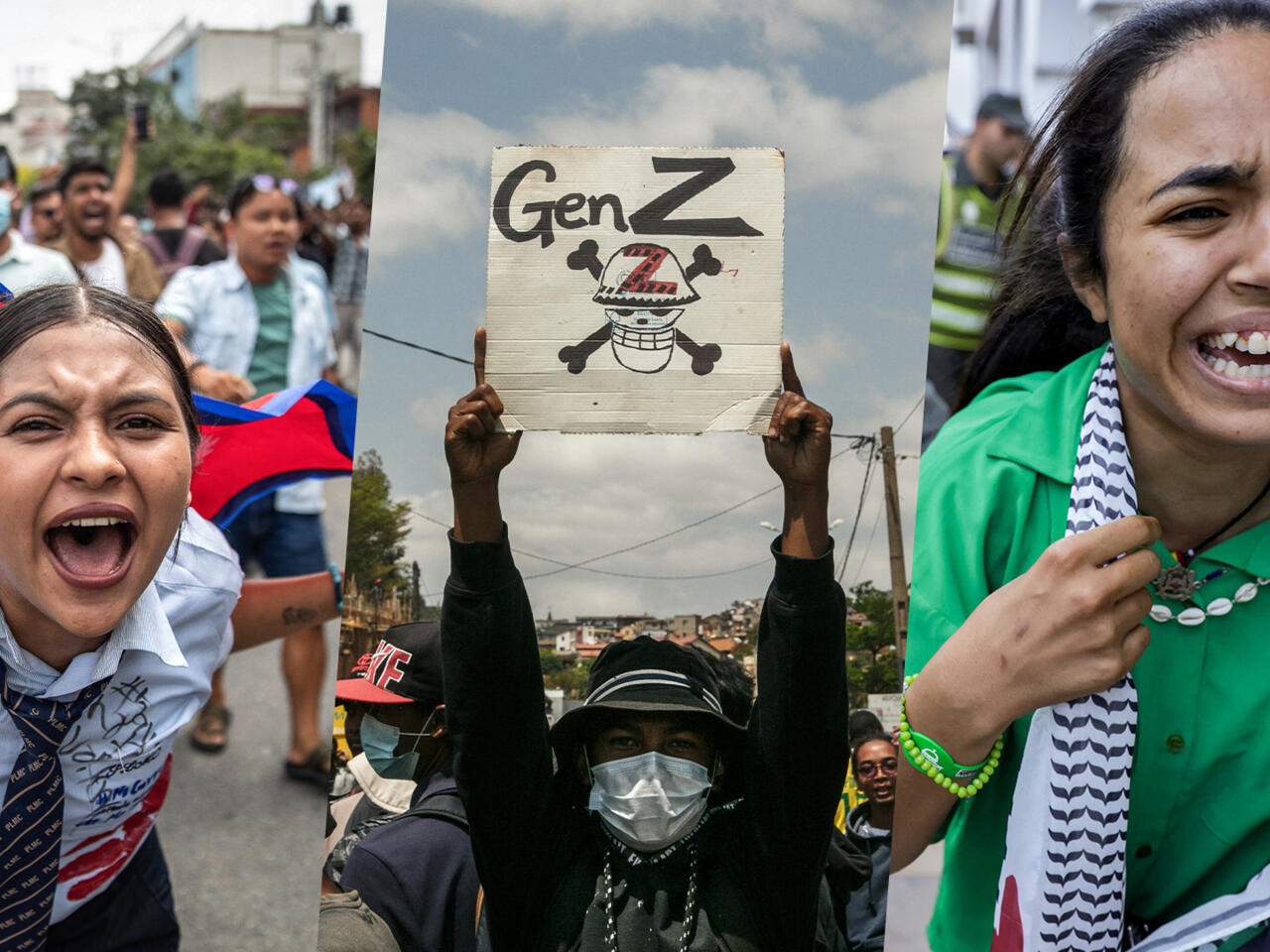
The age breakdown is the harder figure. Interior Ministry data shows that voters under 35 make up only 18 percent of the electorate, and the 18-to-24 group just 3 percent, in a country where about a quarter of the population is aged 15 to 29. An Afrobarometer survey published in March 2026 found only about a third of Moroccans aged 18 to 35 placing much trust in Parliament, local councils or parties.
The baseline is a turnout of roughly 50 percent of eligible voters in 2021 — high by regional comparison, against 21 percent in Algeria's most recent legislative election and 11 percent in Tunisia's. Commentators expect abstention to rise this year.
The institutional history does not help. After the youth-led February 20 Movement of 2011, authorities reserved 30 seats in the 395-seat house for candidates under 40. Ahead of the 2021 election, a 60-seat gender quota was expanded to 90 — and the 30 youth seats were the currency used to pay for it. Reforms introduced this cycle, including online candidate registration, may in practice widen the gap between digitally connected cities and rural areas rather than close it.
The Field
The outgoing government is a three-party coalition assembled after the September 2021 election: the National Rally of Independents, or RNI, with 102 seats, the Party of Authenticity and Modernity, or PAM, with 87, and Istiqlal with 81. All three are seeking to hold or expand their share.
Aziz Akhannouch, the head of government and one of Morocco's wealthiest businessmen, stepped down as RNI leader after the Gen Z 212 protests; the party is now led by Mohamed Chaouki. PAM, founded in 2008 by Fouad Ali El Himma, is led by Fatima Ezzahra El Mansouri, the housing minister and mayor of Marrakesh, and counts Budget Minister Fouzi Lekjaa — who also heads the national football federation and whose profile has risen with preparations for the 2030 World Cup — among its leading figures. Istiqlal is led by Nizar Baraka.
Observers expect the next head of government to be either Lekjaa or El Mansouri. A government organized around delivering the 2030 World Cup, or one led by a woman, would each be unprecedented. Neither would represent a break with the governing establishment.
The most watched opposition story is the Justice and Development Party, the Islamist formation that won the 2011 election and was reduced from 125 seats to 13 in 2021. It is again led by Abdelilah Benkirane, the former head of government who took it to power in 2011 and who launched the party's national campaign in Rabat on Saturday, Sept. 12, with an attack on the Akhannouch government's record. Benkirane is not standing as a candidate. The USFP, the PPS, the Popular Movement and the Constitutional Union are also seeking to recover ground, while the left-wing PSU and FGD are running joint lists.
Not everyone is competing. The Justice and Spirituality movement, the largest Islamist current outside the party system, has announced it will boycott the vote and has urged citizens to stay away from the polls.
Where the Power Actually Sits
The constitution obliges the king to appoint the head of government from the party that finishes first, and that government serves a five-year term. But the monarch retains the sovereign domains — national security, religious affairs and the strategic direction of foreign policy — and presides over the cabinet. An elected government in Morocco is accountable to voters chiefly on economic and social policy, which is both the source of its legitimacy and the limit of its reach.
That division explains why the campaign has been fought almost entirely on the cost of living, jobs, health, education and social protection, and why analysts are unimpressed. A press review by Le360 citing Al Ahdath Al Maghribia described a campaign awash in costly social and economic promises with a widening gap between spending pledges and any explanation of how they would be financed. Writing in TelQuel, the political analyst Abdellah Tourabi argued that the Sept. 23 vote has been emptied of meaningful political and ideological competition and reduced to a "pure contest of notables."
What to Watch
The first number to read on election night is not the seat distribution but the turnout, and within it any indication of youth participation. A figure at or above 2021's roughly 50 percent would let the establishment claim the protests were metabolized; a sharp fall would confirm that a generation has opted out of the formal system.
The second is whether the PJD's recovery is real. A return to two or three dozen seats would not put it in government but would signal that organized opposition still has a constituency.
The third is what happens on Sept. 27, when Gen Z 212 marks its first anniversary with the election four days behind it. The movement has refused political co-optation from the start. Whether it treats the new Parliament as an interlocutor or an irrelevance will shape the next government's first year far more than the arithmetic of the coalition that forms it
Published By | News Editor