Written By | Joshua Nahamya
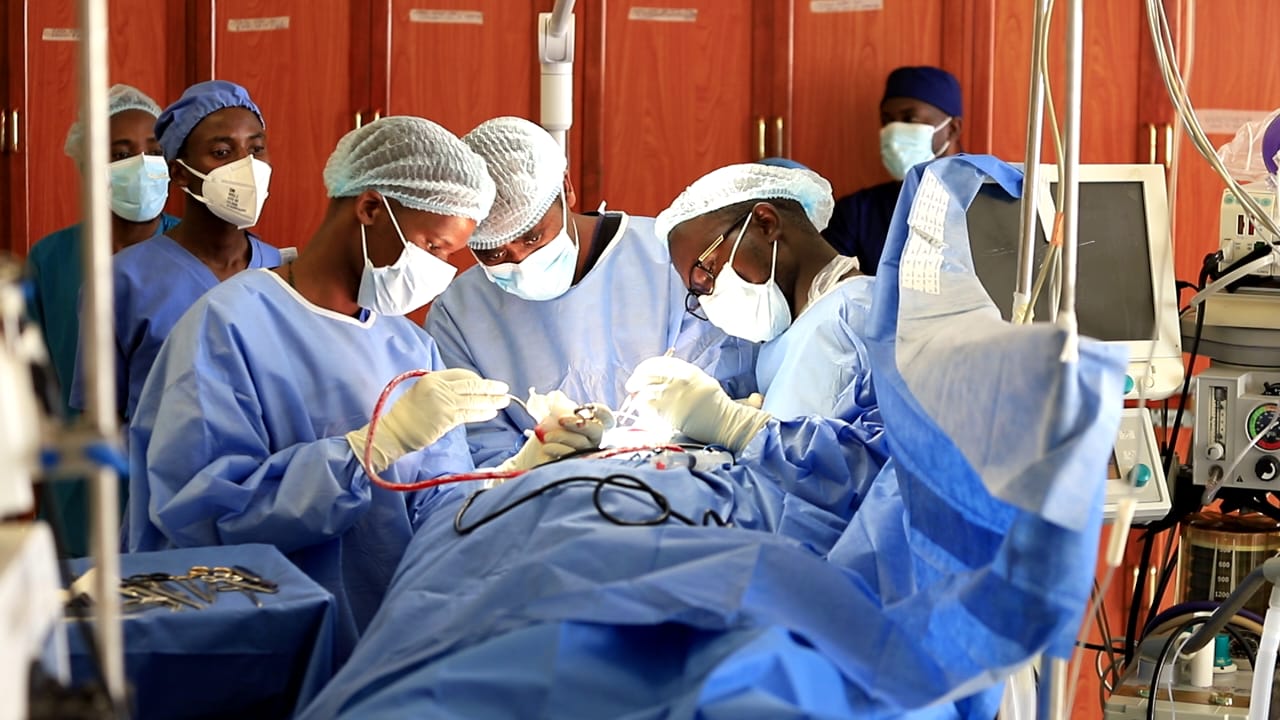
Mbarara Referral Hospital neurosurgery team navigating a high specialised procedure in the theatre
MBARARA CITY
Mbarara Regional Referral Hospital (MRRH) has secured a dedicated three-phase power line, bringing an end to frequent power outages at the facility, which conducts critical, life-saving surgeries and other essential medical operations daily.
The development was revealed by Dr Deus Twesigye, the hospital’s Senior Consultant General Surgeon and Acting Senior Executive Consultant, during a staff general meeting held at the hospital premises to review operations for the 2026/2027 financial year.
The health facility, which conducts thousands of critical surgeries annually and houses sophisticated diagnostic equipment that requires a constant electricity supply, had historically been prone to blackouts because it relied on a shared utility line.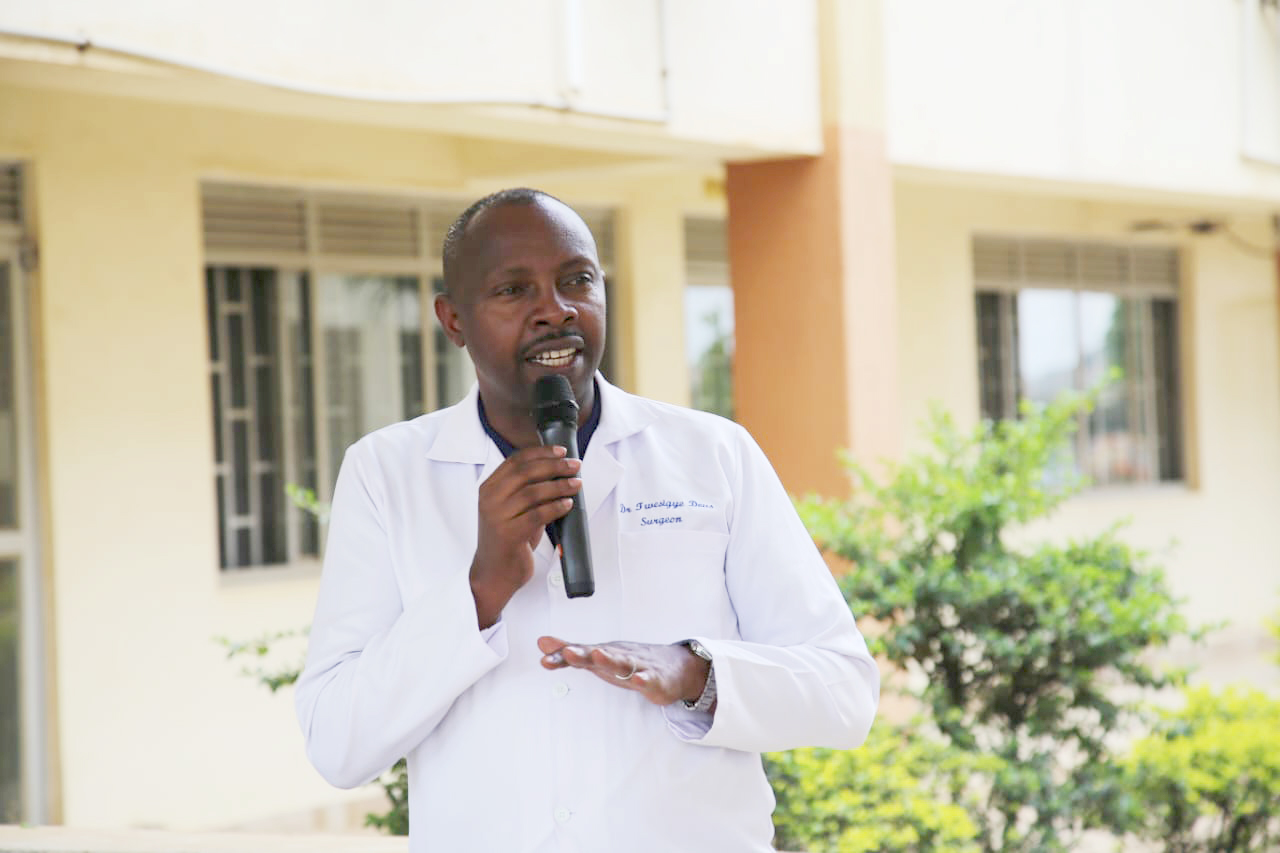
Dr Deus Twesigye, MRRH's Ag Snr. Executive Consultant detailing the impact of a 3-Phase during a general staff meeting
Dr Twesigye confirmed that the Uganda Electricity Distribution Company Limited (UEDCL), the government parastatal responsible for electricity distribution networks, has finalised and officially handed over the 33kV dedicated line to the institution.
Dr Twesigye, who spent decades performing high-risk procedures in operating theatres before assuming executive leadership, stressed that the new supply is highly reliable and rarely experiences outages, giving medical personnel confidence to perform complex procedures without the constant anxiety of sudden power loss.
In an interview regarding the technical milestone, Hospital Public Relations Officer Halson Kagure emphasised that the power stabilisation safeguards high-value medical infrastructure.
“The hospital runs very expensive assets, such as Magnetic Resonance Imaging (MRI) machines, which can be severely damaged by sudden power cuts, leading to unbearable repair costs,” Kagure noted.
He added that, prior to the installation of the dedicated line, the facility faced a heavy financial burden from relying on diesel generators to keep the Intensive Care Unit (ICU), Neonatal Unit, Operating Theatre, Radiology Department and clinical laboratories running smoothly.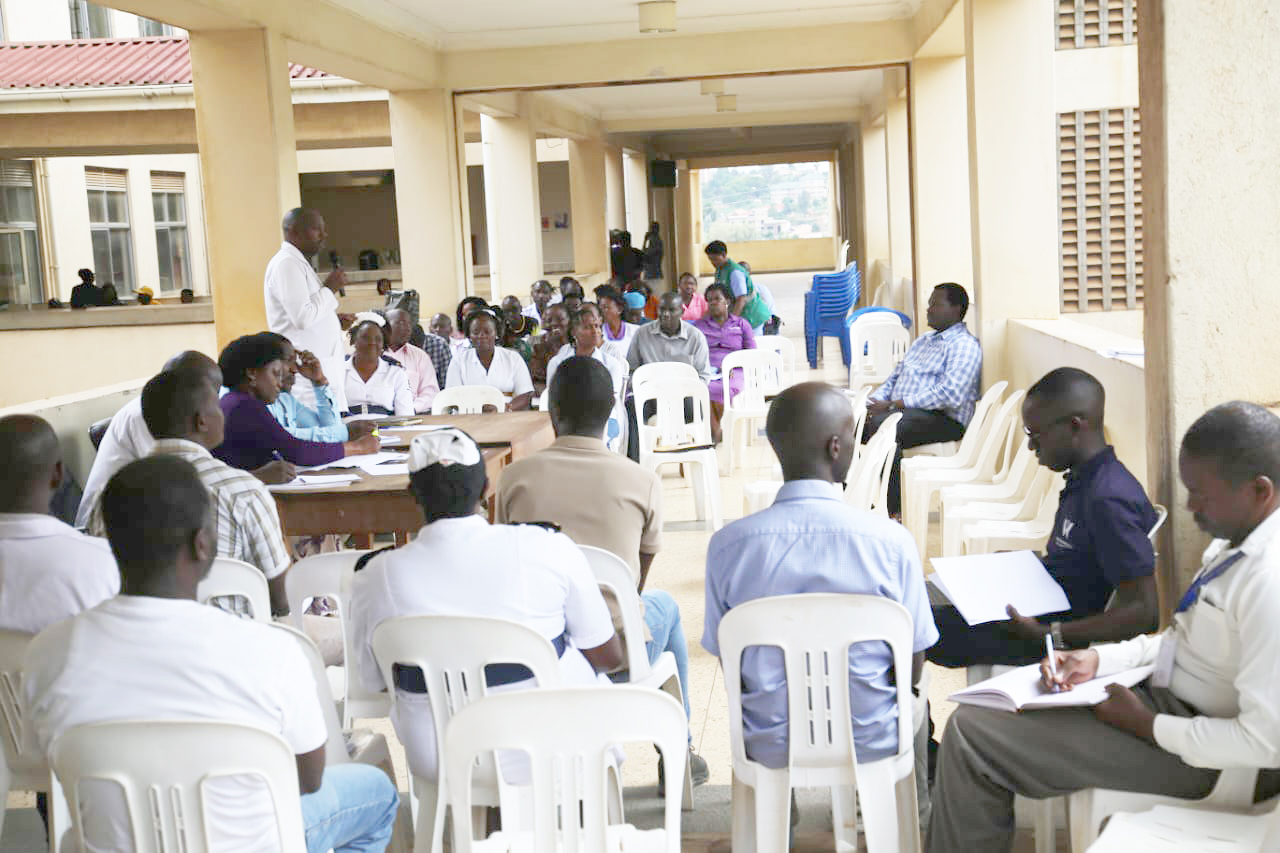
Some of the representatives of MRRH staff from different departments attending the meeting
Quantifying the financial impact, Hospital Engineer Patrick Ssemata revealed that the facility was spending up to Shs6 million per week on generator fuel to keep critical operations running uninterrupted.
Currently, all major units in the hospital, with the exception of the intern staff hostels and the Infectious Diseases Treatment Centre, have been connected to the new system. The remaining structures are scheduled for integration in phases.
The 33kV line enters the hospital’s internal substation, passes through a circuit breaker to the transformers and distributes regulated electricity across all connected clinical wards.
However, to control utility costs, Dr Twesigye cautioned the maintenance team against energy wastage, instructing staff to avoid leaving lights on in unoccupied offices and consultation rooms.
He said the engineering team is preparing to install photocell sensors to automatically manage lighting and reduce unnecessary electricity consumption.
Serving a catchment population of more than 6.5 million people across the Ankole sub-region and neighbouring districts, the installation of the dedicated 33kV power line marks a significant operational upgrade for Western Uganda’s main referral health centre.



