Written By | International News Agencies
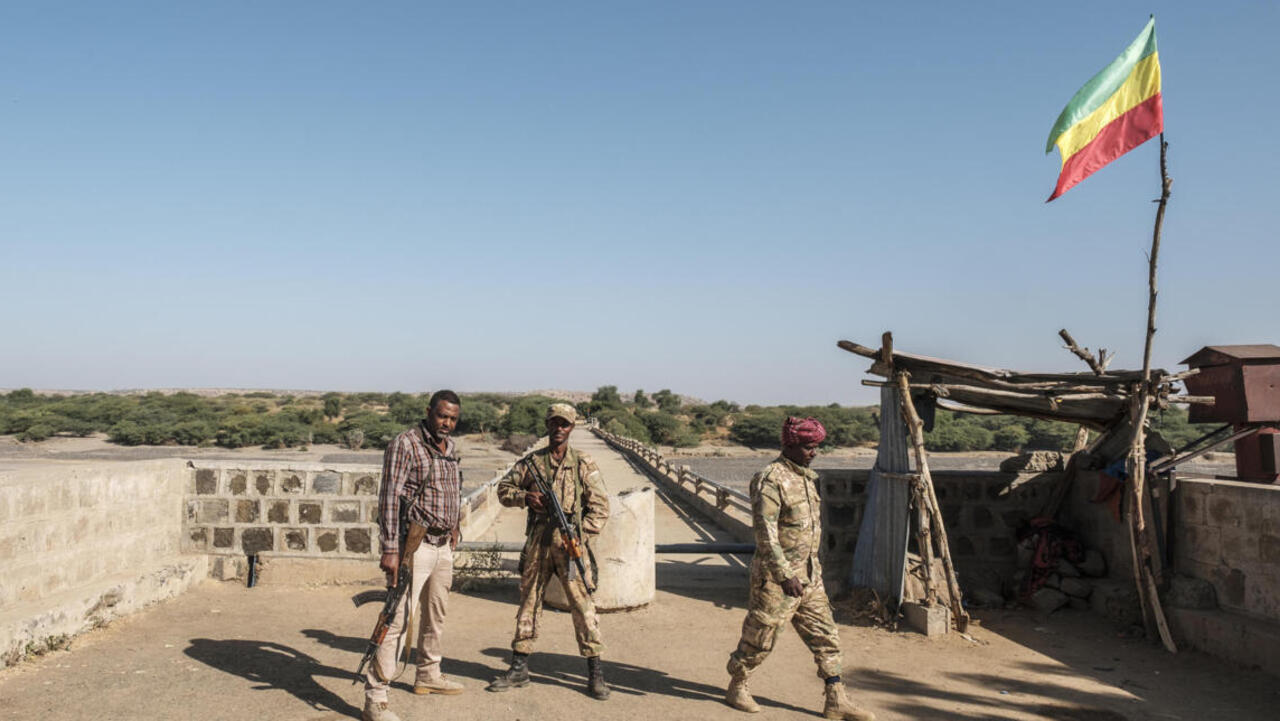
Eritrea denies supporting the armed opposition alliance now fighting the federal government.
ADDIS ABABA
Ethiopia closed its embassy in Asmara and ordered 10 Eritrean diplomats out of the country on Thursday, and Eritrea answered by severing diplomatic relations altogether. The rupture came as Ethiopian federal forces pressed to within roughly 40 kilometers (25 miles) of Mekelle, the capital of the Tigray region, and as explosions were reported in Addis Ababa itself. Taken together, the events mark the most dangerous moment for the Horn of Africa since the 2022 Pretoria peace agreement ended the two-year Tigray war, and they raise a question that analysts have been asking for days: whether a conflict that began as a domestic power struggle is hardening into a regional one.
A diplomatic break with a war behind it
Ethiopia's Foreign Ministry accused Eritrea of what it called "direct and indirect acts of hostility and belligerence," according to Al Jazeera's account of the announcement, and warned Asmara to "cease all acts" that violate the principles governing relations between sovereign states. AllAfrica reported that Addis Ababa described the expelled diplomats as "posing a national security threat." Al Jazeera reported that the diplomats were given 48 hours to leave.
Eritrea denies supporting the armed opposition alliance now fighting the federal government. Its response, cutting ties completely, leaves the two neighbors without a formal diplomatic channel at the moment when the risk of direct confrontation appears highest. The disputes between them are not new. AllAfrica's reporting points to allegations that Eritrea backs armed groups opposed to Prime Minister Abiy Ahmed and to the dispute over Ethiopia's pursuit of Red Sea access.
The African Union and the United Nations have both called for restraint, AllAfrica reported, citing concern about civilian casualties and the safety of humanitarian operations. The Intergovernmental Authority on Development (IGAD), the East African regional bloc, has separately urged the resumption of dialogue.
How the war came back
The present crisis has a short fuse and a long history. The 2022 Pretoria agreement silenced the guns in Tigray but, as Al Jazeera noted in its September 24 reporting, it also fractured the coalition around Abiy. Amhara forces and Eritrea, neither of which was a party to the settlement, later fell out with the federal government over port access and regional autonomy.
Researchers at Chatham House, Ahmed Soliman and Abel Abate Demissie, identify May 2026 as the critical turning point. That month, they write, the Tigray People's Liberation Front (TPLF) reinstated a pre-war legislative council and named Debretsion Gebremichael regional president, effectively ending the Tigray Interim Regional Administration that the Pretoria agreement had created.
Then, on September 20, seven armed movements announced the Ethiopian Peoples' Forces Alliance for Survival. The group includes the TPLF, the Amhara Fano National Movement and the Oromo Liberation Army, along with organizations from the Afar, Somali and Benishangul-Gumuz regions, according to Al Jazeera. Its stated aim is to remove Abiy's government and install a transitional administration.
The fighting escalated quickly. By September 24, a senior TPLF official was describing a shift from localized clashes to "a full war" in the space of 24 hours, Al Jazeera reported. Tigray's army said federal forces had launched "a full-scale offensive" using infantry, mechanized units and drones. Chatham House reports that TPLF forces captured three national airports in Tigray on September 23 and that ground offensives widened along Tigray's southern and eastern borders with the Amhara and Afar regions. Al Jazeera reported that the alliance also took Abala, a district capital in Afar, and that Ethiopian Airlines suspended flights to the affected areas. Chatham House adds that the town of Alamata fell to pro-government forces. Roughly 750,000 people were already displaced inside Tigray before this escalation, Al Jazeera reported.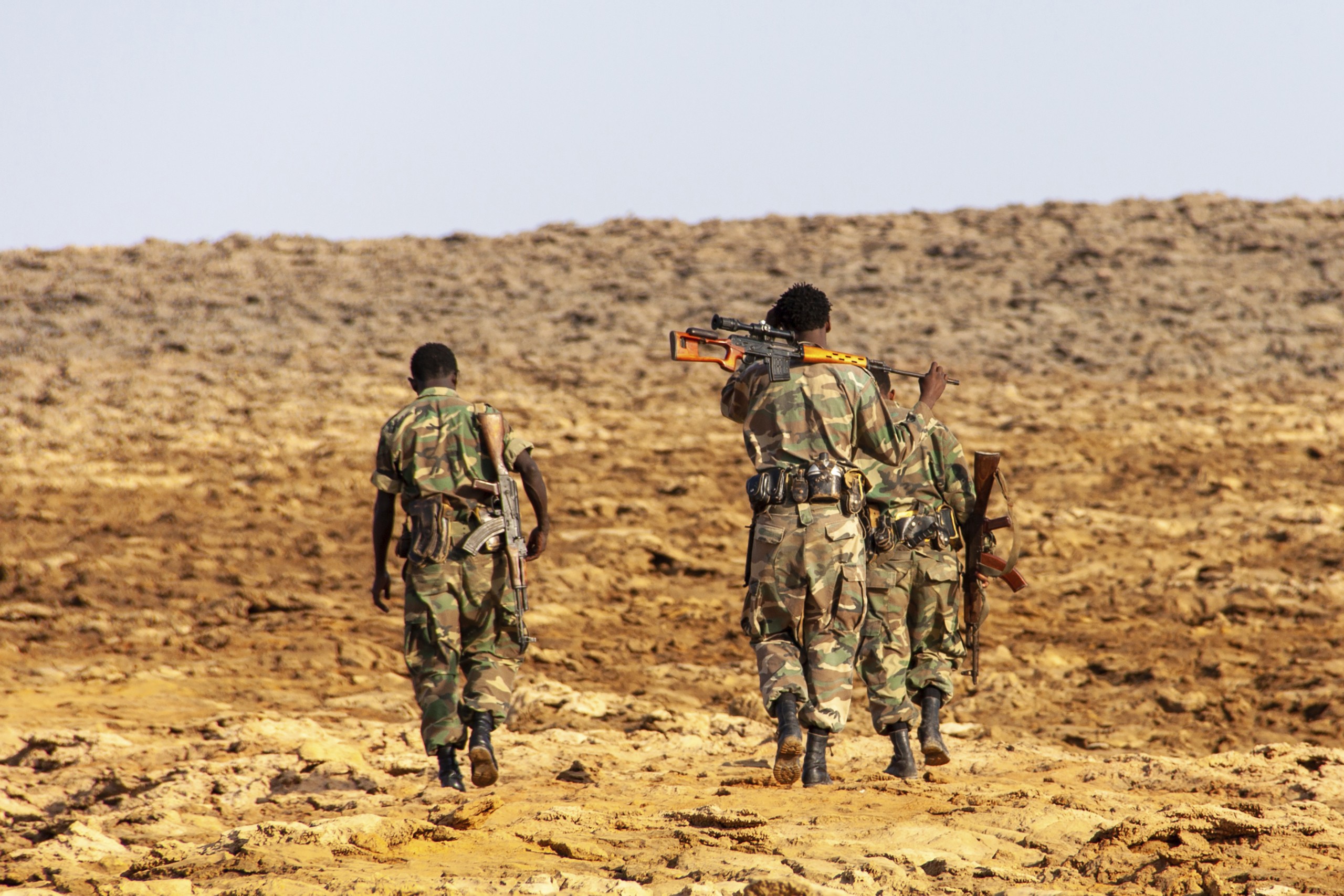
The past 48 hours
The latest developments, reported October 1, show the war shifting toward the Tigrayan capital and into the center of the country. Federal forces are now about 40 kilometers from Mekelle, according to Al Jazeera. The Africa Intelligence Brief published by the Rio Times reports that the TPLF leadership has evacuated the city. Thousands of civilians have fled, and electricity and internet service across the region have been cut, Al Jazeera reported.
In the capital, Al Jazeera reported blasts in Addis Ababa after the government banned drone flights over the city. The alliance reportedly carried out drone strikes, including one at military headquarters. The report describes these as reported attacks, and independent confirmation of their targets and effects was not available in the sources reviewed for this story.
In Afar, the government claims to have retaken the towns of Erebti and Abaala, though Al Jazeera described those claims as unconfirmed. More than 80,000 Afar residents are reportedly trapped in conflict zones, according to the same report. Afar's deputy governor, Ahmed Hussein, called on Eritrea on October 1 to withdraw from Afar territory, the Rio Times brief reported. That demand is notable because it implies an Eritrean military presence on Ethiopian soil, an allegation that Eritrea denies in the broader context of supporting the alliance. The reporting available does not independently establish where, if anywhere, Eritrean forces are operating.
The fighting also threatens the supply routes that carry food between Ethiopia and Djibouti, Al Jazeera reported, which underlines how exposed the country's food supply is to the fighting.
The stakes for Abiy
For Abiy, the immediate calculation is military. Federal forces have momentum toward Mekelle, but the fighting has now reached the capital, at least in the form of drone-related explosions, and the government's decision to ban drone flights over Addis Ababa signals concern about the vulnerability of its own center. A government that holds the city's skies tightly is a government that fears them.
The political calculation is harder. The alliance's declared goal is regime change, which leaves little room for the kind of negotiated settlement that ended the last war. Chatham House argues that mediation efforts currently lack sufficient international backing or viability, a bleak assessment given that the Pretoria agreement was itself the product of heavy African Union mediation.
The diplomatic move against Eritrea can be read as an attempt to reframe the conflict. By naming Asmara as an actor, the federal government casts the war as a defense of sovereignty against a foreign-backed insurgency, not a revolt by Ethiopians against the state. That framing may rally support at home. It also carries a cost: it hands Ethiopia's adversaries a rationale for further escalation and removes the diplomatic channel through which an Eritrean-Ethiopian crisis might otherwise be managed. This reading is analysis rather than reporting, but it fits the pattern of the Foreign Ministry's language.
An alliance with a weakness
The alliance has its own structural problem. Mohamed Kheir Omer, a Horn of Africa researcher writing for Al Jazeera, notes that the coalition faces the same territorial and power-sharing disputes that broke earlier opposition fronts. He points to the 2021 precedent, when a similar United Front collapsed within months after the Afar Revolutionary Democratic Unity Front withdrew, accusing the TPLF of killing civilians. Most pointedly, the TPLF and Fano both claim western Tigray, a dispute he describes as irreconcilable.
"A common enemy can stop being enough when battlefield fortunes change," Omer writes. Chatham House reaches a similar conclusion in more cautious language, observing that "it is not immediately clear that this uneasy tactical alliance...will result in functional cooperation." Omer sketches three possible outcomes: a prolonged stalemate, fragmentation of the alliance over territory, or coordinated advances that overwhelm federal defenses. Even in the third case, he argues, victory would leave fundamental disagreements about governance unresolved, setting the stage for a later conflict among the victors.
That analysis bears directly on the federal advance: pressure on Mekelle tests whether the alliance's other members will commit resources to defend Tigray's capital.
The regional dimension
The Chatham House authors warn that "a protracted war in Tigray is likely to spill over beyond Ethiopia, into Eritrea and further into Sudan." They report that Eritrea allegedly provides supply lines to the TPLF but prioritizes keeping the war off its own territory, and that Sudan's own conflict has become "more intertwined" with Ethiopia's instability, with accusations flowing between Addis Ababa and Sudanese actors about military support to opposing forces. Al Jazeera cited analysts who warned that Ethiopia risks becoming an "incongruent battlefield" for wider Horn of Africa rivalries.
What to watch
Several developments will determine whether this week marks a turning point or merely another escalation.
The first is Mekelle. Whether federal forces enter the city, besiege it, or halt short will shape the TPLF's options and the humanitarian picture. With power and internet cut, information from inside the city will be scarce, and early claims on all sides should be treated with caution.
The second is Addis Ababa, where further drone strikes would change the political climate in a city largely insulated from the fighting so far.
The third is Eritrea. Any confirmed cross-border military activity would transform a civil conflict into an interstate one, and the expulsion of diplomats suggests that Addis Ababa wants that possibility on the record.
The fourth is diplomacy. The African Union, the United Nations and IGAD have all spoken, but none has yet offered a mechanism with leverage over the combatants. Without one, the chances of a pause appear slim.
Finally, the humanitarian toll: with 750,000 people displaced in Tigray before the latest offensive and more than 80,000 reportedly trapped in Afar, aid access will be tested.
For now, the facts available are stark enough. A country that appeared to have closed its worst chapter four years ago is again at war, its capital is within range of hostile drones, and its government has chosen to confront a neighbor diplomatically even as it fights on several fronts at home. Whether that choice narrows or widens the war is the central question of the week.



