Written By | International News Agencies
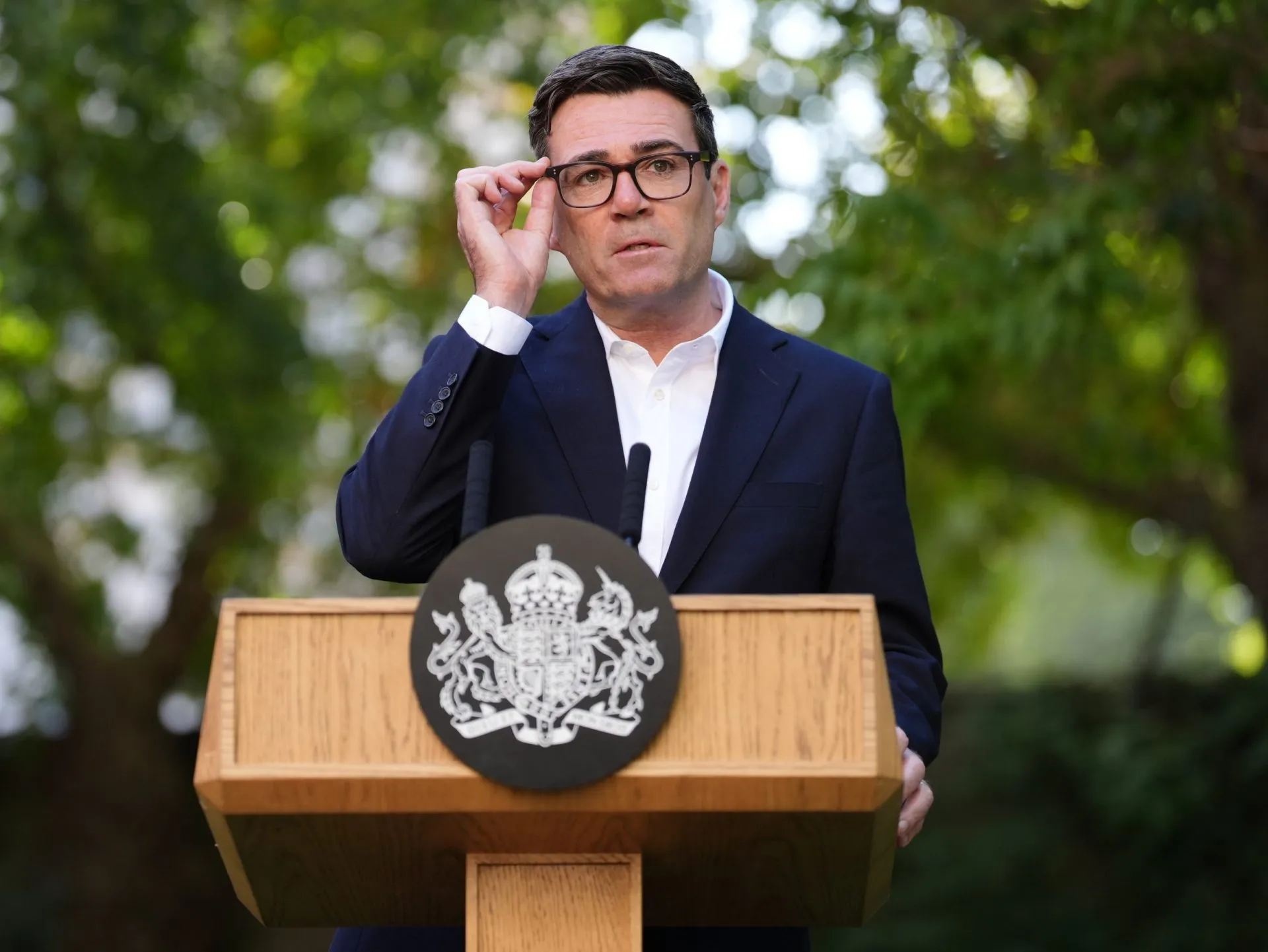
Burnham's arrival in Downing Street followed a turbulent period for the Labour Party
World Politics
Overview
Britain's new prime minister, Andy Burnham, has reopened the most divisive question in modern British politics. Speaking to BBC Radio 4 after his first Labour Party conference speech as leader on Tuesday, September 29, 2026, Burnham said that rejoining the European Union was "among all the options" the country should consider for its future relationship with the bloc. "We could stay as we are. That's definitely an option, if people think this is the right place to stay," he said, before listing the alternatives: a customs union, membership of the single market, or going "all the way" to full membership. Reports in the Japan Times and Bloomberg framed his remarks as opening the door to rejoining after the next general election, which is due by 2029.
The remarks matter because Labour, under Keir Starmer, had explicitly ruled out pursuing EU membership, and because Burnham himself, during a recent by-election campaign in a strongly pro-Brexit constituency, is accused by opponents of promising not to propose it. His comments therefore mark a notable shift in tone and possibly in direction, and they drew immediate fire from the Conservatives and Reform UK while drawing a more impatient reaction from the Liberal Democrats, who say Britain should move faster.
Background: A Government Reset
Burnham's arrival in Downing Street followed a turbulent period for the Labour Party. Starmer resigned earlier this year, and Burnham, the former Greater Manchester mayor and former cabinet minister who had twice stood for the party leadership, succeeded him after returning to Parliament. Before that, he had challenged Starmer openly, arguing that Britain needed "wholesale change" and warning that a failure to change course could deliver "a government of the like we've never seen before in the shape of Reform," a reference to Nigel Farage's party, which had been outperforming Labour in polls.
One consequence of the leadership transition was diplomatic. A UK-EU summit planned for July was postponed after Starmer's resignation, and the rescheduled meeting is now expected later this year. Burnham said he intends to bring forward "different options" for the relationship ahead of that summit. According to reports, EU officials have been reluctant to negotiate detailed improvements to trade arrangements while London has not settled its own long-term policy, a problem Burnham's approach appears designed to address, at least in part.
What Burnham Said, and What He Did Not
The prime minister was careful to frame his remarks as an invitation to debate rather than a commitment. Britain, he said, "can't afford another decade of post-Brexit drift." He argued that around 60 percent of the public believes Brexit has caused more harm than good, and said the settlement negotiated by the Conservatives had, on balance, done more damage than benefit. Earlier in his career he said he wanted Britain to rejoin "in my lifetime," but he stressed this week that this does not mean immediately, and that staying as things are remains a legitimate choice if the public prefers it.
He did not announce a policy, a timetable, or a referendum. Nothing in the reporting indicates that the government has changed its formal position that it will not seek membership in this Parliament, and the relevant point is that the possibility has been raised for the period after the next election. The distinction between a menu of options and a decision is likely to be the central battleground in the coming weeks.
Burnham also made an unrelated but politically charged argument about electoral legitimacy, suggesting that parties winning majorities on under 30 percent of the vote lack legitimacy in an era of five-party politics. The observation was noted with irony by commentators, since Labour won its own majority at the last election with 33.7 percent, and it hints at an interest in electoral reform that may accompany his European agenda.
The Economic Argument
The economic case for closer ties is central to Burnham's pitch. Bloomberg Economics research cited in coverage suggests that Brexit may have cost the UK between 2 and 4 percent of gross domestic product, and that closer ties with the EU could recover somewhere between 0.4 and 1.2 percentage points of that loss. Those are estimates, not certainties, and economists differ on the size of the Brexit effect and on how much of it could be reversed short of full membership. A customs union would ease border frictions but limit Britain's freedom to strike independent trade deals, while single market membership would restore much frictionless trade in goods and services but likely involve accepting EU rules and, in some form, freedom of movement. Full membership would carry additional obligations, including budget contributions and, according to the current treaty framework, an expectation of eventual euro adoption and Schengen participation, though the terms of any UK return would be negotiated.
Public Opinion
The political ground has shifted since the 2016 referendum, at least according to polling. A YouGov survey in June 2026 found 55 percent in favor of rejoining, 34 percent opposed and 10 percent undecided, a 21-point lead, with other pollsters generally placing support between roughly 50 and 56 percent, though a few show lower figures in the mid-to-upper 40s. Support is notably higher in Scotland, at around 64 to 67 percent. Yet support falls sharply when respondents are told that membership would include adopting the euro and joining the Schengen area, dropping to 36 percent in favor against 42 percent opposed in one survey. Burnham's decision to lay out a spectrum of options rather than a single destination reflects this reality: the public appears more comfortable with closer cooperation than with the full package of obligations.
Reactions
The Conservative Party's response was swift and personal. A spokesperson said, "You cannot trust a word Andy Burnham says," pointing to the pledge he made during the Makerfield by-election, in a heavily pro-Brexit seat, not to propose EU membership. Deputy leader Alex Burghart accused Labour of "trying to pin the blame for their disastrous economic decisions on a vote that happened over a decade ago."
Reform UK's deputy leader Richard Tice said Burnham was trying to return to Brussels "via the back door," language that previews how Reform intends to campaign, casting Labour as insufficiently committed to the referendum result at a time of weak growth. Liberal Democrat leader Sir Ed Davey took a different line, calling for concrete action rather than continued discussion and saying his party already has "concrete plans" for closer ties. The Liberal Democrats, along with the Scottish National Party, Plaid Cymru and the Greens, back eventual rejoining, so Burnham's shift places Labour closer to them and may ease cooperation on other issues.
Beyond Britain, the reaction from Brussels is likely to be cautious. EU governments have generally been sympathetic to a closer British relationship, but they have been wary of reopening negotiations without a clear British mandate, and some, notably France, have historically been less enthusiastic than others.
Political Risks and Calculations
For Burnham, the risks are considerable. He governs a party that won its majority partly with voters in the north and Midlands who backed Brexit, and those voters are the ones Reform UK is targeting. The Conservative attack on his credibility is designed to exploit that vulnerability. At the same time, his political base includes many Remain-leaning voters and Labour members who have pressed for a bolder European policy, and a leader who arrived promising change may find that avoiding the question is costlier than raising it.
Burnham also faces a timing problem. Opening the debate now, years before an election, gives him time to build a case and to see what Brussels would actually offer, but it also gives opponents years to attack. The strategy of publishing options before a European summit suggests he hopes to set the terms of the discussion before others do.
What Comes Next
The immediate next step is the set of options Burnham has promised ahead of the rescheduled UK-EU summit, expected later this year. Observers will look for whether the government moves on concrete measures such as veterinary and food-standards agreements, closer participation in EU programs, or steps toward a customs arrangement, all of which could be pursued without settling the membership question. Further out, the question is whether Labour's manifesto for the next election will include a commitment on rejoining, a customs union or something short of both. For now, Burnham has ensured that the future of Britain's relationship with Europe will be at the center of British politics in the run-up to that vote, and that the argument he has restarted will not be settled quickly.



