Health Desk
It is the most dangerous double act in medicine, and almost nobody knows it is happening inside them.
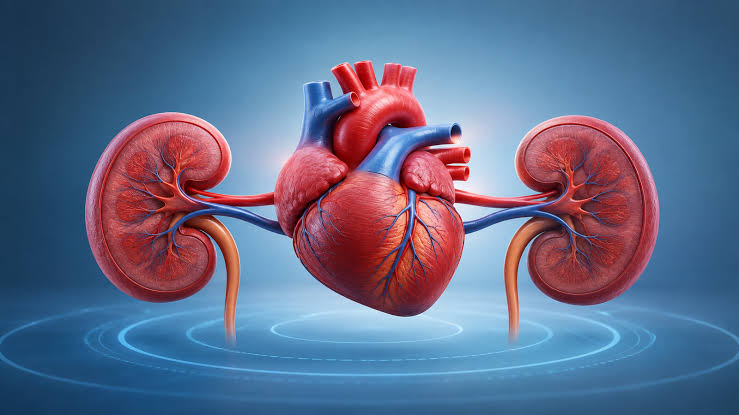
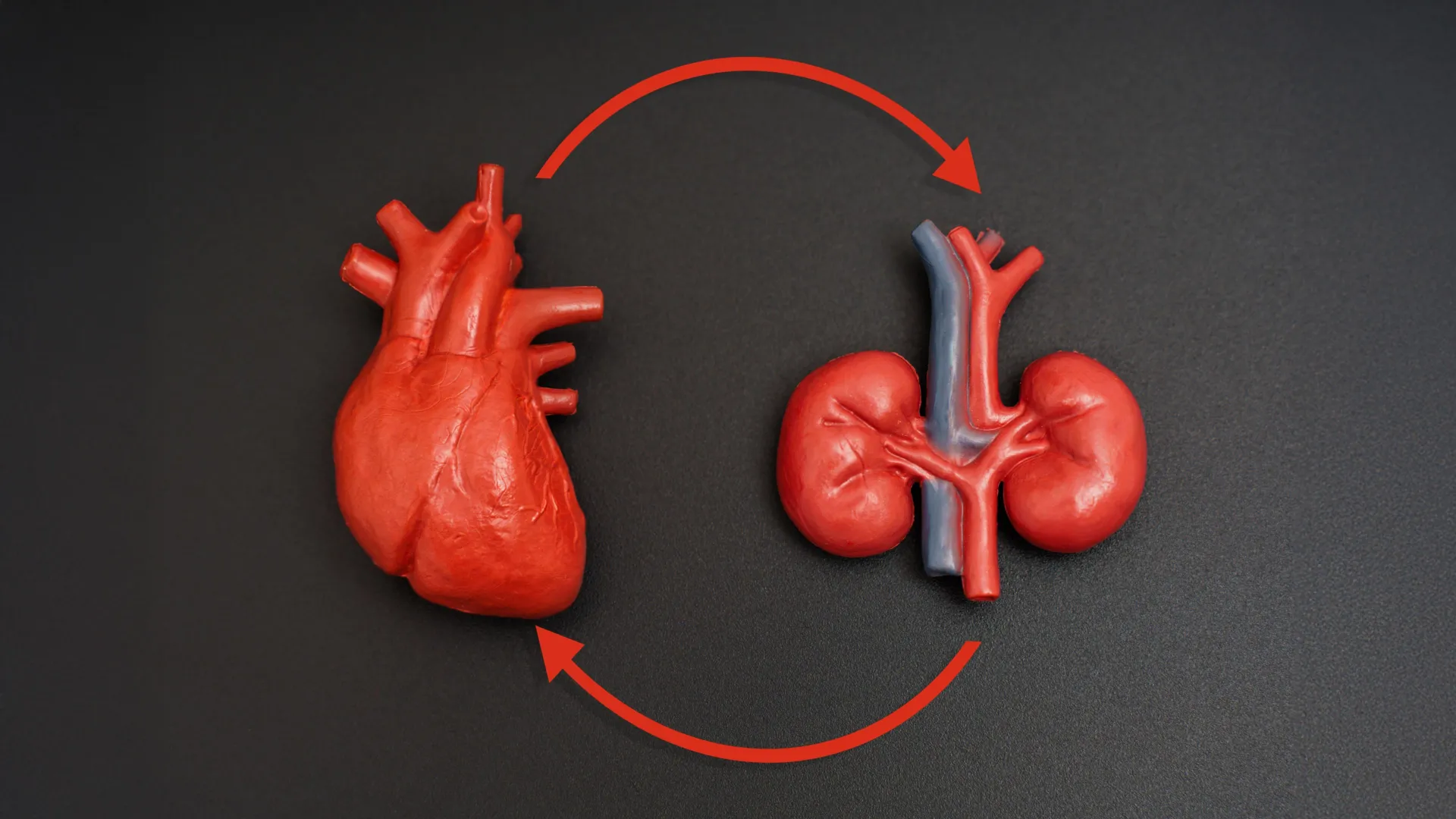
Your heart and your kidneys are locked in a relationship so tight that doctors have a phrase for what happens when one starts to fail: the vicious circle. A struggling heart pushes blood through the kidneys badly. Damaged kidneys retain fluid, raise blood pressure and load the heart further. Each organ drags the other down, faster and faster, until the patient arrives at dialysis or a cardiac ward years earlier than they otherwise would have.
Now the European Society of Cardiology has published its first-ever guidelines devoted entirely to breaking that circle — and the central recommendation is startling in its simplicity. Test everyone. Test them with a blood sample and a urine sample. Test them on the day their heart disease is diagnosed, not years later when their kidneys have already been quietly wrecked.
The guidelines, produced in collaboration with the European Renal Association, were published in the European Heart Journal and presented at ESC Congress 2026. Coverage of them broke widely over the weekend of 5 to 6 September.
100 MILLION PEOPLE, ONE MISSED TEST
An estimated 100 million people across Europe have chronic kidney disease — defined as abnormalities in kidney structure or function that persist for at least three months and affect a person's health.
"The disability and lifetime lost to each disease are profound, but CKD can accelerate CVD and vice versa, resulting in cardiovascular events and the need for dialysis much earlier in life," said Task Force Chair Associate Professor Kevin Damman of University Medical Centre Groningen in the Netherlands.
"The good news," he added, "is that there have been major advances over the last few years, which mean there are now several simple treatments that can substantially lower the risk of both cardiovascular and kidney complications."
That is the frustrating heart of this story. The treatments exist. The tests exist. What has been missing is the habit of joining the two together.
The picture in the United States is, if anything, starker. About 35.5 million American adults are estimated to have chronic kidney disease — and as many as nine in ten of them do not know it. Even among people whose kidney function is already severely reduced but who are not yet on dialysis, roughly 40 per cent are unaware they have the condition. In 2022, treating Medicare beneficiaries with CKD cost 95.7 billion dollars, with dialysis alone accounting for another 45.3 billion.
WHAT CHRONIC KIDNEY DISEASE ACTUALLY IS
Ask most people what kidney disease looks like and they will describe a dialysis machine. That image is the end of the story, not the beginning, and it is a large part of why the condition goes unnoticed for so long.
Your kidneys are a pair of filters roughly the size of a fist each. Every day they process something in the region of 180 litres of fluid, pulling waste and excess water out of your blood and returning almost all of the useful material. Chronic kidney disease means that filtering capacity is permanently reduced, or that the filters have started leaking things they should be holding on to.
It is measured two ways, and both matter. Estimated glomerular filtration rate, or eGFR, is a calculation based on the level of creatinine in your blood, and it tells you roughly how much filtering capacity is left. Urine albumin-to-creatinine ratio, or uACR, tells you whether protein is escaping through the filter membrane — a sign of damage that can show up long before eGFR budges at all.
Crucially, you can lose a very large share of your kidney function and feel completely normal. The organ has enormous reserve. That is a gift biologically and a curse diagnostically, because the warning signs people expect — swelling, exhaustion, changes in urination — usually arrive only in the advanced stages, when the room for intervention has already narrowed sharply.
THE FIVE-LETTER PLAN: STAMP ON CKD
To make the recommendations stick in busy clinics, the Task Force built them into an acronym: STAMP on CKD — Screen, Triage, Address CKD risk, Modify CVD management, and Plan health services.
Screen comes first, and it is the recommendation with the sharpest teeth. Every patient with cardiovascular disease should be tested for chronic kidney disease at the moment their cardiovascular disease is diagnosed. That means two things: an estimated glomerular filtration rate calculated from blood creatinine, and a urine albumin-to-creatinine ratio.
"Many patients with CKD are treated by the cardiology community and the new ESC Guidelines aim to increase the use of kidney function and urine albumin testing in patients with CVD," said Task Force Chair Professor William Herrington of the University of Oxford. "With improved screening, more at-risk patients can be identified, and the most appropriate treatments for both CKD and CVD can be prescribed."
Triage comes second: working out how likely each patient is to progress to kidney failure, alongside their cardiovascular risk, using validated risk scores that actually take kidney function into account.
Address CKD risk means starting proven, cheap therapies early enough to matter. "Early use of drugs called RAS inhibitors and SGLT2 inhibitors alongside statin-based therapy are particularly important and effective," Damman explained.
Modify CVD management is the part clinicians will find hardest. Failing kidneys change how the body clears drugs, so standard cardiac medicines and standard doses are not always safe. The guidelines set out which treatments can be used, and how, when the usual options are off the table.
Plan health services is the organisational fix: making sure cardiologists and nephrologists actually talk to each other, and that patients and families are in the room when decisions are made.
"Active and efficient communication between specialties is often necessary due to the complexities associated with CKD," Herrington said. "Engagement of patients and family or caregivers in the multidisciplinary care process also helps to ensure patients' priorities are met, improve their experience and promote patient-centred care."
THE TEST YOU HAVE PROBABLY NEVER HAD
Most people who have had a routine blood panel have had their kidney function estimated whether they realised it or not — eGFR is a standard line on the results.
The urine albumin-to-creatinine ratio is a different story. It measures whether small amounts of the protein albumin are leaking into your urine, which is one of the earliest signs that the filtering units of the kidney are damaged. It is cheap. It requires a single urine sample. And it is skipped constantly, including in patients who have every risk factor going.
That gap matters because albuminuria is not just a kidney signal. It is an independent predictor of heart attack, stroke, heart failure and death. A patient with a reassuring eGFR and heavy albuminuria is not a low-risk patient — but if nobody ordered the urine test, they will be treated as one.
DRUGS THAT ARE ALREADY IN THE CUPBOARD
The reason this guideline is being greeted as consequential rather than merely tidy is that the pay-off is immediate.
SGLT2 inhibitors — originally developed as diabetes drugs, now firmly established in heart failure and kidney disease — slow the decline of kidney function and cut cardiovascular events. RAS inhibitors, the ACE inhibitors and angiotensin receptor blockers that have been on the shelf for decades, reduce albuminuria and protect the kidney. Statins remain the backbone of cardiovascular risk reduction.
None of these are exotic. Most are off-patent or close to it. The obstacle is not availability or cost. It is that the patient was never identified as having kidney disease in the first place, so nobody thought to start them.

THE DOSING TRAP
There is a second, quieter reason cardiologists are being told to look at kidneys, and it has nothing to do with dialysis.
A great many cardiac medicines are cleared from the body by the kidneys. When kidney function falls, those drugs hang around longer and build up. The dose that was correct for a patient at 60 can become the dose that harms them at 70, without anything visibly changing. Some drugs need reducing. Some need swapping for alternatives cleared by the liver. Some monitoring intervals need tightening.
The guidelines devote significant space to exactly this: which cardiovascular treatments remain safe as kidney function declines, and what to reach for when the standard option is no longer appropriate. It is unglamorous, practical medicine, and it is the sort of thing that quietly prevents hospital admissions.
It also explains why the Task Force put such weight on cardiologists and nephrologists actually speaking to one another. In many health systems these are separate clinics, separate letters and separate appointments months apart. A patient falling between them is not an edge case. It is the norm.
WHAT THIS MEANS FOR YOU
If you have been diagnosed with any cardiovascular condition — heart failure, coronary artery disease, atrial fibrillation, a previous heart attack or stroke — ask your doctor a specific question at your next appointment: have I had a urine albumin-to-creatinine ratio done, and what was my eGFR?
If the answer to the first is no, ask for it. It is a urine sample. There is no downside.
If you have diabetes or high blood pressure, this applies to you doubly. Those two conditions are the leading causes of kidney failure in the United States, accounting for two out of every three new cases.
If you are already on a heart medication and your kidney function has changed, do not assume your dose is still right. Reduced kidney clearance is one of the commonest reasons ordinary drugs become dangerous, and it is one of the specific things these guidelines are trying to fix.
And if you want a single thing to take away: chronic kidney disease in its early stages produces no symptoms whatsoever. Not tiredness, not swelling, not changes in how often you go. By the time it announces itself, a great deal of irreversible damage has usually already been done. The only way to catch it is to look for it.
THE CATCH
Guidelines are not laws. The ESC can recommend universal screening; it cannot make a rushed clinic order a urine test. Previous kidney-screening recommendations have existed in various forms for years and adherence has been patchy at best — which is precisely why the Task Force wrapped this one in an acronym and built a patient version of the document to hand directly to the people affected.
There is also an honest gap in the evidence base. The Task Force itself flagged that research is needed to fill several holes, and universal screening in every cardiovascular patient will inevitably pick up borderline results that lead to more testing, more anxiety and, in some cases, more treatment than a patient needed. That is the standard trade-off of any screening programme, and it deserves to be stated rather than glossed over.
But weigh it against the alternative. Tens of millions of people are walking around with a progressive, treatable disease that will damage their hearts and that nobody has looked for. The tools to find it have been sitting in every hospital laboratory for decades.
"CVD and CKD are major burdens on patients, healthcare systems and society," the Task Force Chairs concluded. "The key messages in these guidelines should be noted by all relevant healthcare stakeholders and policymakers."
Translated out of guideline-speak: check the urine. It is not complicated. It has simply not been done.
Published By | Features Editor