Written By | Health News Agencies
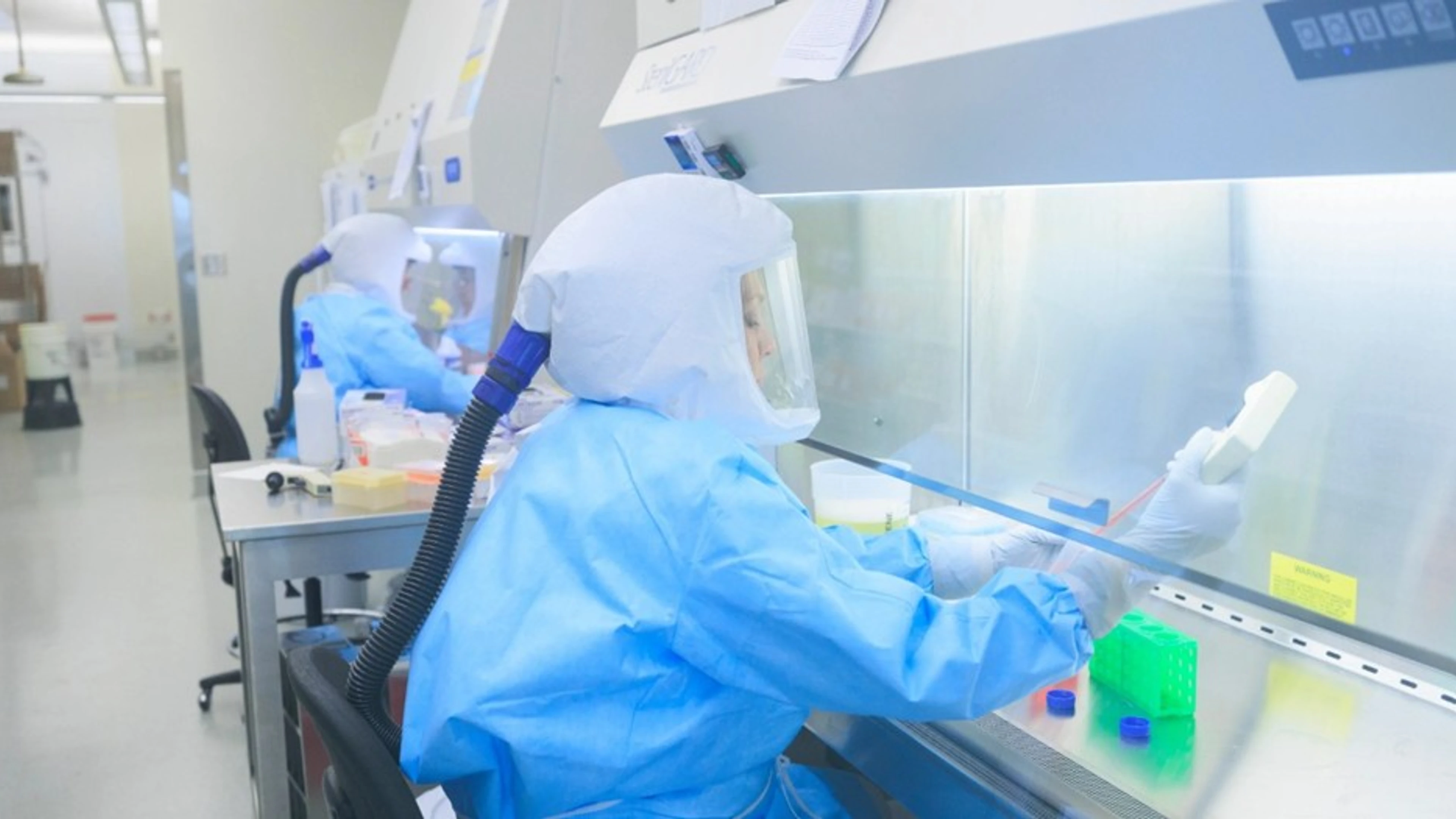
Scientists at the University of Cambridge and its spin-out company DIOSynVax believe they have cracked the code on how to stop the next pandemic before it becomes one
CAMBRIDGE, ENGLAND
In the spring of 2020, as a novel coronavirus swept across the globe, the world watched helplessly while scientists scrambled to create a vaccine for a pathogen they had only just met. Millions died. The vaccines that eventually arrived were miraculous — but they came too late for too many.
Now, scientists at the University of Cambridge and its spin-out company DIOSynVax believe they have cracked the code on how to stop the next pandemic before it becomes one — by building a vaccine not for a virus that exists, but for an entire family of viruses that might one day evolve to threaten humanity. And crucially, they didn't design it themselves. They let a machine do it.
The results of the world's first human clinical trial of a fully AI-designed vaccine — pEVAC-PS , targeting Sarbeco coronaviruses (including SARS-CoV-2, the original SARS virus, and dozens of bat coronaviruses) — were published on June 5, 2026 in the Journal of Infection. The findings: safe, no significant side effects, and a demonstrable immune response targeting not just known human coronaviruses, but bat viruses that have never caused a human outbreak. Yet.
The Machine That Built The Vaccine
Traditional vaccines start with a known enemy. They are reactive: identify the virus, develop the shot, test it, deploy it. The process takes years.
The Cambridge team, led by Professor Jonathan Heeney, took a radically different approach. They fed their AI system vast databases of genetic sequence data from across the entire Sarbeco coronavirus family. The AI was tasked with a simple question: what do all these viruses have in common at the structural level?
What it found — and what no human scientist could have synthesized manually — were conserved structural features : parts of the virus that remain largely unchanged across different strains, because mutating them would likely destroy the virus's ability to function. From these shared features, the AI designed a synthetic "super-antigen" — a novel molecule that doesn't exist in nature, but which teaches the immune system to recognize an entire family of viruses by their common architecture.
"We've converted vaccine development from being reactive to being future-proof," Professor Heeney said.
Inside The Trial: 39 Volunteers, A Needle-Free Jet, And A Striking Result
The Phase I trial enrolled 39 healthy volunteers aged 18 to 50 in Southampton and Cambridge. The vaccine was found to be well tolerated with no significant adverse events. But it also did something Phase I trials don't always manage: it showed signs that it was actually working.
Participants developed measurable immune responses against:
The delivery method is itself a significant innovation. pEVAC-PS was administered using a needle-free jet injector — a high-velocity stream of liquid that pushes the vaccine through the skin. This could dramatically simplify mass vaccination campaigns in resource-limited settings, removing the logistical bottleneck of syringes and sharps disposal.
The vaccine is a DNA vaccine — delivering genetic instructions that cells use to produce the AI-designed super-antigen and trigger an immune response.
The Vision Behind The Vaccine: DIOSynVax
DIOSynVax was founded as a University of Cambridge spin-out with a singular goal: to develop vaccines capable of providing broad, durable protection against entire families of dangerous viruses.
Following the publication of the pEVAC-PS results, DIOSynVax confirmed they are also advancing AI-designed vaccine candidates targeting the Ebola virus family and highly pathogenic avian influenza (H5N1) .
The research has benefited from global genomic surveillance infrastructure built up during and after COVID-19 — the vast databases of viral genetic sequences compiled worldwide. Without that data, the AI would have had nothing to learn from.
Rewiring Pandemic Response: From Reactive To Prophylactic
The core problem with our current pandemic response model is its inherent latency. Even with the remarkable speed of COVID-19 vaccine development, billions were infected and millions died before vaccines were widely available.
A pre-designed, broadly protective vaccine against entire virus families — stockpiled and ready to deploy before the first human case of a novel spillover — would fundamentally change that calculus.
Current Model AI-Driven Model
Reactive: respond to known virus Prophylactic: prepare for entire families
Years to develop Pre-designed and stockpiled
Chasing variants Targeting conserved features
The pEVAC-PS results are early-stage — only 39 people, immune responses described as "modest," duration of protection unknown. A larger Phase 1/2 study has already been initiated. Years of additional development lie ahead.
But the proof of principle has been established. An AI-designed antigen induced broad immune responses in human beings on its first attempt. That is a historic milestone.
What This Means For You
For the average person, the immediate takeaway is simple: the race to prevent the next pandemic is making genuine scientific progress, and that progress is being driven by tools that didn't exist a decade ago.
The needle-free delivery aspect has particular implications for global equity, potentially lowering barriers to mass vaccination in low-resource settings where future pandemic spillover events are most likely to originate.
For investors and biotech watchers, DIOSynVax's success opens a window into the next generation of pandemic preparedness: AI-platform companies focused on preemptive antigen design, backed by surveillance data partnerships.
The Bottom Line: The First Chapter Of A Longer Story
The pEVAC-PS trial is a beginning, not an ending. There are years of additional research, larger trials, and regulatory processes ahead. The challenges are real — modest immune responses need strengthening, duration of protection needs establishing, manufacturing needs scaling.
But what happened in Cambridge is undeniably historic. For the first time, an artificial intelligence designed a vaccine component from scratch — analysing more viral genetic diversity than any human team could process — and that component induced broad, cross-reactive immunity spanning an entire virus family.
The next pandemic is coming. We don't know when. We don't know which virus family will be Patient Zero's unwanted gift. But for the first time, there is a credible scientific pathway to greeting that outbreak not with a desperate scramble, but with a vaccine already waiting on the shelf.
That dream — after the horrors of the last pandemic — is worth celebrating. And worth funding.



