Written By | International News Agencies
As conflict enters its fourth year, Sudan's economy survives on extraction, informal trade and humanitarian aid — with a fragile recovery only now coming into view
More than three years after fighting erupted between the Sudanese Armed Forces (SAF) and the paramilitary Rapid Support Forces (RSF) in April 2023, Sudan has become the site of both the world's largest displacement crisis and one of its strangest economic stories. A state whose formal institutions have been gutted — central bank oversight eroded, tax collection fractured, entire cities reduced to rubble — is nonetheless registering positive GDP growth again, propped up by gold smuggled across unguarded borders, gum arabic tapped from acacia trees in contested farmland, and remittances wired home by a diaspora scattered across half a dozen countries. Understanding Sudan in 2026 means understanding an economy that has not so much collapsed as mutated, reorganizing itself around extraction, informality and survival.
A Fragile Rebound After Historic Collapse
The scale of the initial shock is difficult to overstate. According to the African Development Bank's June 2026 Sudan Economic Outlook, real GDP contracted by an estimated 13.5% in 2024, compounding a broader collapse that some estimates put at roughly 29.4% in 2023 and a further contraction in 2024 as fighting destroyed productive capacity in services such as healthcare, education, telecommunications and trade. Real GDP growth rebounded only modestly to 1.2% in 2025, supported by improved agricultural output and a gradual recovery in services in areas of relative stability.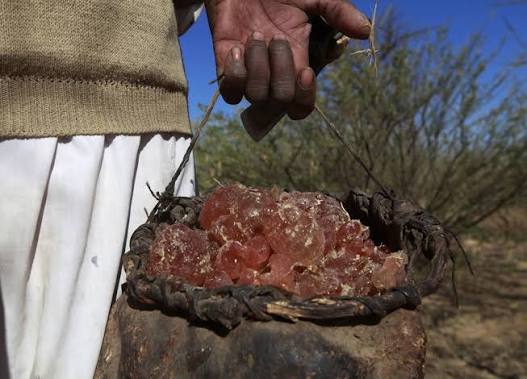
The AfDB projects growth strengthening to 2.1% in 2026 and 3.2% in 2027, driven mainly by reconstruction-related spending in social services and infrastructure and a gradual resumption of economic activity in more stable regions. But the underlying fiscal and monetary picture remains dire. The fiscal deficit widened to 2.8% of GDP in 2025 from 1.6% in 2024 as spending needs outpaced a shrunken revenue base, forcing continued reliance on monetary financing — effectively printing money to cover the gap. Inflation, while easing, remained elevated at 150.2% in 2025, down from 170.1% the year before; the AfDB projects a further deceleration to 78.3% in 2026 and 51.3% in 2027, contingent on reduced reliance on central bank financing. Separately, Sudan Tribune reported that annual inflation climbed back to 45.84% in April 2026 on a narrower monthly basis, driven by renewed depreciation of the Sudanese pound, with urban inflation at 49.70% against 43.62% in rural areas — a reminder that national averages mask sharp swings depending on which index and which month is measured.
The Sudanese pound itself has become almost ungovernable. It continued to depreciate sharply through 2025 and into 2026, reflecting weak export receipts and intense demand for foreign currency amid ongoing conflict, and was trading at roughly 600 to the US dollar on the parallel market by mid-April 2026. Foreign exchange reserves have fallen to critically low levels — just $1.17 billion, equivalent to only 1.1 months of import cover — leaving the central bank with almost no tools to defend the currency. Banking sector stress has risen in tandem: non-performing loans climbed to 16.5% of the loan book, a direct reflection of conflict-related disruption to businesses and household incomes. The current account deficit widened to 6.0% of GDP in 2025 from 4.0%, financed mainly by remittances from Sudanese abroad and by drawing down what little reserve buffer remains.
Gold: The Currency Financing the War
If any single commodity captures Sudan's war economy, it is gold. Sudan ranks among Africa's five largest gold producers, and production has continued to surge even as the conflict has raged — output reached an estimated 74.6 metric tons in 2025, according to figures cited by Sudan's own finance minister, Gibril Ibrahim. Gold now accounts for more than 70% of total national revenue by some estimates, having become the financial backbone of the state budget after Sudan lost the bulk of its oil revenue when South Sudan seceded in 2011.
The trouble is that most of that gold never reaches the formal economy. Of the roughly 70 tons produced in 2025, only about 20 tons were exported through official channels; more than 55 tons vanished into a shadow economy that bypasses the state treasury entirely. Artisanal mining and parallel markets now account for more than 80% of the industry. Much of the smuggled metal crosses porous, unguarded borders and ultimately reaches Gulf refining and trading hubs, chiefly the United Arab Emirates, according to reporting compiled by Chatham House and the Africa Center for Strategic Studies. Both warring parties depend on these extraction and smuggling networks: the RSF's control of gold-rich areas of Darfur and Kordofan provides hard currency used to procure weapons, while gold produced in SAF-controlled territory — an estimated 65 tons in one recent year, of which roughly 28 tons moved through Port Sudan — helps fund the military's own war effort. Port Sudan, the Red Sea city that has become the de facto seat of the internationally recognized government since Khartoum's fall to fighting, has emerged as the country's key formal export gateway for gold and other extractive goods.
Gum Arabic and Agriculture Caught in the Crossfire
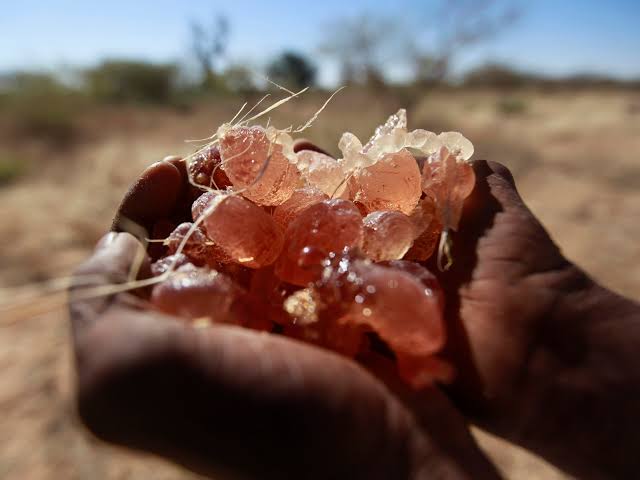
Sudan's other signature export tells a similar story of resilience shadowed by disruption. Sudan supplies an estimated 80–90% of the world's gum arabic, the acacia-tree resin used as a stabilizer in soft drinks, confectionery and pharmaceuticals worldwide, harvested largely from the semi-arid 'gum belt' stretching across Kordofan and Darfur. Reporting from the UN Human Rights Office (OHCHR) and Inter Press Service in July 2026 documented how displacement and insecurity have degraded the trade: farmers who have fled to urban displacement camps have left large quantities of naturally exuded gum uncollected in the forests, while weak border controls have simultaneously enabled smuggling and undermined formal export channels. As with gold, gum arabic, livestock and other agricultural commodities have become embedded in the war economy — extracted, transported and exported through networks that impose formal and informal levies along the way, according to OHCHR's account of trade routes controlled by armed actors.
Even so, agriculture has been a rare bright spot in the AfDB's 2025 growth numbers, with improved output helping to lift GDP out of contraction. That resilience reflects both the sector's importance to rural livelihoods — it remains the primary occupation for a large share of Sudan's population — and the sheer necessity of subsistence farming in a country where formal markets have broken down across large stretches of territory.
The World's Largest Displacement Crisis
The human toll dwarfs the macroeconomic story. Sudan is now the site of the world's largest displacement crisis, according to the International Organization for Migration's Displacement Tracking Matrix and UNHCR. Roughly 14 million people have been forced from their homes since April 2023: UNHCR recorded some 9.1 million internally displaced people at the start of 2026, alongside more than 2.8 million Sudanese refugees who had fled to neighboring countries — nearly double the figure recorded at the start of the crisis. More than 4.4 million people have sought refuge in Chad, Egypt, South Sudan and other neighbors, straining host communities and regional infrastructure. Children bear a disproportionate share of the burden: more than half of internally displaced people are under the age of 18.
The knock-on humanitarian need is staggering. The UN's 2026 Humanitarian Needs and Response Plan identifies 33.7 million people in need of assistance — the highest figure of any crisis worldwide, and an increase of 3.3 million compared with 2025 — yet as of April 2026 only around 20% of that plan had been funded, according to joint UN reporting, severely constraining the humanitarian response. In February 2026 the UN launched a $2.87 billion Sudan Humanitarian Needs and Response Plan appeal, but funding gaps of this magnitude mean aid agencies are forced to ration who receives assistance, and where.
Hunger Approaching Famine Thresholds
Food security has deteriorated to among the worst levels recorded anywhere in the world. A joint WFP–FAO–UNICEF warning issued in May 2026 found that nearly 19.5 million people — roughly two in every five Sudanese — face crisis-level acute food insecurity (IPC Phase 3 or above), with more than five million people at emergency levels and around 135,000 people already living in catastrophic (IPC Phase 5) conditions. As of the most recent IPC classification, El Fasher in North Darfur and the besieged town of Kadugli in South Kordofan were assessed to be in outright Famine with reasonable evidence — a designation reserved for the most extreme food-security emergencies. UNICEF has separately warned that more than 825,000 children are at risk of death from severe malnutrition in 2026. Humanitarian access remains the binding constraint: insecurity, bureaucratic obstruction, attacks on supply routes and the destruction of markets and production capacity continue to prevent aid agencies from delivering assistance at the scale the crisis demands.
Poverty and the Collapse of Human Development
Behind the headline growth and inflation numbers lies a collapse in living standards that will likely take a generation to reverse. According to the AfDB, the poverty rate has surged to 71% in 2025, up from 36% before the war, leaving an estimated 23 million people in poverty in a country whose pre-war population was roughly 46 million. Sudan now ranks 171st of 193 countries on the 2025 Human Development Index, with a score of 0.51, reflecting the compounded effects of collapsed health and education services, mass displacement and economic devastation.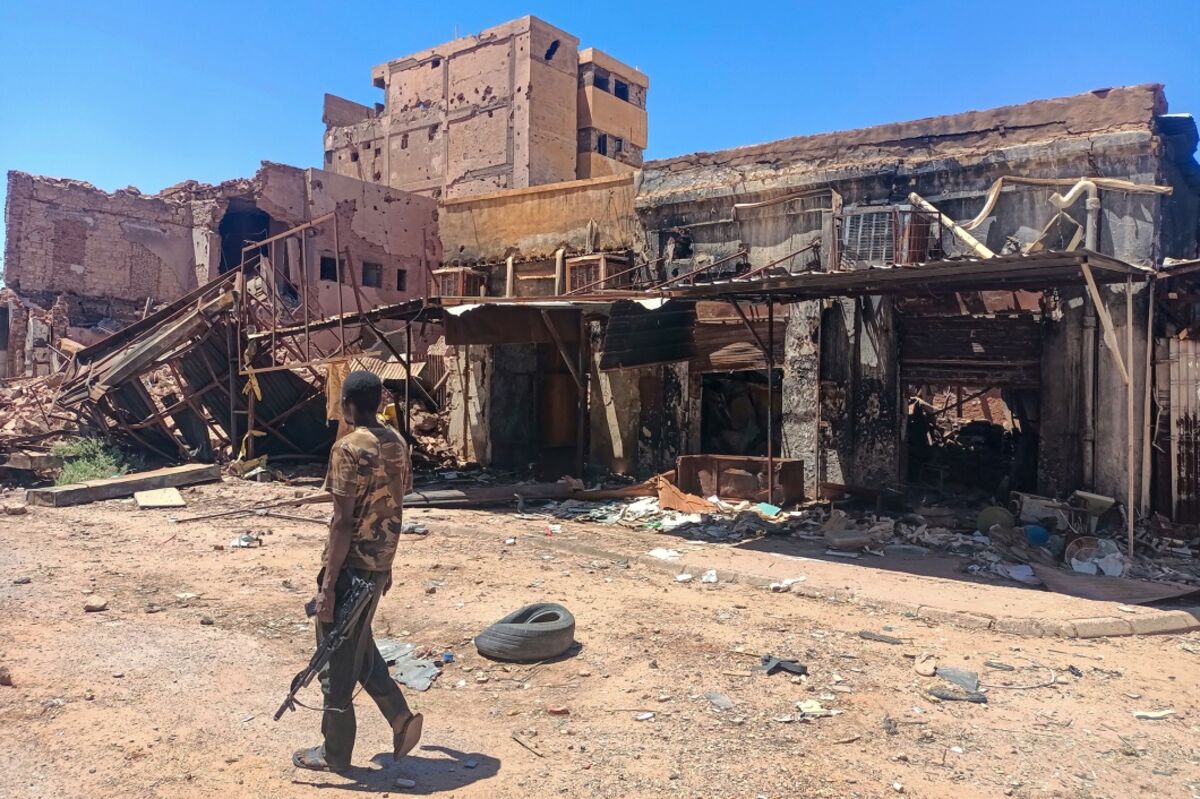
A Narrow, Fragile Path to Recovery
Sudan's Ministry of Finance has begun coordinating with the World Bank, the United Nations and the Arab Planning Institute to assess reconstruction needs and update damage estimates, reportedly starting with a field survey of Khartoum state to be used as a model for other regions, according to reporting from Sudan Horizon and AllAfrica in August 2026. The AfDB's own assessment is candid about the scale of the financing challenge: Sudan faces acute constraints from weak domestic revenue mobilization, a large informal economy and essentially no access to international capital markets, compounded by a broader fragmentation of global development finance that has narrowed available sources, raised borrowing costs and reduced the predictability of external flows.
The AfDB's prescribed reform agenda — strengthening anti-money-laundering and counterterrorism-financing frameworks, modernizing payment and settlement systems, improving exchange-rate transparency, and rebuilding public financial management — reads less like a conventional growth strategy and more like a checklist for rebuilding the basic architecture of a functioning state. Every element of that agenda depends on a variable the AfDB itself flags as the decisive risk to its 2.1%/3.2% growth projections: a durable peace agreement. Absent one, the Bank warns, protracted conflict, climate-related shocks and weak institutional capacity could just as easily derail the fragile rebound now taking shape. For a country whose gold, gum arabic and remittance flows have kept it from complete economic collapse, the difference between reconstruction and renewed catastrophe still hinges on a ceasefire that, as of August 2026, remains elusive.



