Written By | Health News Agencies
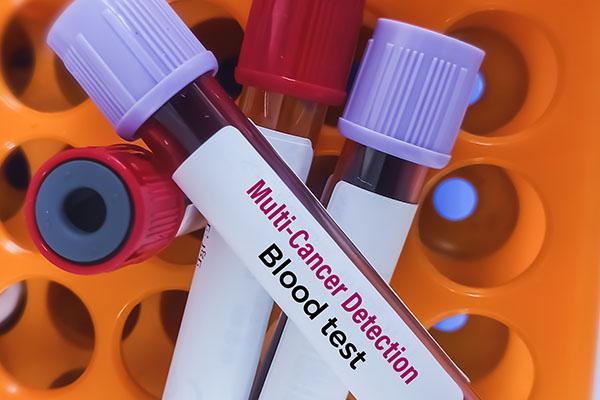
A Texas biotech just launched what it calls the most accurate cancer-screening blood test ever built — and doctors are already arguing about whether it's a medical miracle or a Pandora's box
HEALTH
Somewhere in a lab outside Dallas, a machine is reading your blood like a book — hunting for whispers of a tumor that hasn't even made itself known yet. No lump. No cough that won't quit. No unexplained weight loss. Just a vial of blood, a genome sequencer, and an AI model trained on more molecular data than any cancer test has ever seen.
That's the pitch behind Caris Detect, the multi-cancer early detection (MCED) blood test that Caris Life Sciences officially began selling to the public this summer, with the company declaring it "the world's most sensitive and comprehensive" cancer-screening blood draw on the market. It is, in plain terms, a single needle stick that claims to flag warning signs of cancer across more than a dozen organ systems — lung, breast, prostate, colon, pancreas, skin, head and neck, uterus, and more — before a patient ever feels sick.
For a disease that kills roughly 611,000 Americans a year, largely because it's caught too late, that's an enormous promise. And unlike some of its rivals, Caris says it has the data to start backing it up.
THE SCIENCE BEHIND THE VIAL
Most earlier-generation multi-cancer blood tests, including GRAIL's well-known Galleri test, work by scanning for methylation patterns — chemical tags on DNA fragments that tumors shed into the bloodstream as they grow and die. Caris took a different, more expensive road. Caris Detect combines ultra-deep whole genome sequencing with whole transcriptome sequencing — reading not just the raw DNA circulating in a patient's blood, but also which genes are actively being switched on and off — then runs the results through AI models trained on Caris's staggering internal archive: more than one million patient cases and over 50 billion molecular data points collected over nearly two decades of tumor profiling work.
The company says that depth of data is what sets its test apart. Where a methylation-only test is essentially reading a single "channel" of biological signal, Caris argues its combined genomic-and-transcriptomic approach picks up cancer signatures that a narrower test might miss entirely — particularly in early-stage disease, when tumors are shedding the least genetic material and the "signal" is faintest.
The numbers from the company's pivotal ACHIEVE 1 study, finalized and released just weeks before the commercial launch, are the ones oncologists are now poring over. In that trial, Caris Detect picked up 56.8% of Stage I cancers and 70.1% of Stage II cancers — a combined Stage I/II sensitivity of roughly 61%, rising steeply to 77.1% in Stage III and 99.1% in Stage IV disease, when tumors are shedding far more genetic material into the bloodstream. Specificity — the test's ability to correctly clear someone who does not have cancer — came in at 99.1% in an asymptomatic screening population and 95.3% in a broader, undiagnosed population that included people already showing some symptoms.
Detection rates weren't uniform across cancer types. Head and neck cancers were picked up in 81.3% of early-stage cases — among the best performance of any tumor type in the study — while breast cancer sensitivity lagged at just 53%, a reminder that no single blood test yet catches everything equally well.
A TEST LAUNCHING INTO A CROWDED, SKEPTICAL FIELD
Caris Detect isn't arriving in a vacuum. It's stepping directly into a fight that's been simmering in oncology circles for two years, largely because of what happened to its biggest rival.
GRAIL's Galleri test, the best-known name in multi-cancer screening, has been marketed for several years and has data showing it can detect signals from more than 50 cancer types, increasing cancer detection roughly seven-fold when layered on top of standard screening for breast, cervical, colorectal, and lung cancer. But this summer, results from the landmark NHS-Galleri trial in the United Kingdom landed with a thud: the study missed its primary endpoint of significantly reducing late-stage cancer diagnoses across a screened population. It was a sobering result for a field that has spent years promising it could out-detect the disease before it becomes deadly, and it left plenty of oncologists publicly asking whether MCED tests as a category were ready for prime time.
Caris's timing — announcing its own strong sensitivity and specificity data in the same window that Galleri's real-world trial stumbled — was not lost on industry watchers, several of whom noted the company appeared to be positioning Caris Detect as the more rigorously validated alternative just as public confidence in the category wavered.
It's worth being clear about what neither test has yet: FDA clearance. Both Caris Detect and Galleri are currently offered as laboratory-developed tests (LDTs) under CLIA regulations — meaning they're validated and run by a certified lab, but have not gone through the FDA's full premarket approval process the way a new drug would. That distinction matters. It means the tests are legally available now, ordered mostly through a physician, but they don't yet carry the same regulatory stamp of approval most consumers assume comes with any medical test they pay for.
WHAT THIS MEANS FOR YOUR NEXT PHYSICAL
Here is the uncomfortable arithmetic every early-detection test forces patients to confront: even Caris's best-case sensitivity numbers mean a substantial share of early-stage cancers — nearly 4 in 10 at Stage I and II combined — will still slip through undetected. A negative result is reassuring, but it is not a guarantee. Doctors are already warning patients not to skip mammograms, colonoscopies, or PSA tests just because they got a clean MCED result; these blood tests are designed to supplement, not replace, established cancer screening.
There's also the flip side of specificity to reckon with. Even at 95–99% specificity, a test rolled out to millions of asymptomatic people will inevitably flag some number of people who don't actually have cancer — triggering a cascade of follow-up imaging, biopsies, and weeks of gut-wrenching uncertainty for a false alarm. Oncologists have flagged this as one of the core tensions of population-level MCED screening: even a small false-positive rate, multiplied across a mass-market rollout, translates into real anxiety and real healthcare costs for a meaningful number of healthy people.
Then there's the question of who actually gets to use it. Caris has not published consumer pricing for Caris Detect, and MCED tests broadly have a spotty track record of insurance coverage — Galleri, for instance, is not currently covered by Medicare or by most private insurers, and patients have often paid several hundred to over a thousand dollars out of pocket. If Caris Detect follows a similar path, its "most sensitive test on the market" pitch will, at least initially, be available mainly to patients who can afford to pay for it directly — reviving a familiar worry in American medicine that the most advanced early-detection tools arrive first for the wealthy.
THE BIGGER PICTURE: A RACE THAT'S ONLY SPEEDING UP
Caris Detect's launch lands amid a broader gold rush in early cancer detection. Multiple companies — GRAIL, Exact Sciences, Guardant Health, Freenome, and now Caris — are racing to build the definitive "one blood draw, dozens of cancers" screening product, each betting that whoever nails sensitivity, specificity, and cost first will capture a market some analysts believe could be worth tens of billions of dollars annually as screening becomes routine.
The American Cancer Society and other major medical bodies have taken a notably cautious public stance on MCED tests as a category, stressing that while the technology is promising, none of the currently available multi-cancer blood tests have yet been shown in a randomized, controlled, population-level trial to actually reduce cancer deaths — the ultimate test any screening tool must pass. The NHS-Galleri trial was supposed to be exactly that proof point for Galleri, and its missed endpoint this year is now a cautionary tale the whole industry, Caris included, will have to answer for as it tries to convince health systems, insurers, and skeptical physicians that its own approach is different enough to deliver where Galleri fell short.
For now, Caris Life Sciences is leaning hard into the idea that its whole-genome-plus-transcriptome approach is a meaningfully different, more powerful lens on cancer biology than methylation-only competitors — and its ACHIEVE 1 numbers are, on paper, a fairly strong opening argument. Whether that translates into fewer people dying of cancers caught too late is a question that will take years, and likely a large prospective trial of its own, to answer.
WHAT TO WATCH NEXT
Expect Caris to publish consumer pricing and insurance-coverage details in the coming months, along with additional data from its next-generation test incorporating even deeper whole transcriptome sequencing. Expect continued sparring with GRAIL and other MCED makers over whose sensitivity numbers are most clinically meaningful. And expect oncology societies to keep repeating the same message to patients this year: an early-detection blood test, however sophisticated, is a complement to your regular screening — not a replacement for it.
If you're curious about ordering an MCED test like Caris Detect, doctors recommend starting the conversation with your primary care physician or oncologist rather than a direct-to-consumer purchase, both to interpret results properly and to understand what, if anything, your insurance will cover. And if you fall into a high-risk category — a strong family history of cancer, prior treatment, known genetic mutations like BRCA1/2 — these tests are being discussed as a potential addition to your monitoring, not a first-line replacement for the screenings your doctor already recommends.
The science of finding cancer earlier is moving fast. Whether the healthcare system, insurers, and regulators can keep pace with it is, for now, still very much an open question.



