Written By | International News Agencies
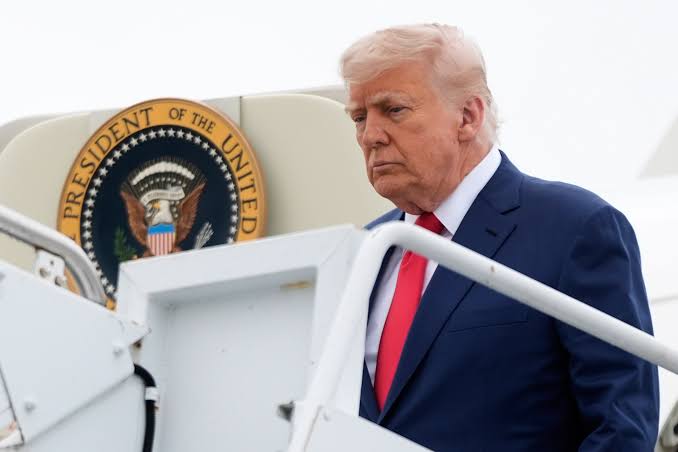
Donald Trump
World Politics
Background
The announcement on July 30, 2026 that Hamas and an international body chaired by President Donald Trump had reached agreement on a disarmament roadmap for Gaza represents the most significant attempted breakthrough in the territory's fragile peace process since the guns fell silent in October 2025. That earlier ceasefire, built around Trump's twenty-point plan, ended two years of war that began with Hamas's October 7, 2023 attack on Israel and Israel's subsequent military campaign in Gaza, a conflict that killed tens of thousands of Palestinians and left much of the strip in ruins. Under the October 2025 deal, Hamas released the last twenty living hostages within roughly seventy-two hours of Israel's cabinet ratifying the agreement, while Israel freed approximately two thousand Palestinian prisoners, including two hundred fifty serving life sentences. Hamas has said it returned all hostage remains it could recover, though several sets of remains have still not been located, a recurring irritant in the relationship between the two sides.
The October plan also created the structure that has since become central to Gaza's governance question: a Board of Peace, chaired by Trump, tasked with managing international funding, coordinating an International Stabilization Force, and overseeing reconstruction. Its executive membership has grown to include Secretary of State Marco Rubio, senior White House adviser Jared Kushner, envoy Steve Witkoff, former British prime minister Tony Blair, World Bank-linked financier Ajay Banga, and private equity executive Marc Rowan, alongside regional figures such as Turkey's foreign minister Hakan Fidan, a senior Qatari official, Egypt's intelligence chief, an Emirati minister, and current UN Middle East envoy Sigrid Kaag. Notably, no Palestinian representative sits on the board, a structural choice that has drawn criticism from Palestinian officials and analysts who argue that decisions about Gaza's future are being made without Gazans at the table.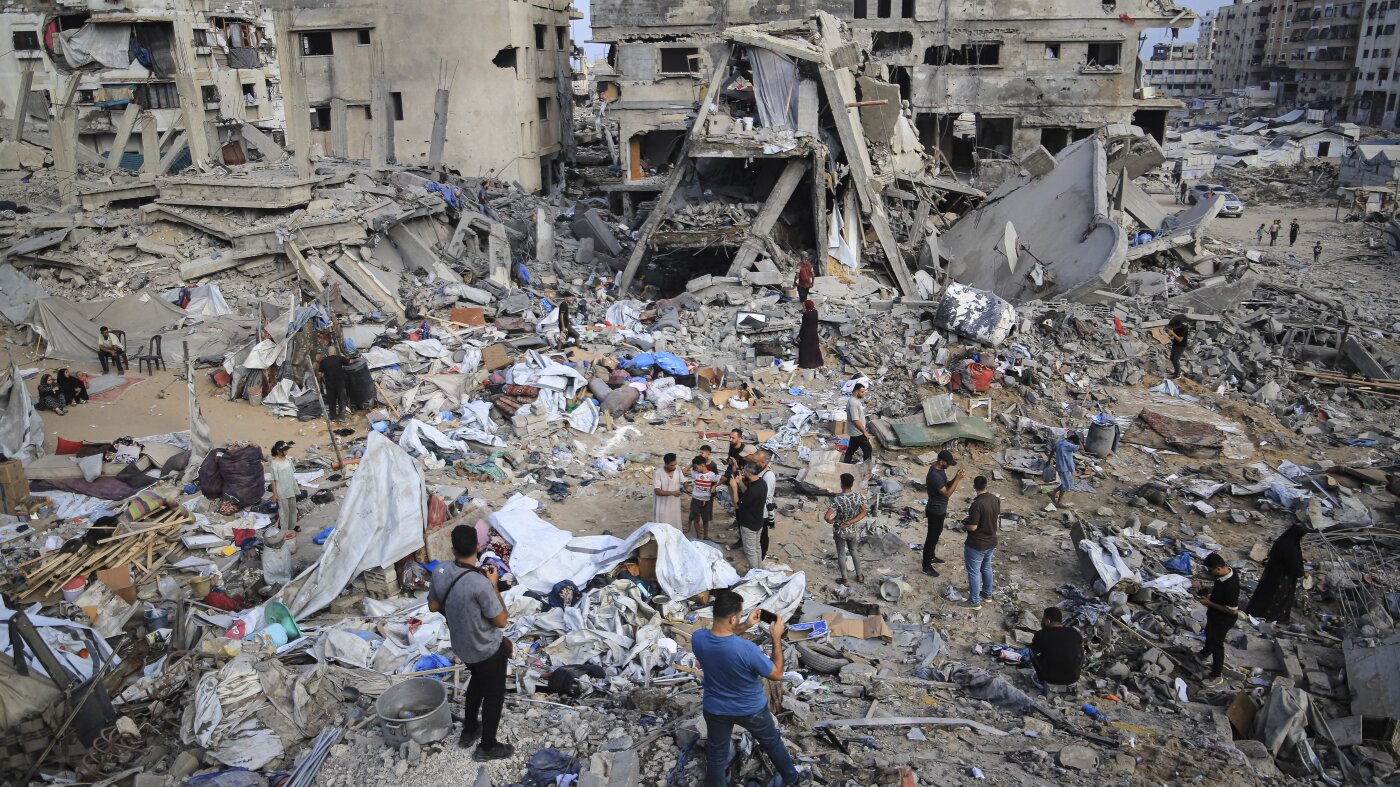
In the months since the ceasefire took hold, implementation has proceeded unevenly. An NPR analysis published in mid-July found Israeli forces still controlled roughly seventy percent of Gaza's territory, up from about fifty percent when the ceasefire began, with displacement continuing in hard-hit areas such as al-Shujaiya. Hamas announced in early July that it would dissolve its formal governing body in Gaza as a gesture meant to pressure Israel toward further withdrawal, but the central and most contentious issue, the disarmament of Hamas's fighters, remained unresolved. Israel has consistently said it will not withdraw further until Hamas and other armed factions give up their weapons; Hamas has said it will not disarm until Israel commits to a full withdrawal timeline. That sequencing dispute is precisely what Thursday's announcement claims to have resolved, at least on paper.
Key Developments
Trump announced Thursday evening, July 30, that Hamas and the Board of Peace had agreed to what he called a 'HISTORIC agreement for the COMPLETE DISARMAMENT of Hamas and all other armed groups in Gaza,' describing it in a social media post as a 'monumental step toward lasting PEACE and SECURITY.' According to details reported by CBS News, Al Jazeera, CNN and other outlets, the plan calls for Hamas and allied factions to dismantle their heavy and light weapons, tunnel networks, weapons depots and production facilities over an eight-month, multi-phase process. Under the sequencing described, factions would first hand over weapons held by their police-type units to a newly formed National Committee overseeing Gaza, with the decommissioning of heavier armaments to follow in later phases.
As disarmament milestones are met, Israeli forces are meant to withdraw in parallel stages, while the International Stabilization Force, commanded by U.S. Major General Jasper Jeffers, works alongside a newly constituted Palestinian police force to assume responsibility for security. That force has already begun a limited, pilot-scale deployment: Israel's security cabinet voted on July 26 to allow an initial contingent of roughly two hundred stabilization troops, led by Uganda and Morocco, to enter a humanitarian pilot zone in Rafah, a preliminary step that predates Thursday's disarmament announcement but is widely seen as connected to the same broader effort.
The agreement, as described by Trump and reported across multiple outlets, sets a fourteen-day deadline for negotiators to produce a precise, detailed disarmament roadmap, with the possibility of extensions subject to sign-off from an international verification body and the consent of all parties involved. Officials briefed on the process describe a complicated series of reciprocal, independently verified steps expected to unfold over roughly seven to eight months in total. Al Jazeera reported it had obtained a copy of a document already agreed to by Hamas and other Palestinian factions, even though, as of Thursday evening, Hamas had not issued a public confirmation through its own official channels, according to CNN's reporting.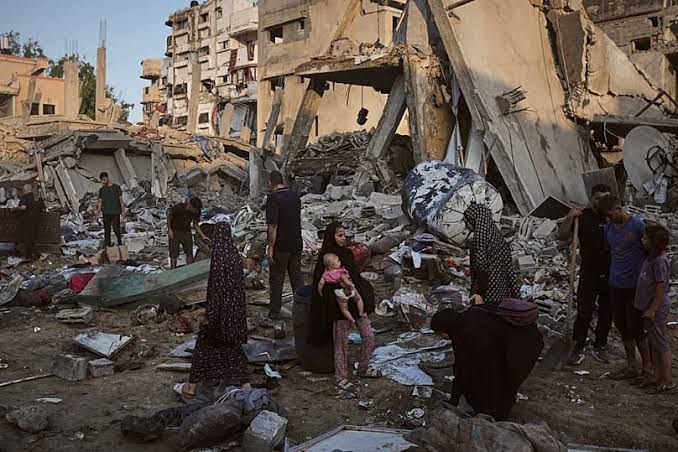
Reactions
The reaction from Israel's government has been immediate and pointed. Prime Minister Benjamin Netanyahu's office disputed that the Board of Peace's fifteen-point disarmament proposal meets Israel's own demands for what it calls the complete demilitarization of Gaza, according to reporting cited by Newsmax and other outlets. Israeli officials reiterated that the country will not withdraw its forces until Hamas and other Iran-aligned armed factions are fully disarmed, and multiple reports describe Israeli officials and Western diplomats as deeply skeptical that Hamas will actually follow through on decommissioning its arsenal even if it has verbally accepted the terms. That skepticism is rooted in Hamas's history of retaining covert weapons caches through prior ceasefires and in the group's continued framing of its arms as a resistance asset rather than a bargaining chip to be surrendered outright.
Hamas's own public posture has been cautious and conditional. Hamas official Ghazi Hamad told Al Jazeera that the negotiations leading to the agreement were 'difficult and hard,' and stressed that Hamas would not implement any part of the deal if Israel failed to meet its own obligations, particularly around the pace and scope of its withdrawal. That comment underscores that even with an announced agreement in hand, the fundamental trust deficit between the two sides, over who moves first and how compliance will be verified, remains largely intact. Analysts note that this is effectively the same standoff that has stalled implementation for months, now wrapped in a more detailed, internationally endorsed framework rather than resolved outright.
Reaction beyond Israel and Hamas has been comparatively muted, in part because Thursday's announcement landed amid a crowded news cycle dominated by the widening U.S.-Iran conflict, which has drawn in Kuwait, Jordan, Egypt and Saudi Arabia in recent days. Regional mediators including Qatar and Egypt, who helped broker the original October ceasefire, have not yet issued detailed public assessments of the new disarmament terms. Palestinian civil society voices and some regional commentators have renewed criticism that a body with no Palestinian representation is dictating the terms of Gaza's security architecture, a critique that has accompanied the Board of Peace since its formation in January.
What's Next
The immediate test will be whether the fourteen-day window to finalize a detailed roadmap holds, and whether Hamas issues the kind of unambiguous public confirmation that has so far been absent. Diplomats involved in the process have cautioned that even a signed roadmap is only the beginning; the real measure of success will be whether the first phase, transferring police-held weapons to the National Committee, actually occurs on schedule and is independently verified, given that verification mechanisms for a group as decentralized and secretive as Hamas's military wing have never been fully tested at this scale.
A second and closely related question is what happens to Israel's roughly seventy percent territorial control of Gaza as the process unfolds. Any withdrawal will need to be sequenced against tangible disarmament milestones, and previous rounds of the ceasefire have shown both sides willing to slow-walk their commitments when they judge the other side to be doing the same. The International Stabilization Force's expansion beyond its initial two-hundred-troop Rafah pilot will be an early, visible indicator of momentum, or its absence.
More broadly, the deal's fate will likely be shaped by developments far from Gaza. The Trump administration is simultaneously managing an escalating war with Iran that has now touched Kuwait, Jordan, Egypt and Saudi Arabia, and the bandwidth of senior U.S. officials such as Rubio, Witkoff and Kushner, all of whom sit on the Board of Peace while also being central to Iran diplomacy, will be tested. If the Gaza framework holds and disarmament visibly begins, it would mark a genuine turning point after nine months of stalled implementation; if it collapses like previous incremental steps, it will reinforce a now-familiar pattern in which announced breakthroughs in Gaza give way to renewed deadlock within weeks.



