Written By |
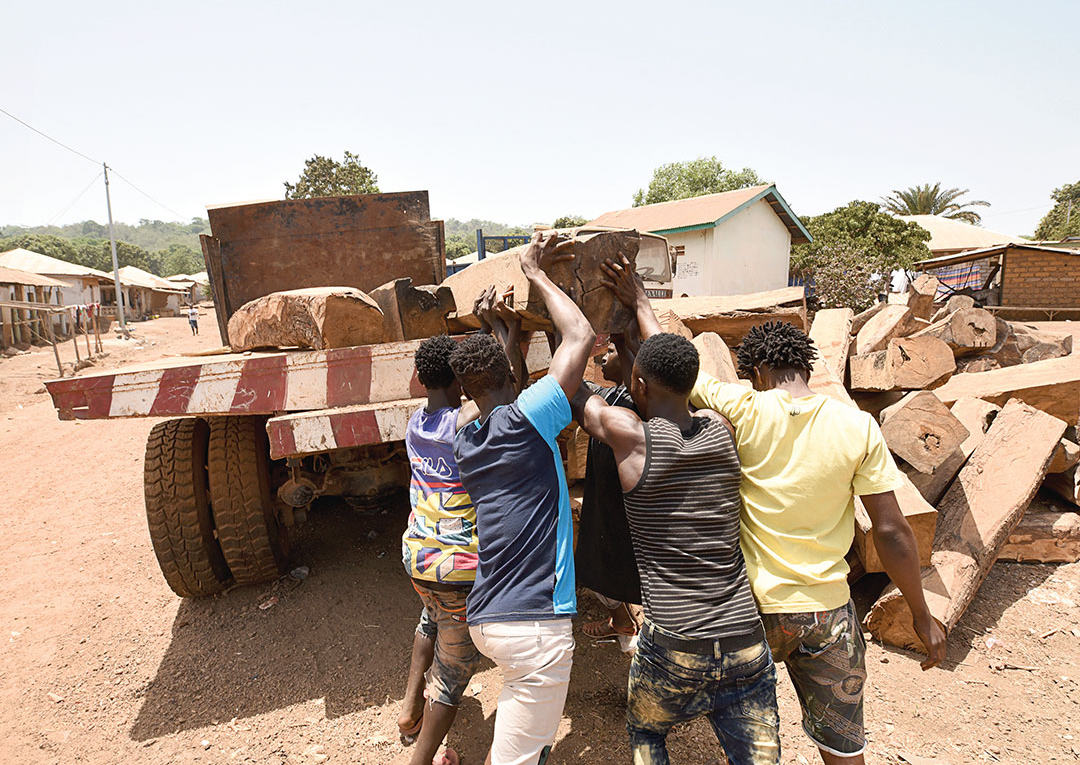
Men load freshly cut rosewood logs onto a truck in Sierra Leone. Rosewood and other hardwoods are illegally harvested throughout Africa for use in custom furniture in China
FEATURE - Recent seizures of illegal drugs in the Sahel region reveal a troubling trend: conflict-ridden African nations are becoming increasingly crucial to international drug trafficking networks.
In 2022, authorities seized over 1,466 kilograms of cocaine across Burkina Faso, Chad, Mali, and Niger—an astonishing increase from the average of just 13 kilograms annually between 2013 and 2020, according to an April 2024 United Nations report. The report noted that, by mid-2023, Mauritanian authorities had intercepted an additional 2.3 tons of cocaine. The region's strategic location makes it a natural stopover for cocaine produced in South America, destined for European markets where demand has surged.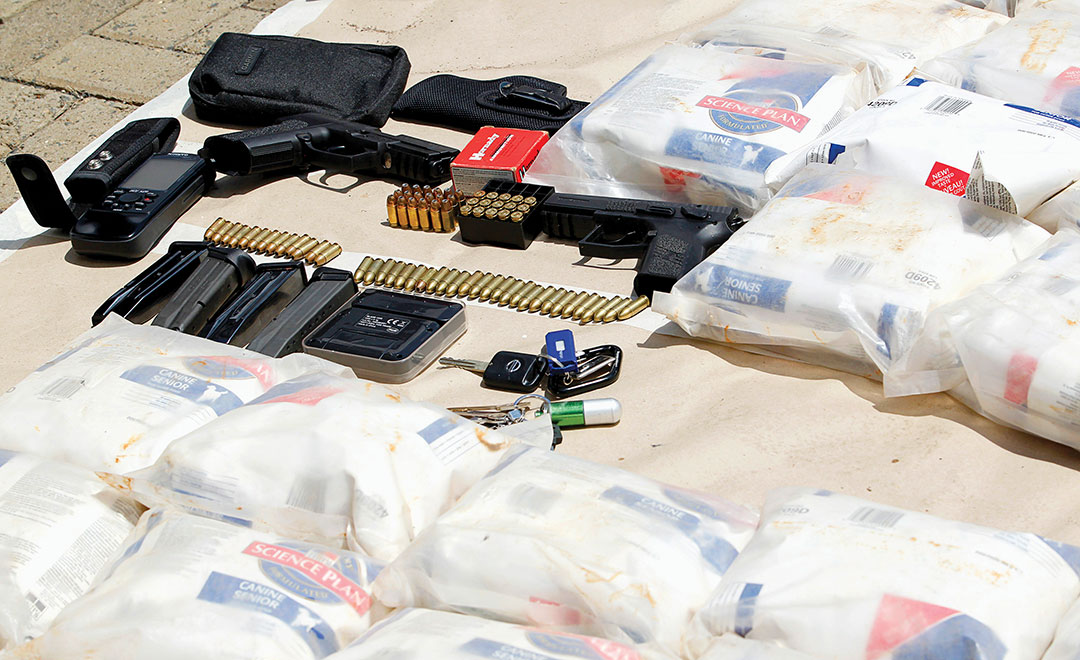
Kenyan officials display packets of heroin, two pistols and ammunition seized from drug traffickers in the port city of Mombasa. Police said they seized 196 kilograms of heroin valued at about $5 million and arrested six people
The U.N. report highlights how the drug trade funds armed groups across the Sahel, where extremists thrive amid frequent coups and political instability. These criminal enterprises often involve a complex mix of actors, from armed groups to political elites and community leaders, creating networks that use profits to secure weapons and fuel regional conflicts.
The cocaine trade is just one part of a broader wave of transnational organized crime (TOC) that has spread across Africa, including kidnappings for ransom, weapons sales, money laundering, cybercrime, illegal logging, and human trafficking. In particular, the illegal wildlife trade—such as trafficking pangolins to Asia—has become a lucrative industry.
Africa’s vulnerability to TOC stems from political, socioeconomic, and technological challenges. Weakened governance, porous borders, poverty, and under-resourced law enforcement have enabled criminal syndicates to establish extensive cross-border operations, according to the Africa Center for Strategic Studies. The center emphasizes that African governments are struggling to mount effective responses due to corruption, sovereignty challenges, and limited resources.
Africa’s Oceans: A Hub for Illicit Trade
Organized crime extends beyond land borders, with Africa’s oceans becoming hotbeds of illegal activity. In a 2023 study, researcher Carina Bruwer of the Institute for Security Studies (ISS) called Africa’s waters “the world’s biggest transnational crime scene.” Criminal networks exploit shipping lanes, traffic narcotics, and plunder marine resources, with Africa’s location making it a central site for illicit maritime trade.
“Criminal networks plunder marine resources, hijack vessels, and navigate African waters to transport commodities to distant destinations,” Bruwer noted. The east and west coasts of Africa, in particular, serve as key narcotic transit hubs, piracy hotspots, and smuggling routes for illegal goods.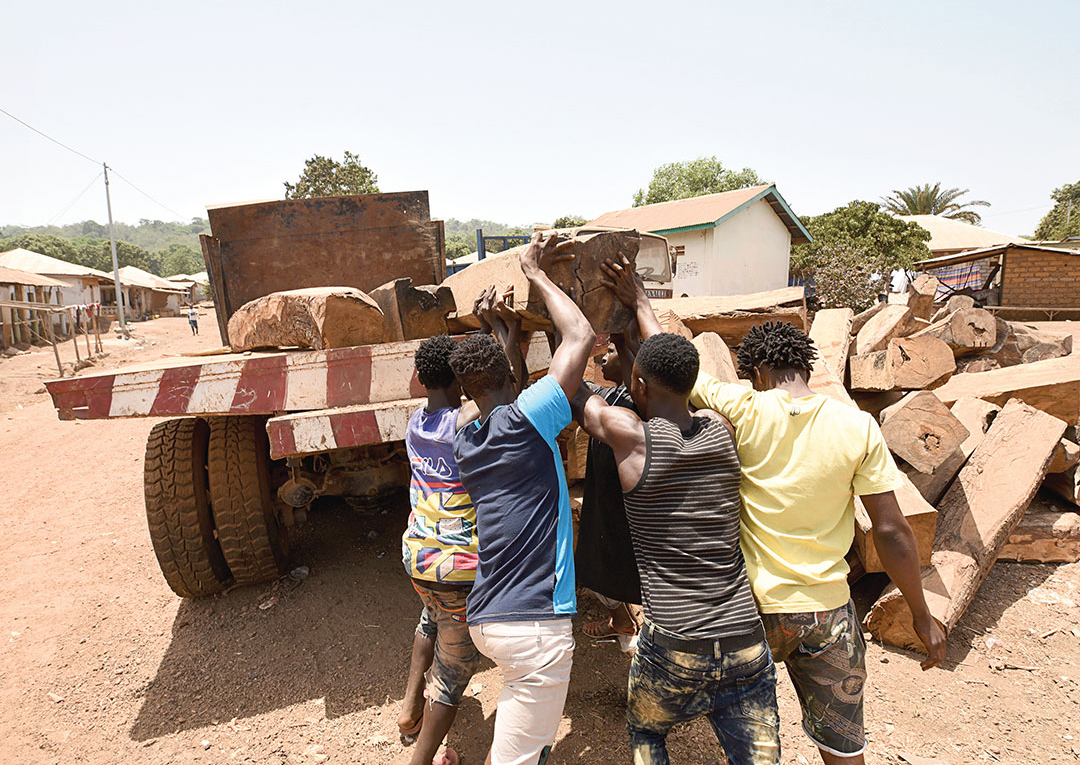
Men load freshly cut rosewood logs onto a truck in Sierra Leone. Rosewood and other hardwoods are illegally harvested throughout Africa for use in custom furniture in China
Kidnappings and cybercrime
Kidnapping for ransom is also on the rise, with victims including tourists, business leaders, and clergy members. A recent report by Nigeria’s SBM Intelligence revealed that from July 2022 to June 2023, nearly 3,620 people were abducted in 582 incidents across Nigeria alone, with ransom demands totaling nearly $4 million.
Cybercrime is a growing area of concern, as well. In 2023, Interpol, in collaboration with Afripol, arrested 14 suspects linked to 20,674 suspicious cyber networks across 25 African nations, uncovering fraud schemes amounting to over $40 million in losses.
Natural resources fuel criminal networks
Africa’s vast natural resources have also drawn the attention of criminal networks. In Sudan, the rebranded Russian Wagner Group, now known as Africa Corps, reportedly dominates the unprocessed gold market. Illegal gold mining has become a lucrative means of funding for Russia's efforts in Ukraine, with approximately $2 billion smuggled out of Sudan each year, according to Atlas News.
Environmental crimes continue to devastate Africa’s forests. In Ghana, despite a long-standing ban on rosewood logging, illegal operations have decimated over 6 million trees since 2012, with the valuable hardwood primarily smuggled to China.
Link between crime and terrorists
Some transnational crimes in Africa are strictly commercial, but many also fund terrorist groups. A 2023 study by the ISS reveals a long-standing overlap between organized crime and terrorism, with criminal enterprises providing financial support for ideologically motivated organizations. The United Nations Office on Drugs and Crime (UNODC) reported in 2022 that extremist groups in the Sahel benefit directly from illegal mineral trafficking.
In a 2024 U.N. Security Council briefing, African Union’s Bankole Adeoye stressed that criminal networks also sustain terrorist operations by trafficking arms, ammunition, and resources like gold and ivory.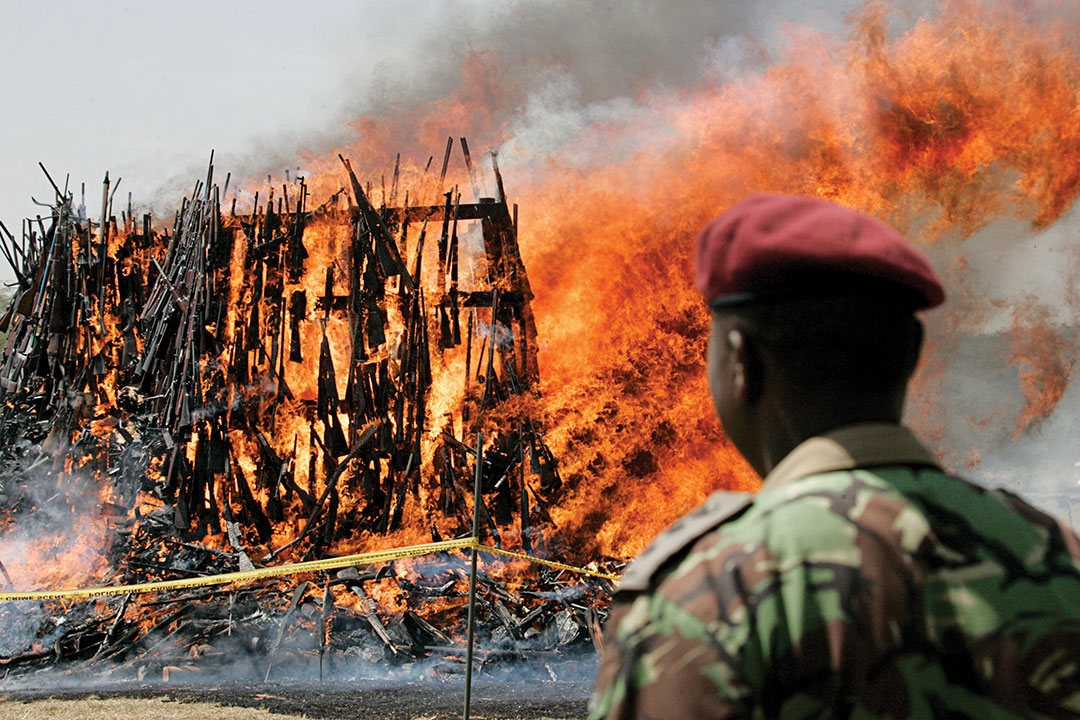
A Kenyan police officer watches as a pile of illicit small firearms and light weapons burn in Nairobi’s Uhuru Gardens
Addressing Transnational Crime: Recommendations
Experts agree that tackling TOC requires a multi-faceted approach. The Wilson Center, a U.S.-based research organization, advises African nations to improve cross-border collaboration, strengthen law enforcement, and foster partnerships with civil society groups and private sector leaders.
The ENACT Africa Organised Crime Index, published in 2023, provides a framework for policymakers by ranking African nations based on criminality and resilience levels. The report underscores the need for African nations to build long-term resilience and adopt preventive measures, including victim support, public awareness campaigns, and partnerships with civil society to counteract the pervasiveness of TOC.
“The challenge of criminality is increasing, but it can be mitigated through a concerted effort,” the report states. “African nations must diversify, intensify, and strengthen their collective responses and resilience-building strategies to effectively counteract organized crime across the continent.”
Source: African Defense Forum (ADF) Magazine



