Written By | Joshua Nahamya
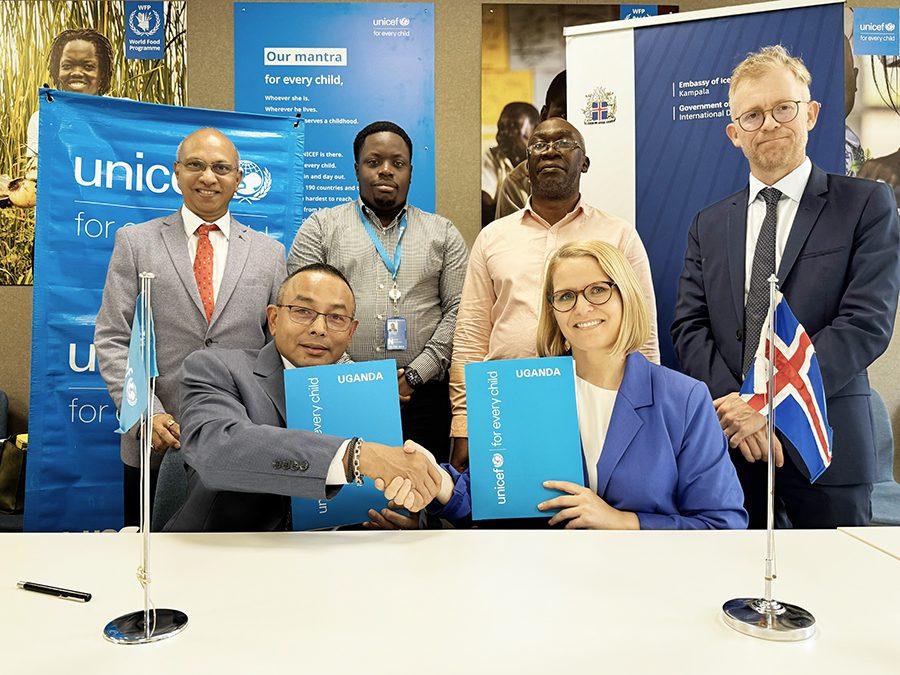
Exchanging the agreement with UNICEF to cement the relationship support to WASH in Uganda
KAMPALA
The Government of Iceland has announced an additional US$5.5 million contribution to UNICEF, aimed at scaling up critical services for vulnerable children, adolescent mothers, and families across Uganda.
The funding, formalized through a multi-year partnership, targets two primary areas: social protection for young mothers and the sustainability of Water, Sanitation, and Hygiene (WASH) systems in refugee-hosting districts.
A significant portion of the grant—US$4 million—is earmarked for Phase II of the “Empowering Adolescent Mothers and Their Children – A Dual Generation Approach” programme. Running from January 2026 through late 2029, the initiative supports mothers aged 12–19 and their young children in Kikuube and Kyegegwa districts. The program addresses the cycle of poverty by helping mothers return to school or gain vocational skills while ensuring their children receive early childhood development (ECD) care.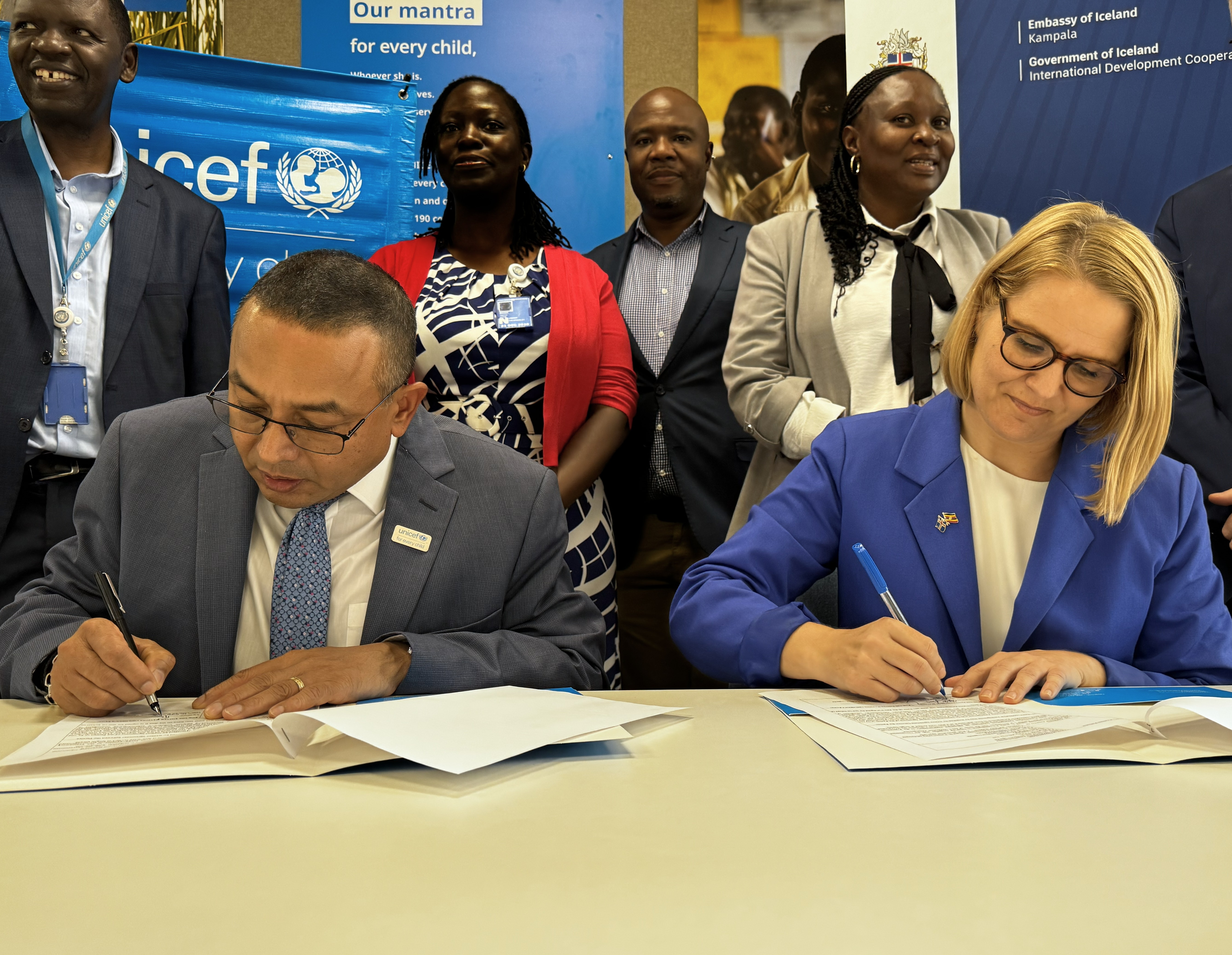
Iceland officials signing an agrremnet to support WASH in children under UNICEF
Hildigunnur Engilbertsdottir, the Head of Mission for the Embassy of Iceland in Uganda, expressed confidence in the long-standing partnership during the signing ceremony.
“UNICEF remains one of Iceland’s priority partners in international development cooperation, and UNICEF Uganda has been among our most trusted partners for many years,” Engilbertsdottir stated. “I am very pleased that we can build on the success of our social protection programme in Kikuube and Kyegegwa districts, which we launched just one year ago. With Iceland’s continued support, I am hopeful that thousands of adolescent mothers and their children will be supported to build better lives for themselves.”
In addition to social protection, a US$1.5 million agreement was signed for a "WASH in Institutions" exit programme. This initiative is designed to transition direct aid into sustainable, government-led services in schools and health facilities across five West Nile districts: Adjumani, Arua, Madi-Okollo, Terego, and Yumbe. The transition is expected to benefit nearly 140,000 community members.
Dr. Robin Nandy, the UNICEF Representative to Uganda, highlighted the catalytic nature of this investment in strengthening national systems.
“Iceland is a valued strategic partner in advancing Government-led programmes for children and adolescents in Uganda,” Dr. Nandy said. “This new support will empower adolescent mothers to access quality education and skills pathways, while the WASH transition programme consolidates gains in schools and health facilities through sustainable, nationally owned systems. Together, these investments strengthen social protection, early learning and essential services.” 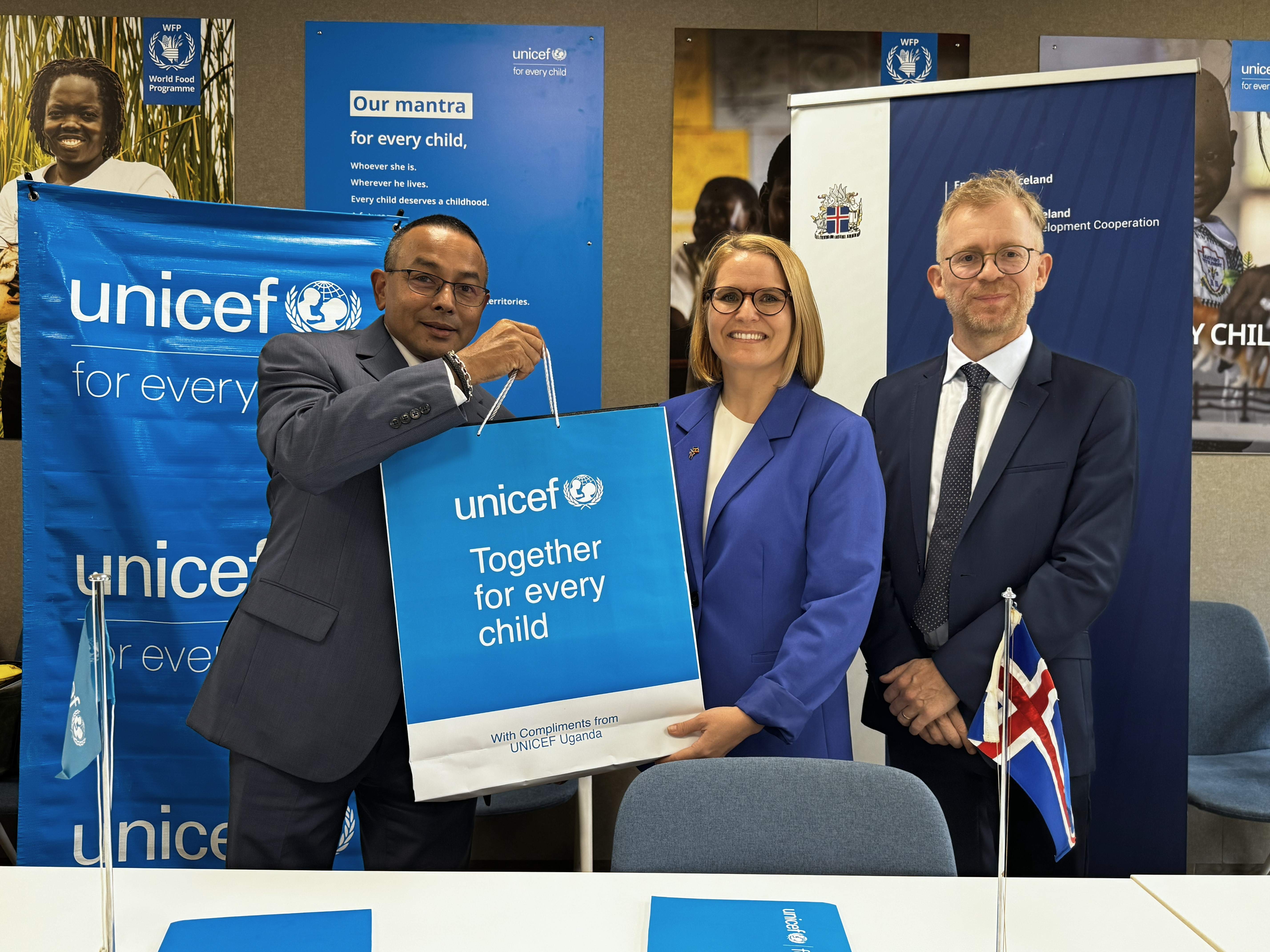
Rewarding Officials from Iceland during the function in Kampala
The “Dual Generation” model is particularly vital as it aligns with Uganda’s National Development Plan IV (NDP IV), providing evidence for policy reforms regarding teenage pregnancy and community-based service delivery. Phase I of the programme has already demonstrated success, reaching 871 mothers with mentorship and cash transfers.
Engilbertsdottir concluded by noting the importance of the transition in the West Nile region: “As our successful WASH programme in West Nile approaches its conclusion, I am pleased by how ambitious the planned exit phase is, particularly for the benefit of women and children in the region.”
By embedding infrastructure maintenance and governance within local district structures, the new funding ensures that the impact of these interventions remains durable long after the international programmes conclude.
UNICEF will continue to work closely with the Government of Uganda, sector ministries, district local governments and community-based partners to promote sustainability, local ownership and alignment with national priorities including advocating for scaling up of existing investments.
The United Nations Children’s Fund (UNICEF) works in the world’s toughest places to reach the most disadvantaged children and adolescents, striving to save their lives, defend their rights, and help them fulfil their potential. The organisation works in more than 190 countries and territories.
Torch Media Africa



