After a weekend of failed talks over a 10 billion euro savings target, the Flemish nationalist prime minister has gone to the palace, leaving King Philippe to decide whether Belgium gets a rescue, a rebuilt majority or new elections.
World Politics
Overview
Belgian Prime Minister Bart De Wever travelled to the Royal Palace in Brussels on Monday morning, November 2, to offer his government's resignation to King Philippe. The move followed a weekend of unsuccessful one-on-one meetings with ministers and overnight talks in which his five-party coalition once again failed to agree on a 2027 federal budget. Belgian media reported the development first, and Reuters and the Flemish broadcaster VRT confirmed it. The prime minister's office had not issued detailed comment when the first reports appeared.
Whether the resignation brings the government down is not yet clear. Under Belgian constitutional practice the king can accept it, which would turn the cabinet into a caretaker administration, or he can hold it in consideration while consulting party leaders on whether the coalition can be saved or reshaped. Reports say the king is not expected to accept immediately, and that governments have often kept working after such a royal visit. Even so, the episode lays bare the fragility of one of Europe's most complicated coalitions at a moment when bond markets are punishing countries with weak public finances.
Background: A Coalition Built Slowly, Tested Constantly
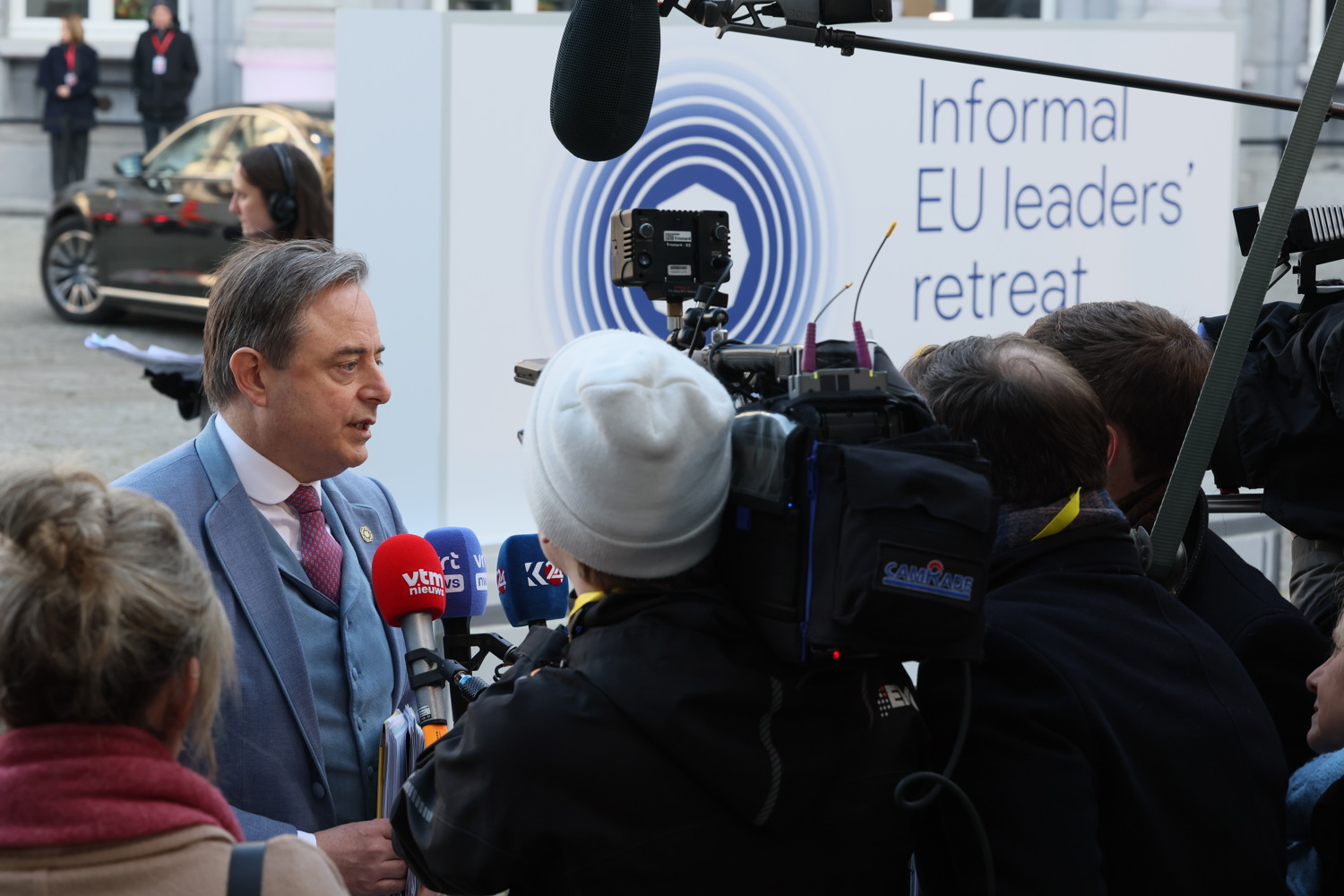
De Wever, leader of the Flemish nationalist N-VA, heads the so-called Arizona coalition, which also includes the Francophone liberals of the MR, the Francophone centrists Les Engagés, the Flemish socialists of Vooruit and the Flemish Christian Democrats of CD&V. The government took office only after a 234-day negotiation, a reminder of how hard it is to assemble a majority in a country divided by language, region and ideology. The coalition spans the political spectrum, from a conservative nationalist prime minister to a socialist party, and that range has made every budget a trial.
The financial backdrop is stark. Belgium's deficit is reported at about 5.2 percent of GDP by one outlet and 5 percent for 2025 by another, the highest in the eurozone either way, and public debt is expected to exceed 110 percent of GDP, with one report citing more than 735 billion euros. Only France, Italy and Greece carry higher relative debt in the currency union. Under EU fiscal rules Belgium is expected to bring its deficit below 3 percent of GDP and its debt towards 60 percent, targets that are far out of reach in the short term, and the government has committed to reducing the deficit by 2029 to avoid what De Wever calls an interest snowball, in which the state must borrow simply to pay interest on existing debt.
The current impasse also echoes last year. In autumn 2025, De Wever sought roughly 10 billion euros in savings, visited the king without resigning, and obtained a 50-day extension to negotiate. A deal worth 9.2 billion euros was eventually reached on November 24, 2025. Observers see the current crisis as a replay with higher stakes, because the room for compromise has narrowed after a year of austerity and mounting fatigue among partners.
Key Developments: The Fault Line Over Who Pays
The central dispute is a classic left-right split over who should shoulder the burden. N-VA and the MR want savings to come primarily from direct spending cuts, including tighter control of healthcare costs and administrative expenses, and they oppose higher taxation. Vooruit, CD&V and Les Engagés want the people with the strongest shoulders to contribute more, and one report says those parties want between 1 billion and 1.5 billion euros of the savings to come from higher taxes on high earners and wealth. VRT analyst Bart Verhulst described the clash as left versus right at its most traditional.
The finger-pointing began quickly. Deputy Prime Minister David Clarinval of the MR blamed Vooruit's refusal to compromise on its demand for higher tax rates. Foreign Minister Maxime Prévot of Les Engagés said there were too many unresolved issues to make progress, adding that listing every sticking point would take an eternity. Matti Vandemaele of the opposition Groen party argued that De Wever's premiership was producing a legislative standstill and warned that Belgium could again face provisional monthly budgets.
That prospect is exactly what De Wever wants to avoid. Under a system of provisional twelfths, the government may spend each month only one twelfth of the previous year's budget, mirroring this year's income and spending and preventing new policy. De Wever has rejected that route. Reports note that a Tuesday deadline to avoid provisional budgets might still be met if the king sends the prime minister back to the table. The numbers and details differ slightly between outlets, so figures here are given as reported, and the precise amount of the proposed tax component remains unconfirmed by official sources.
Market and Political Reaction
Financial markets reacted on Monday. Yields on Belgian government bonds rose, increasing the state's borrowing costs, in a move consistent with a broader pattern in which interest rates on debt from Belgium, France and other European countries with weak public finances have risen sharply. For a country with a debt load above 110 percent of GDP, even modest increases in yields compound quickly, which is the very dynamic De Wever has warned about. The timing is awkward for Europe more broadly: France is itself wrestling with a budget crisis and street protests, and Germany faces youth demonstrations over austerity and conscription, as covered earlier in this series.
Politically, the opposition has seized on the turmoil. Greens and others accuse the prime minister of presiding over paralysis, while the parties inside the coalition are trying to avoid being seen as the ones who broke the government. Public attention has focused on who will blink first: Vooruit, which risks being blamed by its allies for refusing to compromise, or N-VA and the MR, which risk accusations of protecting the wealthy while cutting services.
What Happens Next
The constitutional options are well defined even if the political outcome is not. If the king accepts the resignation, the cabinet remains in place in a caretaker capacity. The king could then ask party leaders to explore a new majority within the existing parliament, which is possible in principle without elections, or the country could head to early elections. If instead he holds the resignation in consideration, as he did a year ago when giving De Wever extra time, a new round of negotiations would follow, possibly with a revised savings target, a different mix of cuts and taxes, or a mediator.
The most likely path, according to reports, is a pause rather than a collapse, because the partners have little appetite for new elections that could boost either the far right in Flanders or fragment the Francophone centre. Yet the coalition's central contradiction remains. Without agreement on revenue, the government cannot meet its 10 billion euro goal; with the fiscal deadlines in Brussels and Belgian bond yields rising, it cannot afford a prolonged stalemate.
For Europe, the stakes extend beyond Belgium's borders. The country hosts the European Union's institutions, and its fiscal position will be scrutinised by the European Commission and by markets already nervous about French and Italian debt. A prolonged crisis would add to concerns about political fragility in the eurozone's core. For now, all eyes are on the palace and on whether the next 24 to 48 hours bring a patched-up compromise or the start of a more serious constitutional episode.
Published By | News Editor