Written By |
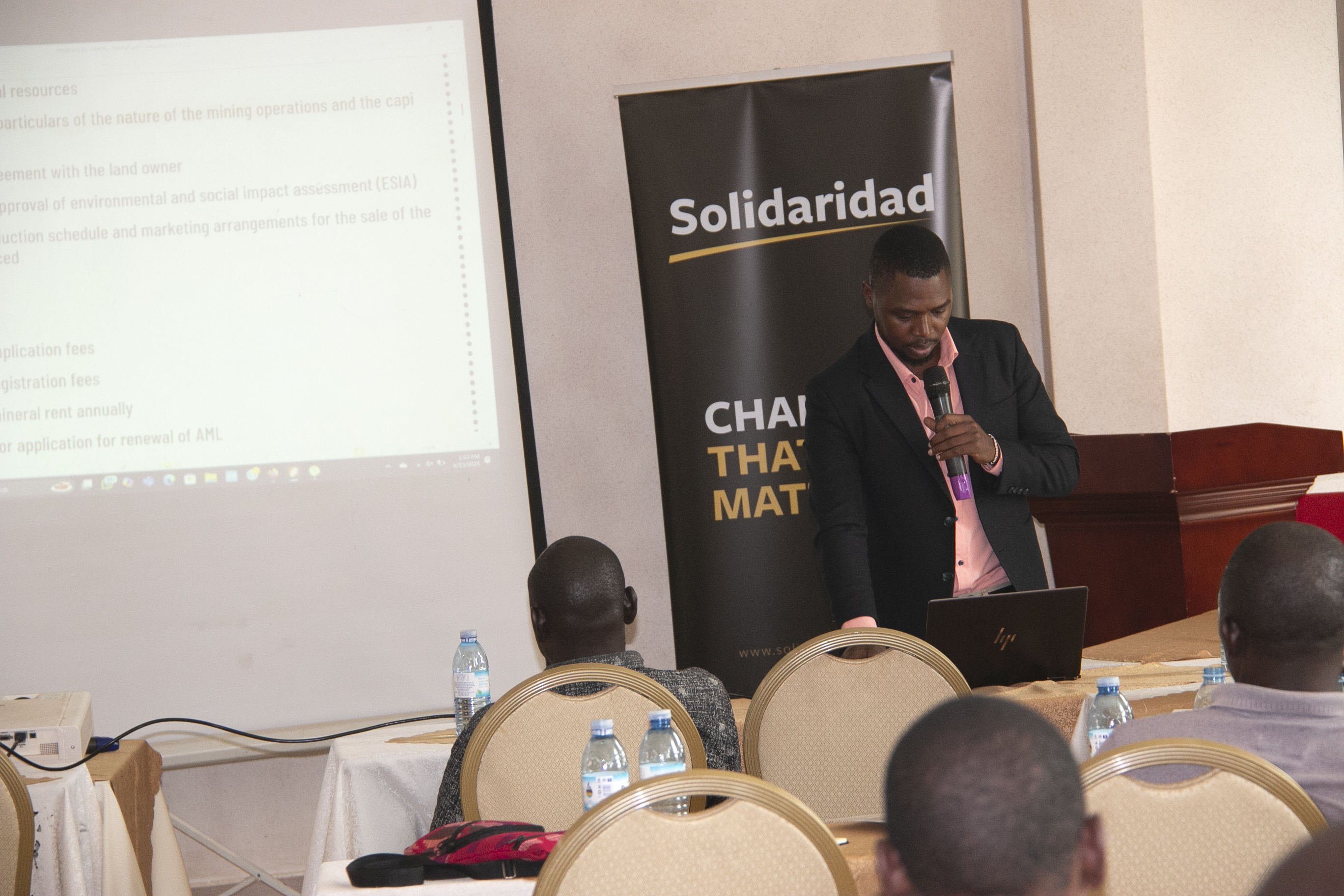
Philip Akankwasa, a geologist at the Ministry of Energy and Mineral Development
By Edison Kinene
MBARARA - Artisanal and small-scale miners under the umbrella of the Uganda Association of Artisans and Small-Scale Miners (UGAASM) have received training on how to apply for mining licenses and meet their tax obligations. The two-day training, conducted in Mbarara City, attracted miners from across the country. It was organized by Solidaridad, a global civil society organization.
Following the amendment of the Mining and Minerals Act, 2022, the government introduced new mining licensing regulations. The new procedures and requirements for acquiring mining licenses now demand miners to apply for licenses under different categories, each with varying payment requirements.
The categories of mineral rights include prospecting licenses, retention licenses, large-scale mining licenses, medium-scale mining licenses, small-scale mining licenses, artisanal mining licenses, and licenses for the extraction of geothermal resources for direct use.
While presenting at the event, Philip Akankwasa, a geologist at the Ministry of Energy and Mineral Development, explained that the most critical requirements for obtaining licenses include statutory fees and completing documents demanded by the cadastre department.
“Among the documents required are a tax clearance certificate, proof of financial resources, and proof of technical capabilities,” Akankwasa stated.
Deusdedit Bainomugisha, Chairperson of the Miners Association in Buhweju, commended Solidaridad for the training, noting that miners are now well-equipped with the knowledge of the new mining regulations and the Mining and Minerals Act, 2022. He emphasized the need for collaboration with government agencies like the Uganda Revenue Authority (URA) to further develop the mining sector.
Josephine Aguttu, a miner from Tiira Small-Scale Mining Association in Busia, pointed out the challenges miners face, particularly in renewing their licenses. She highlighted the lack of awareness and sensitization as a key barrier. She also noted that the Environmental and Social Impact Assessment process poses a significant challenge due to the high costs involved in hiring experts.
Epolito Kenyatta, Chairperson of Ruhama Artisanal Miners, commended the training and called for similar sessions, especially focusing on taxation and regulations, to be brought closer to other mining communities.
Emmanuel Kibirige, the national coordinator of UGAASM, stressed the importance of such training sessions in bridging the communication gap between citizens and the government. He added that these trainings not only change mindsets but also educate miners on how to benefit from the mineral sector. Lawrence Muwonge, an economist at the URA, urged artisanal and small-scale miners to regularly file their tax returns to avoid hefty penalties.
He also advised miners' associations to acquire Tax Identification Numbers (TINs) to simplify tax payments and address the challenges posed by royalties.
Torch Media Africa



