Written By | Health News Agencies
Algeria enters the second half of 2026 with an economy still overwhelmingly built on hydrocarbons but under growing pressure to show it can grow without them
Economic & Social Transformation
Algeria enters the second half of 2026 with an economy still overwhelmingly built on hydrocarbons but under growing pressure to show it can grow without them. Real GDP expanded at a modest but steady clip last year — the African Development Bank puts 2025 growth at roughly 3.3%, rising to 4.1% in 2026 and 4.2% in 2027, while the World Bank's Macro Poverty Outlook shows non-hydrocarbon GDP growing considerably faster, at 5.4% year-on-year in the first half of 2025. That gap between headline growth and non-oil growth captures Algeria's economic policy challenge: a state trying, with mixed success, to convert gas revenue windfalls into durable non-oil capacity, while a wide fiscal deficit and a still-thin non-hydrocarbon export base show how far the country remains from breaking its dependence on crude and gas.
The Diversification Ledger
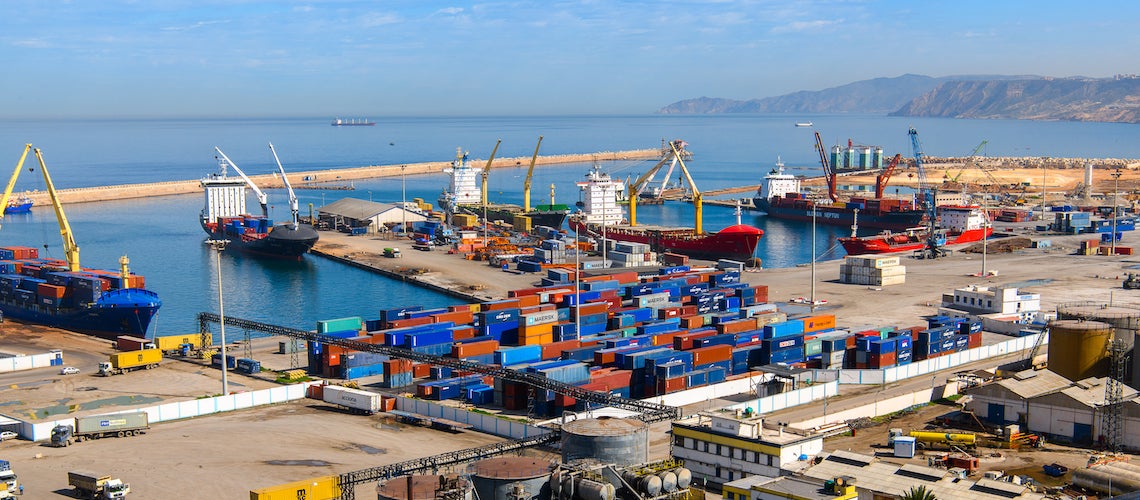
Non-hydrocarbon exports have tripled since 2017, reaching $5.1 billion in 2023 — fertilizers, steel products, and cement leading the list — according to World Bank reporting. That is real progress by Algerian standards, given that oil and gas historically accounted for more than 90% of export revenue. Yet $5.1 billion amounts to roughly 2% of GDP, illustrating how far the trend still has to travel before it changes the shape of the economy. Hydrocarbons still account for around 40% of GDP and 92-93% of exports, per the IMF's latest Article IV consultation.
Some of the improvement traces to unglamorous institutional plumbing. The Algerian Port Community System, launched in July 2021 with World Bank technical assistance, links customs authorities, shipping lines and exporters electronically and has cut cargo clearance times. The National Accreditation Agency, ALGERAC, has nearly doubled its roster of accredited testing laboratories, from 77 in 2021 to 135 by July 2024 — a 75% increase that matters because export-quality certification is often the binding constraint on getting non-oil goods into demanding markets.
Gas Diplomacy in a Fractured Market
None of this diversification talk changes the fact that gas remains Algeria's most important economic and geopolitical asset. State energy producer Sonatrach delivered an estimated 39-40 billion cubic meters of gas to the European Union in 2025 — roughly 13-14% of the bloc's total gas imports — via the TransMed pipeline to Italy, the Medgaz pipeline to Spain, and LNG cargoes. Annual production capacity sits near 100 billion cubic meters, with roughly half exported and domestic consumption growing 3-4% a year, a trend that will eventually squeeze exportable volumes unless capacity expands.
Algeria's energy ministry has floated $60 billion in planned energy-sector investment for 2025-2029, and Sonatrach itself has earmarked $40 billion for a 2023-2027 investment program, with Sinopec, Eni, Chevron and ExxonMobil named as partners. Algeria also issued its first sovereign sukuk and recently exited the Financial Action Task Force's “grey list” for anti-money-laundering monitoring — both moves aimed at widening the country's access to international capital markets beyond oil-linked revenue.
The 2022 Investment Law
If gas revenue is the fuel, the 2022 investment law is meant to be the engine for redirecting it. The law created the Algerian Investment Promotion Agency (AAPI), which offers tax exemptions, customs waivers and a streamlined online registration platform. Between November 2022 and March 2025, Algeria registered 12,843 investment projects worth roughly $44.5 billion, of which 235 large industrial projects worth $8.9 billion carry the potential, according to AAPI figures, to create more than 316,000 jobs.
At a single trade exhibition in Algiers in early September 2025, the country signed $11.4 billion in total contracts, including $5 billion in foreign direct investment, with AAPI having by then signed cooperation agreements with 31 countries. UNCTAD data show the payoff starting to register at the macro level: FDI inflows reached $1.43 billion in 2024, an 18% increase over 2023, which UNCTAD attributes partly to the legal clarity the 2022 reforms introduced.
Fiscal Reckoning
The fiscal picture complicates the diversification narrative. Algeria's July 2026 IMF Article IV mission urged “sizable” fiscal consolidation, warning that buffers are eroding, and put the 2025 fiscal deficit at 10.5% of GDP with public debt at 52.1% of GDP. The African Development Bank's own figures run higher — a deficit near 14% of GDP for both 2025 and 2027 — a discrepancy that likely reflects different accounting treatments of hydrocarbon transfers rather than a genuine disagreement about direction.
Algeria's 2026 budget, adopted in January, projects revenues of roughly $61.6 billion against expenditures of $135.6 billion, implying a headline deficit in the range of $74 billion on a gross basis, though other reporting on the same budget cites a narrower net deficit figure of about $40 billion, or 12.4% of GDP, after financing — a gap best read as a difference in accounting basis rather than a contradiction. Subsidies remain the hardest fiscal habit to break: the finance ministry has budgeted tens of billions of dinars for cereals, milk, energy and desalinated-water subsidies in 2026, even as the IMF presses Algiers to broaden the tax base and reduce exemptions. The wage bill alone consumes more than 35% of total budgetary expenditure, and the government still plans 98,000 new public-sector hires in 2026, 45,000 of them in education.
The one genuine fiscal cushion is Algeria's Fonds de Régulation des Recettes, a hydrocarbon-revenue stabilization fund created in 2000 that was fully depleted by 2017 during the oil price crash of 2014-2016. Reactivated after 2022 oil revenues topped $50 billion, the fund held an estimated 2,300 billion dinars by end-2022, earmarked to help finance that year's deficit — a reminder that Algeria's fiscal room to maneuver still rises and falls with the price of crude, whatever the diversification rhetoric says.
AfCFTA: Ahead of the Curve, Narrowly
Algeria ratified the African Continental Free Trade Area agreement in April 2021, and under the AfCFTA's Guided Trade Initiative it now trades preferentially with seven implementing countries — Cameroon, Egypt, Ghana, Kenya, Rwanda, South Africa and Tunisia — putting it among a relatively small group of roughly 25 countries with active tariff schedules under the initiative continent-wide. Algeria is simultaneously a member of the Greater Arab Free Trade Area, giving it preferential access to Egypt, Tunisia, Libya, Morocco and Sudan on top of AfCFTA's broader African market access. Algiers hosted the Intra-African Trade Fair in July 2025, signaling an ambition to position itself as a North African hub for continental trade rather than simply a Mediterranean gas exporter.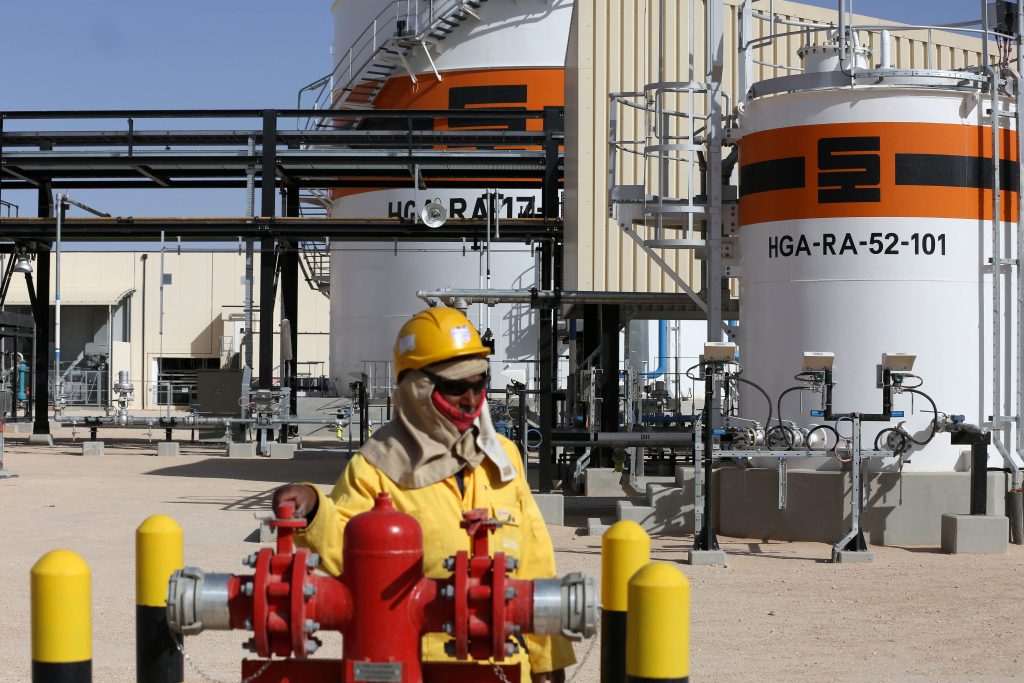
The Social Ledger
Employment data show gradual improvement: the unemployment rate fell to 9.7% by the end of 2024, down from 11.4% in 2019, with roughly 450,000 jobs created in 2024 alone, per World Bank figures. The employment rate — the share of the working-age population actually employed — stood at just 36.1% in 2024, underscoring how much labor-force participation, not only unemployment, constrains the economy.
Poverty data are less current: the World Bank's most recent estimate puts 41.8% of Algerians below the $8.30-a-day (2021 PPP) line, but that figure rests on underlying survey data from 2011 and should be read as an aging estimate rather than a live snapshot. Youth unemployment figures are similarly stale in the public record, with the last widely cited hard number — 26.9% for the 15-24 cohort — dating to 2019; youth joblessness has historically run two to three times the national rate. Algeria's Human Development Index score reached 0.763 in 2025, per the AfDB, placing it solidly in the “high human development” tier even as per-employment and per-capita income gains lag regional peers with more diversified economies.
Conclusion
Taken together, the numbers describe a state trying to buy time with gas revenue while it builds the institutional infrastructure — investment law, trade agency, port systems, accreditation labs — that could eventually let non-oil sectors carry more of the load. Whether that bet pays off before global gas demand or prices turn will likely be the central question of Algerian economic policy through the rest of this decade.



