Written By | Sports Desk
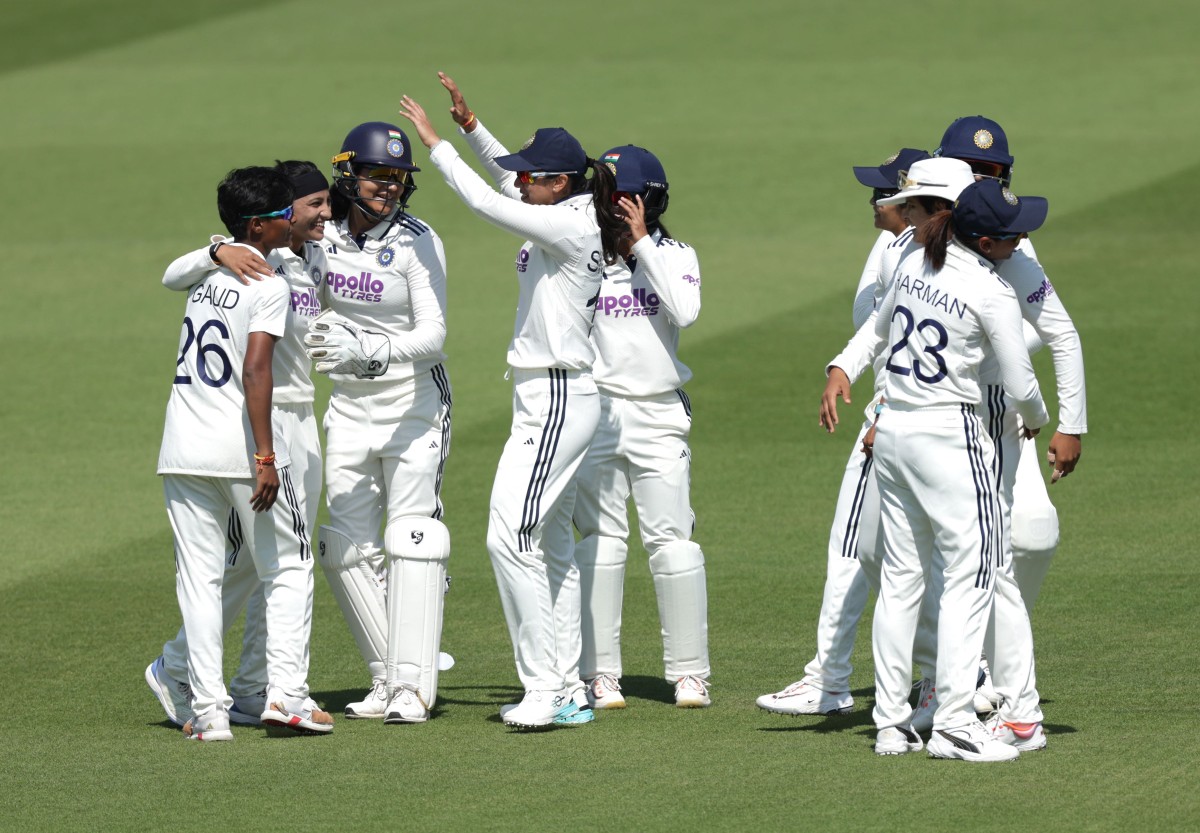
Kranti Gaud's five-wicket haul and Yastika Bhatia's century powered India to a historic victory in the first-ever women's Test staged at cricket's most storied ground
LONDON
For 142 years, the honours board at Lord's Cricket Ground has been a shrine almost exclusively to men. On July 13, 2026, that changed for good. India's women's cricket team demolished England by 270 runs in the first-ever Women's Test played at the "Home of Cricket," a result so lopsided and so symbolically loaded that even hardened cricket writers reached for words like "seismic" and "generational."
The scoreline tells only part of the story: India 285 and 341 for 7 declared, England 170 and 186. But the four days that produced it were packed with the kind of individual brilliance that turns a fixture into folklore. Kranti Gaud, a 23-year-old seamer from Madhya Pradesh, became the first woman to take a five-wicket haul in a Test at Lord's. Yastika Bhatia became the first woman to score a century there. Between them, they authored the two entries every young cricketer dreams of seeing beside her name on the honours board — and both got exactly what they wanted.
A DEMOLITION IN FOUR ACTS
England won the toss and inserted India, a decision that looked sound for about two hours and increasingly regrettable thereafter. Smriti Mandhana top-scored with 83, and half-centuries from captain Harmanpreet Kaur (58) and all-rounder Deepti Sharma (57) hauled India to 285 in their first innings — a competitive but not overwhelming total on a ground with a reputation for testing technique against the slope and the seam.
Then Kranti Gaud took the ball. Bowling with the kind of control that belied her relative inexperience at this level, she ripped through England's top and middle order to finish with 5 for 37, England collapsing to 170 all out. The 115-run first-innings lead handed India control of the match, and they never relinquished it.
India's second innings turned procedural dominance into statement-making theatre. Yastika Bhatia, promised a chance to bat time and build an innings, ground out 113 from 158 balls — the first three-figure score by any woman at Lord's — while Mandhana chipped in again with 70 and Richa Ghosh finished unbeaten on a rapid half-century. Captain Harmanpreet declared at 341 for 7, setting England an impossible 457 to win with more than a day and a half remaining.
England's second-innings chase was never a contest. Sneh Rana, India's off-spinner, picked up 4 for 42 as the hosts folded for 186, handing India victory by 270 runs — statistically India's second-largest margin of victory by runs in Women's Test history and the fourth-biggest in the format's history overall. Gaud, with match figures of 7 wickets (5/37 and 2/54), was a unanimous choice for Player of the Match.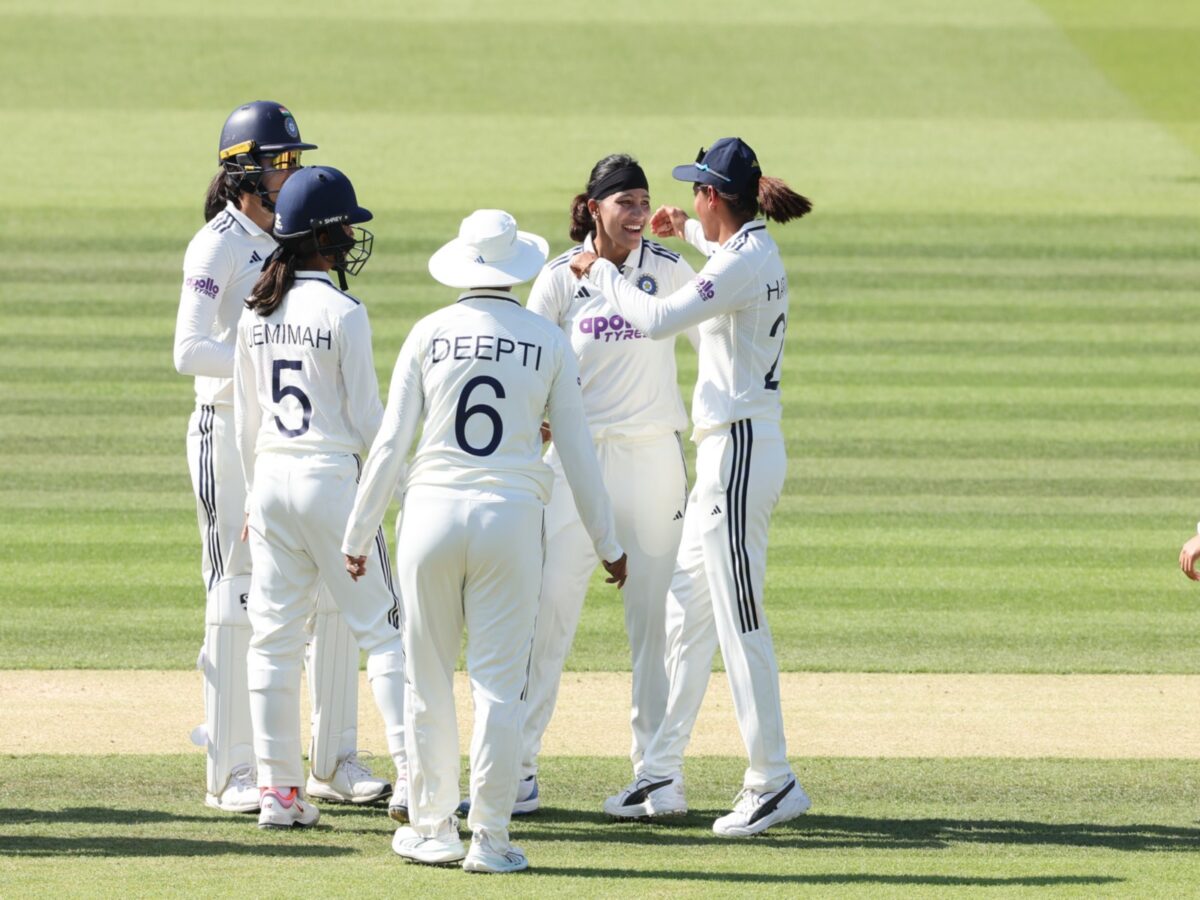
WHAT THE PLAYERS SAID
The emotional weight of the achievement was evident in the post-match interviews. "God is a better writer. He's written it very well," said Harmanpreet Kaur, crediting her top order for taking the pressure off the rest of the batting lineup. "I think our openers have been our biggest strength. The way they batted in the first half, I think that was something very special to watch," she said, adding thanks to the coaching staff after what she described as a difficult recent run of results.
For Gaud, the moment was something she had visualized before the match even began. "Growing up, I never imagined something like this would happen. But from the day this Test match began, I told myself that I wanted to get my name on the honours board," she said. "I feel extremely proud, and so does my family." In a detail that captures the scale of the achievement for a player from a small city in central India, Gaud revealed she has already built a small shrine at home for the occasion: "I've made a small museum at home, and I'm going to keep the stump there forever."
WHY THIS MATCH MATTERS BEYOND THE SCORECARD
Test cricket for women has long occupied a precarious place in the sport's calendar — expensive to stage, rarely broadcast, and often squeezed into a single one-off fixture rather than a full series, exactly as this England-India match was. That a one-off Test could produce a result this decisive, this record-laden, and this widely covered gives the format's advocates fresh ammunition in their long-running campaign for more five-day cricket for women.
It is also India's third Test victory in as many matches played in England, meaning the team remains unbeaten in the format on English soil — a statistic that would have seemed improbable a decade ago when India's women played Test cricket only sporadically. The result arrives at a moment when the BCCI and other boards are under increasing pressure to expand red-ball opportunities for women, and a performance this emphatic, at a venue this iconic, is difficult for administrators to ignore.
For a global readership newly introduced to women's Test cricket through these historic scenes at Lord's, the takeaway is straightforward: this was not a nostalgic gesture or a marketing exercise. It was a genuine, ruthless cricketing performance that happened to also make history. The honours board at Lord's now carries the names of Kranti Gaud and Yastika Bhatia alongside a century of men who came before them — a small but permanent correction to cricket's record books.
THE BIGGER PICTURE
India's dominance fits into a broader pattern of the team's rise under Harmanpreet Kaur, who has overseen a period of improved results and rising profile for the Women in Blue, including recent white-ball success. A red-ball performance of this magnitude, on the sport's most famous stage, cements the sense that India's women's team has arrived as a genuine all-format force. Whether cricket's administrators respond by scheduling more Test matches for the women's game — rather than treating them as rare, symbolic one-offs — will be the real test of whether this Lord's classic changes anything beyond the record books.
For now, English fans can only reflect on a chastening four days, while Indian cricket has a new chapter of its history written into the oldest ground in the sport.



