Written By | Fashion and Design Desk
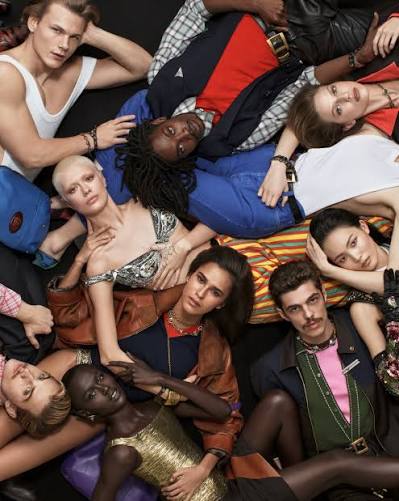
"Versace Obsessed, Chapter II" closes out the Donatella era with Steven Meisel's camera and a house full of ghosts — just as Pieter Mulier prepares to rewrite the story
MILAN
There is a particular kind of fashion campaign that only makes full sense in hindsight: the one shot not knowing, or perhaps knowing all too well, that it will be the last of its kind. "Versace Obsessed, Chapter II," the house's Fall/Winter 2026 campaign, is that campaign. Photographed by longtime collaborator Steven Meisel and unveiled earlier this month, it is being read across the fashion press as the final chapter produced under Donatella Versace's direct creative hand before Pieter Mulier, newly installed as the house's chief creative officer, begins shaping what comes next.
The timing is almost too neat for a house that has always understood the power of a well-staged narrative.
A campaign built as an archive
Where a typical seasonal campaign sells a collection, "Versace Obsessed, Chapter II" sells a memory. Meisel's images place his cast — newcomers Saar Mansvelt Beck, Alaina Rae, and Elodie Guipaud alongside Bai Ruien and Wiley Rhoads — inside interiors deliberately dressed with fragments of the house's own history: fashion magazines from the 1990s and 2000s featuring Meisel's earlier work for Versace, alongside rare, previously unseen editions of Vanitas, the perfume and lifestyle magazine Gianni Versace launched in the late 1980s. The effect is less advertisement than time capsule, a cinematic sequence of vignettes explicitly built to bridge, in the house's own language, "past, present and future."
That the campaign accomplishes this using Meisel — the photographer most responsible for defining Versace's visual language throughout the 1990s, working alongside Gianni and later Donatella — only sharpens the sense of closure. Few creative partnerships in fashion run as deep or as long, and few campaigns have been so openly constructed as a farewell.
The Fall/Winter 2026 collection itself leans hard into the codes Gianni and Donatella built the house on: the collision of grit and glamour, the "divine and dirty" tension that has always separated Versace from its more restrained Milanese peers, leather cut against gold hardware, and the recurring visual anchors of the Medusa head and Greca pattern. Nothing about the clothes signals retreat. If anything, the collection reads as confident, even celebratory — a house closing its current chapter at full volume rather than fading out.
Why Mulier, and why now
Versace's announcement in February that Pieter Mulier would join as chief creative officer, effective July 1, landed as one of the year's more closely watched appointments — not because it was unexpected exactly, but because of what it signals about the house's direction under Prada Group ownership. Mulier's résumé reads like a tour of the industry's most disciplined creative minds: formative years under Raf Simons, stints at Jil Sander, Dior, and Calvin Klein, and, most recently, a widely praised run as creative director of Alaïa, where he was credited with reviving the house through sculptural silhouettes, architectural tailoring, and a string of accessories that became genuine cultural objects rather than mere seasonal hits.
That track record — reverence for archival codes paired with a willingness to sharpen them into something new — is precisely what Prada Group appears to be betting on for Versace. Following the group's acquisition of the house, executives have been explicit that the goal is strengthening Versace's position in luxury without diluting its heritage, a balance Mulier's career suggests he is unusually well equipped to strike.
Notably, the transition is being handled with a patience rarely afforded to designer changeovers in an industry addicted to quarterly news cycles. Mulier's first collection for Versace will not appear until early 2027, likely during Milan Fashion Week's Fall/Winter 2027–28 shows — a runway debut that is, deliberately, still several months away. Prada Group has said the extended runway is intentional, giving Mulier time to immerse himself in the house's archives and develop what insiders describe as a long-term vision rather than a rushed first statement.
An industry watching the handoff closely
Designer transitions have become one of fashion's most reliable spectator sports, and 2026 has been an especially eventful year on that front, with new creative directors settling in across several major houses. But few of this year's changeovers carry the symbolic weight of Versace's, given how inseparable the brand's identity has been from the Versace family itself — first Gianni, then Donatella, who has led the house creatively since her brother's death in 1997.
Industry observers have framed the moment less as a rupture than a carefully managed passing of the torch: Donatella remains involved with the house in a broader capacity, while day-to-day creative direction shifts to Mulier. Still, "Versace Obsessed, Chapter II" is unmistakably being read as her final full creative statement in the role that has defined nearly three decades of her public life — a fact that gives the campaign's archival, retrospective framing an emotional register that likely wasn't fully intentional when the shoot was conceived, but reads unmistakably that way now.
What this means for Versace shoppers and watchers
For customers, nothing changes immediately: the Fall/Winter 2026 collection currently landing in stores and on runways represents Donatella's vision in full, uninterrupted form, and will remain the house's offering through the rest of this year and into next spring. The real inflection point arrives in February 2027, when Mulier's debut runway show will offer the first concrete look at how he intends to translate his archival instincts and architectural precision onto a house built on maximalism rather than restraint — a genuinely different creative challenge than the minimalist heritage brands he has previously reshaped.
For the broader fashion industry, the moment offers a useful case study in how a major house can manage a high-stakes creative transition without triggering the kind of abrupt, headline-grabbing rupture that has defined other recent designer departures. Versace's approach — an extended runway, a deliberately archival farewell campaign, and a new creative director given real time before his first show — suggests a house, and a parent company, playing a longer game than the industry's usual news cycle typically rewards.
Whether Mulier can translate that patience into a debut collection worthy of the anticipation building around it remains, for now, the fashion world's most closely watched open question. Until February, "Versace Obsessed, Chapter II" stands as the house's own answer to where it has been — leaving where it's going for Mulier to decide.



