Written By |
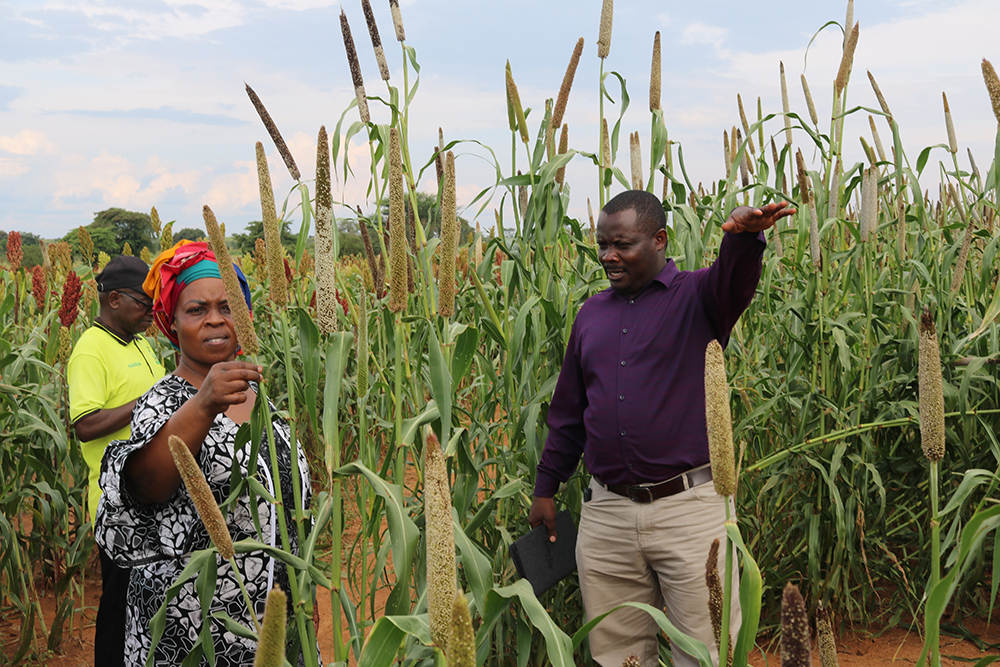
Samuel Kayongo crop scientist at Nabuin explaining an issue to the State minister for Karamoja Nambozo during an inspection of bulrush millet trial garden
By Our Writer
Decades of prolonged dry spells have been identified as the most common climate shock affecting Karamoja, significantly disrupting the region’s rain-fed agriculture. While the promotion of drought-resistant crop varieties has helped improve survival rates among the local population, food insecurity remains a pressing issue.
According to Samuel Kayongo, a crop scientist from the Nabuin Agricultural Research Institute, Karamoja has experienced severe drought due to prolonged dry spells. As a result, families often survive on one meal a day, or none at all, relying heavily on imported food from other regions in Uganda. "The food is very expensive for families who experience the highest indicators of poverty in the country," he explained.
Kayongo noted that the introduction of a variety of crops, combined with farmer training programs, has significantly improved food security in Karamoja. “We have introduced green gram that matures in 60 days,” he said. The institute has also introduced a maize variety known as “Miezi mitatu,” which is ready for harvest in just 90 days. Other crops, such as sim-sim, cassava, and several drought-tolerant sorghum varieties, have also been introduced. Consequently, many locals have shifted from pure pastoralism to agro-pastoralism. “Most people are now looking better, with less reliance on imported food,” Kayongo added, though he highlighted that sustainability remains a challenge.
To further improve food security, Kayongo urged the government to establish food reservoirs in the subregion to support added value and increase productivity. He emphasized the need for crops that can bridge the gap between the wet season, which runs from April to October, and the dry season from November to March.
Dr. Paul Boma, an animal scientist at Nabuin Research Institute, pointed out that while scientists are committed to their work, funding remains a critical issue. “We acknowledge that the government has raised our salaries, but the funding gap must be addressed to facilitate our research,” Boma said, urging the government to support agricultural projects in Karamoja.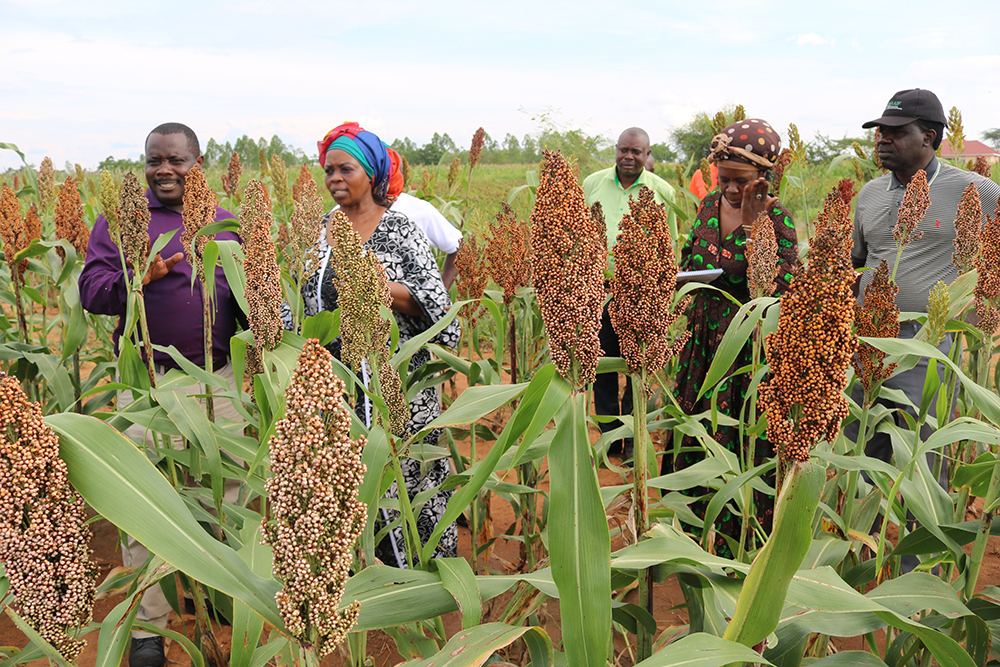
State minister for Karamoja Florence Mayoga Nambozo inspects a sorghum garden at Nabuin research and development institute in Nabilatuk district recently
Charles Topoth, a weather analyst, highlighted that unpredictable weather patterns have contributed to failed crop seasons in Karamoja. “The over-reliance on rain-fed agriculture, with no sign of irrigation, remains a major barrier to achieving food security,” Topoth noted. He also pointed to persistent conflicts and cattle rustling as factors exacerbating food shortages. “Our people produce food, but much of it is stolen from the gardens,” he said, emphasizing that insecurity discourages farmers from cultivating crops.
Jackson Angella, another local expert, cited limited access to agricultural inputs and high illiteracy rates as significant obstacles to food security. “Karamoja requires crops that mature faster due to the unpredictable rainfall pattern,” he said, suggesting that the Nabuin Farm Institute provide non-formal training to improve local agricultural skills.
Florence Nambozo, the state minister for Karamoja affairs, expressed concern over the region's severe food shortages and encouraged scientists to explore ways to improve livestock production, including artificial insemination. She was optimistic that introducing Friesian cows, known for high milk and beef yields, could help reduce cattle rustling. “Let’s do our best as researchers to ensure Karamoja can feed itself,” Nambozo urged.
Isaac Lotukei, a retired teacher from Namalu in Nakapiripirit district, pointed out that food wastage after harvest is another issue. He predicted that this year's harvest would be better than in the past, and food trade in the subregion would soon improve. "We need to regulate the situation as traders will begin buying food cheaply from subsistence farmers," he suggested, calling for government intervention to prevent exploitation during times of hunger. “Let the government buy the sorghum and store it for the people,” he added.
Other factors contributing to food insecurity in Karamoja include inadequate post-harvest handling, birds destroying crops, and disruptive rains during harvest periods.



