Written By | Health News Agencies
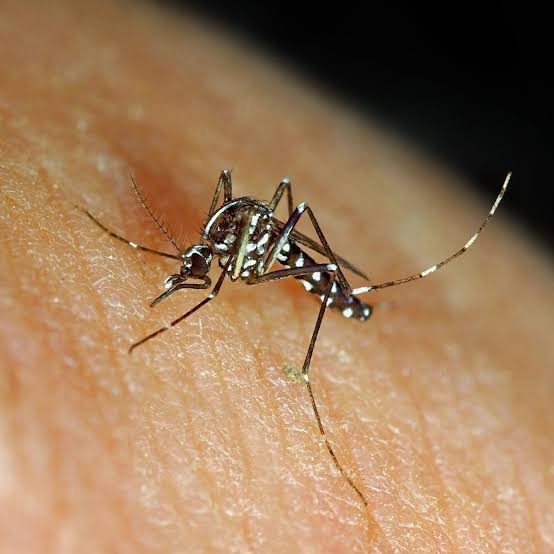
Aedes aegypti — the primary vector of dengue fever — is a daytime hunter
GLOBAL
The mosquito doesn't come at night. That's what makes it so dangerous.
Aedes aegypti — the primary vector of dengue fever — is a daytime hunter. It thrives in urban environments: in water pooled inside discarded tires, in flowerpot saucers, in clogged city drains. You can't sleep your way to safety from dengue. You have to live differently — or not at all.
Today, World Dengue Day, the WHO estimates that 5.6 billion people — more than half the global population — are now at risk of dengue infection. An estimated 100–400 million infections occur every year. 2024 set an all-time record: over 13 million cases in the Americas alone. In 2026, that crisis has not abated — it has spread. And it is coming to places that have never seen it before.
What Dengue Does
Dengue is caused by four viral serotypes, transmitted by an infected Aedes bite. Symptoms: sudden high fever, severe headache, pain behind the eyes, intense muscle and joint pain ("breakbone fever"), and a rash. Most patients recover in 2–7 days. But for about one in five, dengue becomes severe: plasma leakage, hemorrhagic bleeding, and potentially fatal shock syndrome. A second infection with a different serotype dramatically raises the risk.
There is no specific antiviral. No cure. Treatment is supportive: rest, hydration, careful monitoring. Avoid ibuprofen and aspirin — both increase bleeding risk. Acetaminophen is the only safe pain reliever.
The 2026 Surge: Southeast Asia on Fire
In Malaysia's Selangor state alone: 14,502 dengue cases by June 7 — a 6.5-fold increase from last year — and 13 deaths. Indonesia recorded over 2,600 infections and 15 deaths in January 2026 alone. Manila, Johor, and Batam are active hotspots.
Across the Americas: 624,085 suspected cases by week 12 of 2026. While down from 2025's catastrophic peak, epidemiologists warn the baseline is not returning to pre-2024 levels.
Climate Change: The Engine Behind the Expansion
Aedes aegypti cannot survive hard winters. But as global temperatures rise, those cold barriers are weakening. Warmer winters mean mosquitoes survive longer. Their geographic range is creeping steadily poleward.
In January 2026, the EU warned that Paris, Vienna, Zagreb, and other major European cities face increasing dengue risk. In the US, Miami-Dade County was placed under an active mosquito-borne illness alert in June 2026, with CDC data confirming a 359% rise in US dengue activity — including locally acquired cases in Florida.
Research models: dengue cases could increase by 76% across Asia and the Americas by 2050 under current emissions trajectories. Under high-emissions scenarios, up to 8.4 billion people could be at risk by century's end.
The Vaccine Problem
A vaccine does now exist — Qdenga (TAK-003). But WHO guidance recommends it only for individuals aged 6–16 in high-transmission settings. It is not broadly available for adults. Uptake has been slow. Meanwhile, the mosquitoes wait.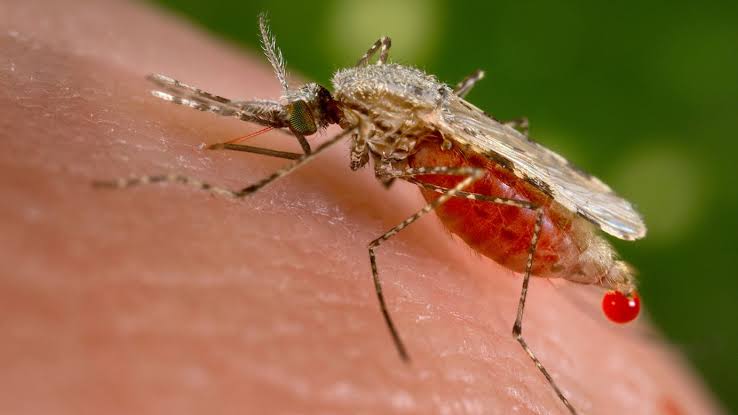
Expert Perspective: An Urban Disease for an Urban World
Unlike malaria (rural, sub-Saharan), dengue is an urban disease. It thrives in cities, in the micro-environments of accumulated containers and poor drainage. Travelers can contract it in city centers, tourist hotels, transit hubs — even on layovers. Increased global mobility acts as a reservoir, potentially introducing new serotypes to previously safe regions.
What This Means for You: How to Stay Safe
No vaccine, no cure. Prevention is everything. And because Aedes bites during the day, strategies differ:
If infected: stay hydrated, rest, monitor for warning signs of severe disease (severe abdominal pain, persistent vomiting, bleeding gums, blood in vomit, rapid breathing, pale/cold/clammy skin). Any of these is a medical emergency. Again: no ibuprofen or aspirin — only paracetamol/acetaminophen.
For travelers to dengue-endemic regions (most of tropical Asia, Latin America, the Caribbean, sub-Saharan Africa, the Pacific islands): pre-travel consultation with a travel medicine specialist is strongly advisable.
The Mosquito Is Not Waiting
Paris. Vienna. Miami. The cities now facing dengue risk are not the cities the global health establishment designed its response around. The disease is moving faster than the infrastructure built to stop it. Climate change is not a future problem — it is a present one, unfolding with every degree of warming and every longer warm season.
More than half the people alive today are at risk of a disease with no cure, a partially available vaccine, and a vector that bites when humans are most active. On World Dengue Day 2026, that is the reality. The mosquito, for its part, is not waiting.



