Written By | International News Agencies
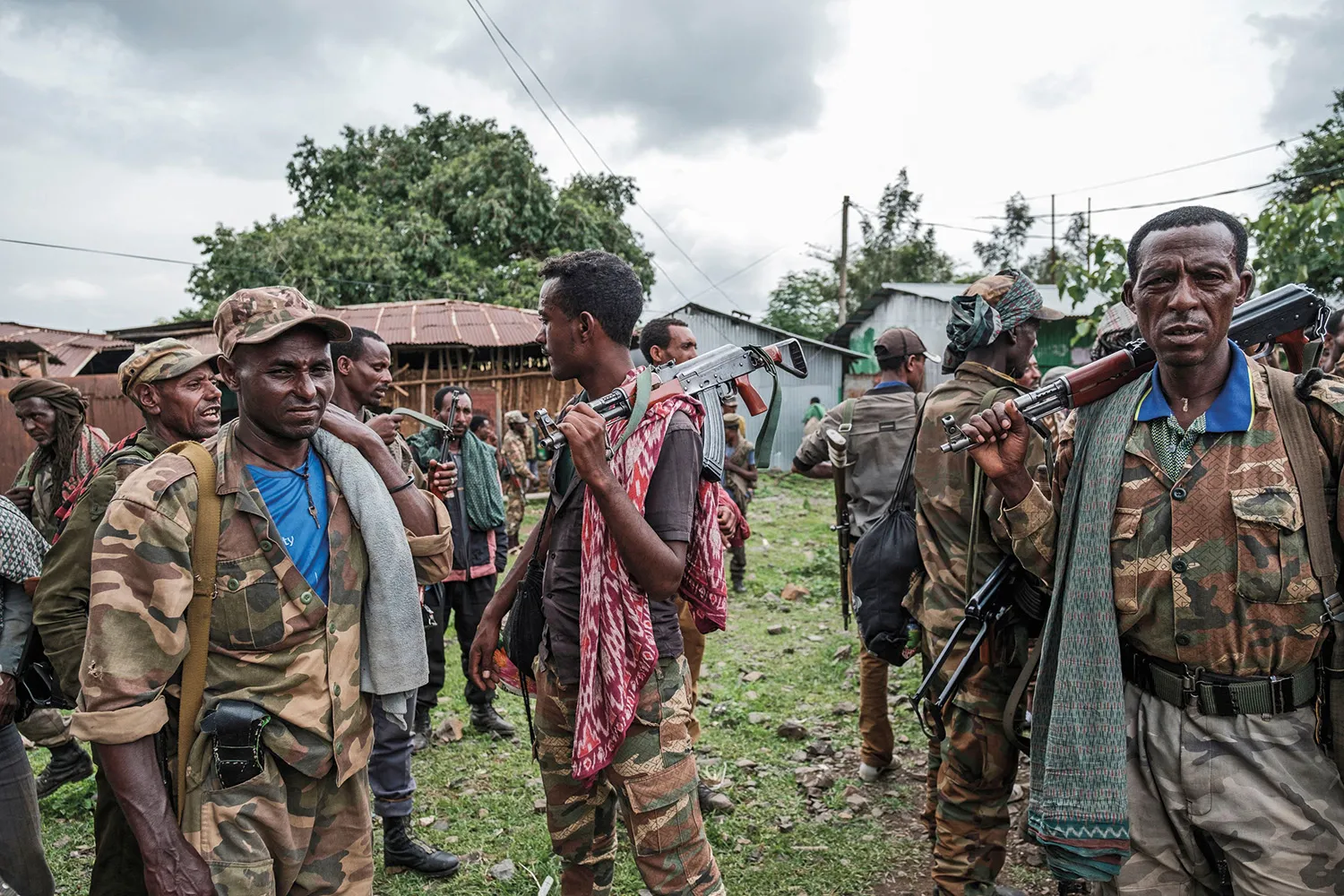
The fighting matters far beyond Tigray: the rebels' advance in Afar points toward the Djibouti corridor, which carries almost all of Ethiopia's foreign trade and fuel imports.
ADDIS ABABA, Ethiopia
Less than four years after the Pretoria Peace Agreement ended a war that the African Union estimates killed about 600,000 people, northern Ethiopia is fighting again. In the past week, Tigrayan forces have seized the airport in the regional capital, Mekelle, pushed into neighboring Afar, and joined a seven-group military alliance whose declared aim is to overthrow Prime Minister Abiy Ahmed. The federal government, for its part, has accused Egypt, Eritrea and Sudan of arming its enemies. The fighting matters far beyond Tigray: the rebels' advance in Afar points toward the Djibouti corridor, which carries almost all of Ethiopia's foreign trade and fuel imports.
A week that changed the map
The sequence of events, as reported by international outlets, moved quickly. Around September 20 and 21, the Tigray People's Liberation Front (TPLF) joined six other armed groups in a coalition called the Ethiopian Peoples' Forces Alliance for Survival. Its members include Amhara nationalist Fano militias and the Oromo Liberation Army, according to Euronews, which described the grouping as spanning armed movements in roughly half of Ethiopia's regional states and seeking to topple Abiy's government.
On Tuesday, September 22, a series of federal air strikes hit the town of Alamata in southern Tigray. Tigrayan authorities said at least 14 civilians were killed and 22 wounded in strikes that involved more than five drones and a fighter jet; Wikipedia's running account of the offensive, drawing on local reports, says two schools were among the targets. The federal government has neither confirmed nor denied those casualty figures. Alamata's mayor, Mogos Shiferaw, said the strikes caused "a lot of psychological trauma" and left residents "in a state of panic," according to the Rio Times summary of regional reporting.
Tigrayan leaders then declared what they called a "defensive war." On Wednesday, September 23, their forces took control of Mekelle airport, and Ethiopian Airlines suspended flights to Mekelle, Axum and Shire. Fighting was also reported in Afar, where an NGO source told Euronews the TPLF and federal troops had been clashing "since last night in Abala and Erebti," and in parts of Amhara region.
Getachew Reda, an adviser to Abiy, told reporters the Tigrayan forces had seized federally controlled airports and launched attacks in Afar and Amhara, describing the moves as an "all-out offensive," according to Face2Face Africa. Tigrayan authorities counter that they were responding to drone strikes on their territory. Each side, in other words, says the other started it.
Afar and the Djibouti corridor
By Monday, the military picture had sharpened. Euronews reported that the TPLF had captured the Afar town of Erebti and was advancing toward Afdeera, roughly 100 kilometers away, and that at least 150,000 people had reportedly been displaced in Afar. The strategic logic is plain to analysts: the road and rail corridor to Djibouti handles nearly all of landlocked Ethiopia's international commerce and fuel imports, so control of even part of it would give the rebels leverage over Addis Ababa. Al Jazeera reported that the TPLF is advancing toward supply routes from Djibouti, in what it described as a repeat of a strategy from the earlier war.
Federal forces have not been idle, and they have not escaped losses. The Rio Times, citing Reuters, reported on September 28 that the federal military had acknowledged major losses to rebels. Wikipedia's compilation of claims lists an Ethiopian government figure of 272 fighters killed and 260 wounded, and Fano claims that its fighters captured two army colonels, Meles Ashagrie and Edmealem Amare, along with military trucks. These battlefield numbers come from the parties themselves, and none has been independently verified.
Communications have also been badly disrupted. Al Jazeera reported that communications in Tigray have been severely disrupted since Friday, September 25, and the Rio Times noted that residents feared a repeat of the blackout that shrouded the 2020–22 war. That makes independent confirmation of casualties, displacement and territorial control even harder, and it means the figures in circulation should be treated as provisional.
Accusations against neighbors
Ethiopia's army chief, Field Marshal Birhanu Jula, said the military was "fighting forces that are organised and allied to serve the interests of external forces," and named Egypt, Eritrea and Sudan as backers, according to Euronews and Al Jazeera. Sudan's army denied the charge, calling it "baseless," and made a counter-accusation: that the rival Rapid Support Forces (RSF) receive support from inside Ethiopian territory, including training, supplies and drone-assisted operations, according to Al Jazeera. Addis Ababa has not, in the reporting reviewed here, responded in detail to that claim.
The regional web is tangled. Euronews, citing analysts, reports that Eritrea, once an enemy of the TPLF and a partner of Abiy's government in the 2020–22 war, is now reported to be coordinating with Tigrayan forces and to have supplied weapons; Eritrea has not, in the reporting reviewed here, publicly confirmed that. The International Crisis Group describes Eritrea as quietly aligned with the TPLF, frustrated by the terms of the 2022 settlement. Ethiopia's dispute with Egypt over the Nile is the backdrop to the accusation against Cairo. None of these allegations of foreign backing has been independently proven, and each of the governments named has an interest in how the story is told.
How the peace unraveled
The Pretoria agreement of November 2022 silenced the guns but left the hardest questions unresolved. The International Crisis Group says the deal left territorial disputes and disarmament issues open, and that in April and May 2026 the TPLF retook control of Tigray's regional government and launched conscription drives, a sign it was preparing to challenge federal authority. About one million people remain displaced from the earlier war, according to Euronews; the Rio Times puts the number of internally displaced in Tigray at between 750,000 and 1 million.
Rights groups had already raised alarms. Human Rights Watch determined that an August 20 air strike on Mekelle was "unlawfully indiscriminate," with "no evident military targets," and recommended that it be investigated as a possible war crime, according to Wikipedia's account of the strikes. Thirteen people were reported wounded in that attack.
What is new this time is the breadth of the opposition. In 2020, the federal government and its allies, including Eritrea and Amhara forces, fought the TPLF together. Now Tigrayan fighters have common cause with Amhara Fano militias, who fought alongside the federal army in the last war but later turned against Abiy, and with the Oromo Liberation Army. CNN's headline captured the shift: former enemies are now fighting together. That coalition gives the TPLF several fronts and, potentially, sources of manpower, but it also joins groups with very different aims, which could strain it over time.
International reaction
The African Union Commission chair, Mahmoud Ali Youssouf, called for "immediate de-escalation," and Euronews reported that the AU urged ceasefire talks within the framework of the Pretoria agreement. The U.S. ambassador expressed "disappointment" with the TPLF's "large-scale offensive" and called it an "unwinnable fight," according to Face2Face Africa and Crisis Group's summary of reactions. Washington has advised its citizens against travel to Tigray and Afar and barred U.S. government personnel from visiting them. The United Nations has voiced particular alarm over the use of drones and the toll on civilians, per Euronews.
Note the asymmetry in that response: the U.S. ambassador has publicly faulted the TPLF's offensive, yet the Alamata strikes preceded it, and the federal government has not, in the reporting reviewed here, explained who ordered them or why. Any credible mediation will have to deal with both sequences of events.
Analysis: what the stakes are
Three things make this moment more dangerous than a flare-up. First, the aim. An alliance that declares itself committed to overthrowing the government is not bargaining over local autonomy; it is contesting the federal state itself. That narrows the space for compromise on either side. Abiy's government can hardly negotiate with a coalition that says it wants him gone, and the coalition's members have little incentive to stop while they are gaining ground.
Second, geography. Afar sits astride Ethiopia's economic lifeline. Even without capturing Djibouti-bound infrastructure, sustained fighting near it threatens fuel supplies, food imports and the currency, in a country whose economy is already strained. Third, the regional dimension. If Egypt, Eritrea and Sudan are in fact backing armed groups, as Addis Ababa alleges, the conflict becomes entangled with the Sudanese civil war and the Nile dispute, and any settlement requires diplomacy that goes well beyond the African Union's Pretoria machinery. If the accusations are exaggerated, they still signal that Abiy's government is preparing to present the war as a foreign-backed aggression, which tends to harden domestic positions.
There are reasons for caution about the worst-case reading. Most of the claims of territorial gains and casualties are unverified, and the communications shutdown makes them hard to test. The federal military retains air power, as Alamata showed, and has not yet publicly committed its full strength. The rebel alliance is new and untested. And the memory of 2020–22 — the famine conditions, the mass killings, the roughly 600,000 dead — may still act as a brake on all sides.
What to watch
For now, the reporting shows an escalation that both sides describe as defensive and neither has yet shown it can control. The next few days, especially in Afar, will indicate whether this is a violent flare-up or the start of a second civil war.



