Uganda Business
Uganda has missed the government's own deadline for producing its first barrel of commercial oil, with the milestone now expected sometime around the end of September rather than the July 2026 target that officials had repeatedly promised. It is the latest in a long string of delays for a project that has been more than a decade in the making, but with the Tilenga and Kingfisher upstream fields and the East African Crude Oil Pipeline (EACOP) all now well past the halfway mark of construction, the country's oil era looks closer than at any point since the projects reached final investment decision.
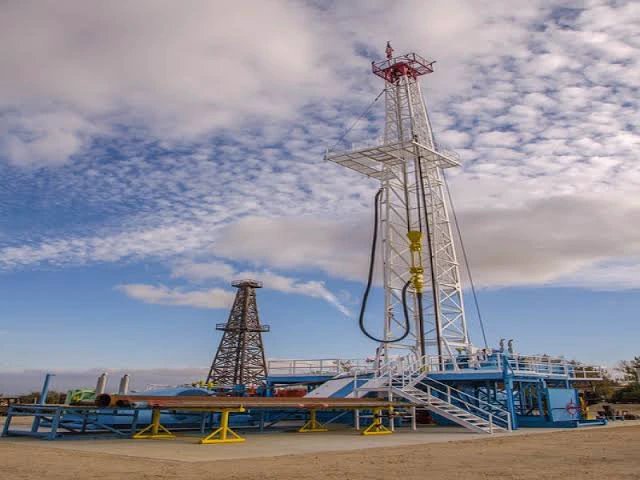
The numbers tell the story of a project in its final, most visible stretch. As of the end of June 2026, the Tilenga field, operated by TotalEnergies, stood at 74 percent completion, with 234 wells drilled — comfortably exceeding the 170-well minimum originally required to hit first-oil thresholds. Kingfisher, operated by CNOOC, had reached 79 percent completion, with its Central Processing Facility and feeder pipeline nearing completion. EACOP, the 1,443-kilometre heated pipeline that will carry crude from the Lake Albert basin to the Tanzanian port of Tanga, was reported at around 90 percent overall progress, with more than 1,443 kilometres of pipe welded across Uganda and Tanzania. Despite that progress, TotalEnergies — the lead operator of the joint venture — is now targeting first oil from the Lake Albert fields by the end of September, having already missed the July target it had set for itself.
For a country that has waited since commercially viable oil deposits were first confirmed around Lake Albert in 2006, a two-month slip is, in one sense, a rounding error against a project timeline that has already stretched across three delayed final investment decisions, a global oil price crash, the Covid-19 pandemic, sustained activist and legal campaigns against EACOP's financing, and repeated cost overruns. Even so, the missed July target underscores how tightly stretched the current construction schedule remains, with commissioning, testing and safety certification work all still to be completed on both the upstream facilities and the pipeline before oil can actually begin to flow.
The scale of the investment involved helps explain why the timeline matters so much to Uganda's economic planners. The upstream Tilenga and Kingfisher developments represent a combined $6 billion, EACOP itself around $5 billion — up sharply from an original $3.6 billion estimate, a roughly 55 percent cost increase — and a planned domestic refinery a further $4 billion, for a total package of roughly $20 billion in investment into the Ugandan economy, an extraordinary sum for a country whose entire GDP is only now approaching $60–66 billion. The upstream partnership is structured with TotalEnergies holding 56.67 percent, CNOOC 28.33 percent, and Uganda National Oil Company (UNOC) the remaining 15 percent, giving the Ugandan state a direct equity stake in the fields alongside the two international operators.

At peak production, the Lake Albert basin is expected to deliver around 230,000 barrels per day, with Tilenga contributing roughly 149,000 b/d and Kingfisher a further 27,000 b/d, feeding into EACOP for export via Tanga. Government projections have pointed to oil revenues of around $2 billion a year once production is fully ramped up, alongside an estimated 160,000 jobs — direct and indirect — created across the value chain, from construction and drilling to logistics, hospitality and downstream services in the Lake Albert region and along the pipeline corridor. Uganda has also progressively revised upward its estimate of recoverable reserves, now put at around 1.65 billion barrels, up from an earlier estimate of 1.4 billion, giving the country a longer production runway than initially projected.
Those headline numbers, however, sit alongside more cautious analysis about the revenue Uganda will actually collect. A study by the Institute for Energy Economics and Financial Analysis (IEEFA) has warned that as the world shifts toward cleaner energy and oil demand growth slows, TotalEnergies' and CNOOC's own investment returns could fall by 25 to 34 percent relative to earlier projections — but that Uganda's government revenues, which are structured as a residual claim after operator costs and returns are recovered, could fall by as much as 53 percent under the same lower-demand, lower-price scenarios. In effect, government revenue is more exposed to price and demand swings than the international operators' returns, a structural feature of the production-sharing arrangement that has drawn scrutiny from independent economists. Separate reporting has also flagged that persistent cost overruns on EACOP in particular could further erode the net revenue Uganda ultimately banks from the project, even as gross production volumes hold up.
The broader economic backdrop into which first oil will arrive is, for now, a relatively favourable one. Uganda's economy grew 6.4 percent in real terms in the 2025/26 financial year, up from 6.3 percent a year earlier, and the government is projecting an acceleration to 10.2 percent GDP growth in financial year 2026/27 specifically on the back of first oil production coming online. The country posted a balance of payments surplus of $2.47 billion in the twelve months to March 2026 — its largest in fifteen years — while the Uganda Investment Authority has pointed to record export volumes, a stable shilling, controlled inflation and rising investor confidence, citing an average return on investment of around 14 percent as evidence that momentum is building ahead of the oil sector's transition from construction to production.
The delay also carries political weight. First oil has been one of the signature promises of President Yoweri Museveni's government heading into and following January's general election, in which Museveni secured a seventh term amid a contested and, at times, violent electoral process. Government officials, including EACOP deputy managing director John Bosco Habumugisha, have repeatedly used the prospect of imminent oil revenue to argue that Uganda's economic transformation is finally within reach after decades of promise. A slipping timeline — even a modest two-month one — gives critics an opening to question whether the government's messaging has consistently outpaced the project's actual engineering and commissioning realities, a pattern that has recurred at several points since the fields were first discovered.
What happens over the coming weeks will determine whether the September target holds. Analysts and industry publications tracking the project say the remaining work is now concentrated on final well completions at Tilenga, finishing the Central Processing Facility at Kingfisher, and completing commissioning and safety testing along the full length of EACOP, including heating systems needed to keep Uganda's waxy crude flowing through the pipeline. Any slippage in those final commissioning steps — a common feature of large energy infrastructure projects worldwide — could push first oil into the fourth quarter of 2026, with export volumes via Tanga not expected to ramp up meaningfully until some months after that. For now, government and industry messaging remains that Uganda is on the verge of joining the ranks of oil-producing nations, even if the exact date keeps moving.
Published By | Business News Editor