Written By | International News Desk
Even before the earthquakes, Venezuela's infrastructure was precarious. Years of underinvestment left hospitals short of supplies and the electrical grid prone to outages.
VENEZUELA
Venezuela was already navigating one of the most turbulent political transitions in its modern history when disaster struck. In January 2026, U.S. forces captured and removed President Nicolás Maduro, ending more than a decade of authoritarian rule. Delcy Rodríguez, the former vice president and longtime Maduro ally, was installed as acting president—a choice that drew skepticism but signaled administrative continuity. Washington subsequently forged closer ties with Rodríguez's caretaker government, restoring roughly $122 million in humanitarian funding.
Even before the earthquakes, Venezuela's infrastructure was precarious. Years of underinvestment left hospitals short of supplies and the electrical grid prone to outages. Rodríguez had only recently begun reviving growth, including signing a bill in January to facilitate roughly $8 billion in private foreign investment in the oil sector. It was against this backdrop that the earthquakes struck.
Key Developments
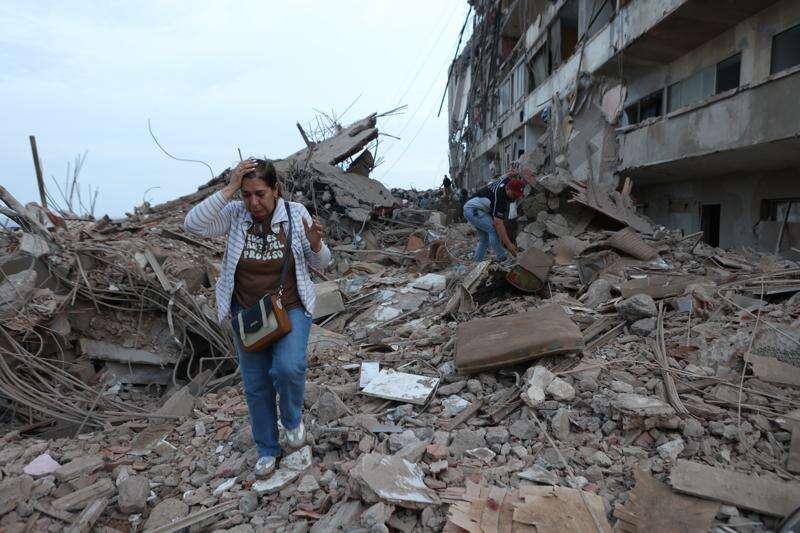
On the evening of June 24, 2026, two powerful earthquakes struck Venezuela in rapid succession, with epicenters roughly 160 kilometers west of Caracas. The first registered magnitude 7.2, and a second measuring 7.5 followed just 39 seconds later—the strongest seismic event to hit the country in more than a century. At least 20 aftershocks compounded the damage and hampered rescue operations in hard-hit coastal areas including La Guaira.
The human toll climbed alarmingly. Initial government estimates Wednesday night put the death toll at 32, with roughly 700 injured. By Thursday, that figure had passed 230, with more than 4,300 injured. By Friday, multiple outlets reported the confirmed death toll had surpassed 900, with some reports approaching 1,000 and rising. The U.S. Geological Survey has separately estimated the eventual toll could exceed 10,000 once the full scope of destruction is known. Economic analysts estimated damage at between 1 and 7 percent of Venezuela's roughly $111 billion GDP—a staggering blow to an economy CNN Business described as already "on its knees."
Acting President Rodríguez declared a state of emergency within hours and announced a reconstruction fund of roughly $200 million for hospitals, housing, and collapsed infrastructure. In a televised address, she thanked the international community, announced that UN-certified search-and-rescue teams would assist, and called for national unity.
Reactions
The international response was swift and notably broad given Venezuela's recent diplomatic isolation. Search-and-rescue teams and aid arrived from Mexico, Brazil, Canada, Colombia, El Salvador, Cuba, and beyond, alongside UN-coordinated contributions. Mexico's president dispatched a military rescue team; El Salvador mobilized roughly 300 rescuers. The Red Cross released an initial $2.5 million. Offers also arrived from Europe, China, India, and Iran—illustrating how a disaster of this scale can momentarily override geopolitics.
President Trump pledged a large-scale American response, committing approximately $150 million in humanitarian aid alongside military assets, with funds channeled partly through the UN. The scale of the U.S. response has been read as a continuation of Washington's more assertive posture toward Venezuela since Maduro's removal.
Not all reaction was celebratory. Humanitarian organizations warned that existing U.S., Canadian, and European sanctions on Venezuela's financial and oil sectors could complicate the flow of relief funds. Some analysts, by contrast, suggested the crisis could become an unlikely catalyst for warmer economic ties between Washington and Caracas. Energy analysts noted that Venezuela's oil infrastructure, much of which sits outside the most affected zones or was built to withstand seismic activity, had so far proven resilient, meaning global crude markets are unlikely to face significant near-term disruption.
What's Next
In the immediate term, search-and-rescue operations continue. As the window for finding survivors narrows, attention will shift toward reconstruction, which authorities estimate will require sustained funding well beyond the initial $200 million commitment given the scale of destroyed housing, hospitals, and infrastructure.
Politically, the disaster arrives at a delicate moment for Rodríguez's caretaker government, already working to establish legitimacy and revive an economy battered by more than a decade of crisis. How effectively her administration manages the relief effort, and how it navigates tensions between sanctions relief, international aid, and its relationship with Washington, will shape both her domestic standing and the broader trajectory of U.S.-Venezuela relations in the months ahead. Whether sanctions will be eased, whether the $8 billion oil investment push proceeds, and whether the disaster accelerates or complicates Venezuela's political transition will all remain central storylines as the country moves from emergency response into recovery.



