Written By |
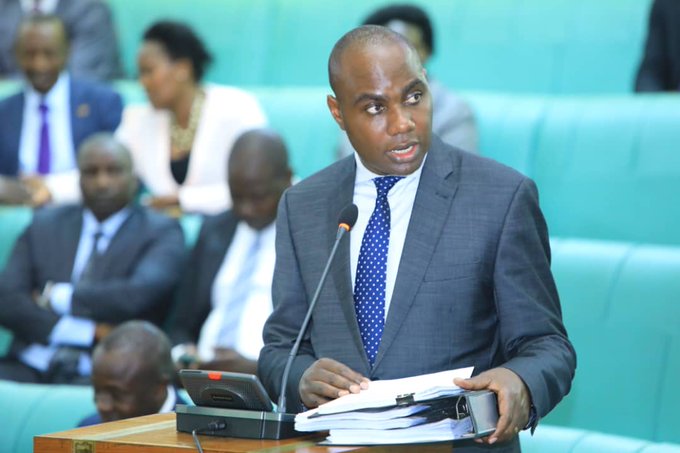
Minister Musasizi
By Our Reporter
Parliament
Uganda’s Parliament has approved a government proposal to waive taxes amounting to Shs9.614 billion owed by selected private businesses, arguing that the foregone revenue represents only 0.01% of the Shs3.6 trillion the country is projected to forego in tax exemptions for the 2024/25 financial year. The decision followed the presentation of a report by Amos Kankunda, Chairperson of Parliament’s Committee on Finance, detailing tax waivers for selected institutions, including Nkumba University, Makerere Business Institute, and Busoga University, among others.
Parliament’s move comes amid concerns over Uganda’s growing tax expenditures. According to the August 2024 Tax Expenditure Report (FY 2022/23) by the Ministry of Finance, the country has foregone over Shs12 trillion in tax exemptions over the past five years. The report further revealed that Shs2.972 trillion was recorded as foregone tax revenue in 2022/23 alone. However, the Finance Ministry admitted that the actual figures could be higher due to challenges in data collection and computation. In his presentation, Kankunda justified the tax waivers, stating that the amount being written off was negligible compared to the overall tax expenditures.
Amos Kankunda
“The seven taxpayer applications for tax waivers before Parliament total UGX12 billion. The estimated total tax expenditures for FY 2024/25 (excluding waivers in interest on unpaid tax arrears) stand at UGX3.6 trillion. When Parliament grants these tax waivers, the UGX12 billion will only constitute 0.01% of the estimated annual tax expenditures this financial year,” Kankunda explained.
The approval of the tax waivers is expected to provide relief to the affected businesses and institutions. However, the decision has also reignited discussions on the effectiveness of tax exemptions and whether they translate into tangible benefits for Uganda’s economy.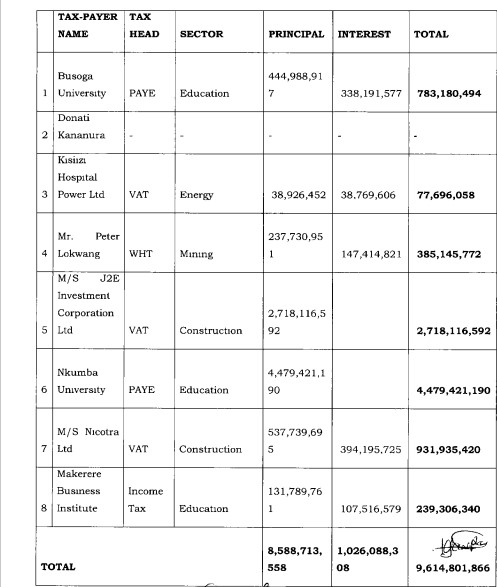
Companies with tax waived
Concerns over tax expenditures
The government’s continued use of tax exemptions has been a point of debate, with some economists and policymakers questioning whether they truly spur economic growth. Critics argue that Uganda’s heavy reliance on tax waivers could be depriving the country of much-needed revenue to fund critical sectors such as healthcare, education, and infrastructure.
As Uganda prepares for the 2024/25 financial year, Parliament is expected to closely monitor how tax waivers impact both businesses and overall revenue collection, ensuring that the exemptions granted serve national interests.
Torch Media Africa



