World News
A vote with national consequences
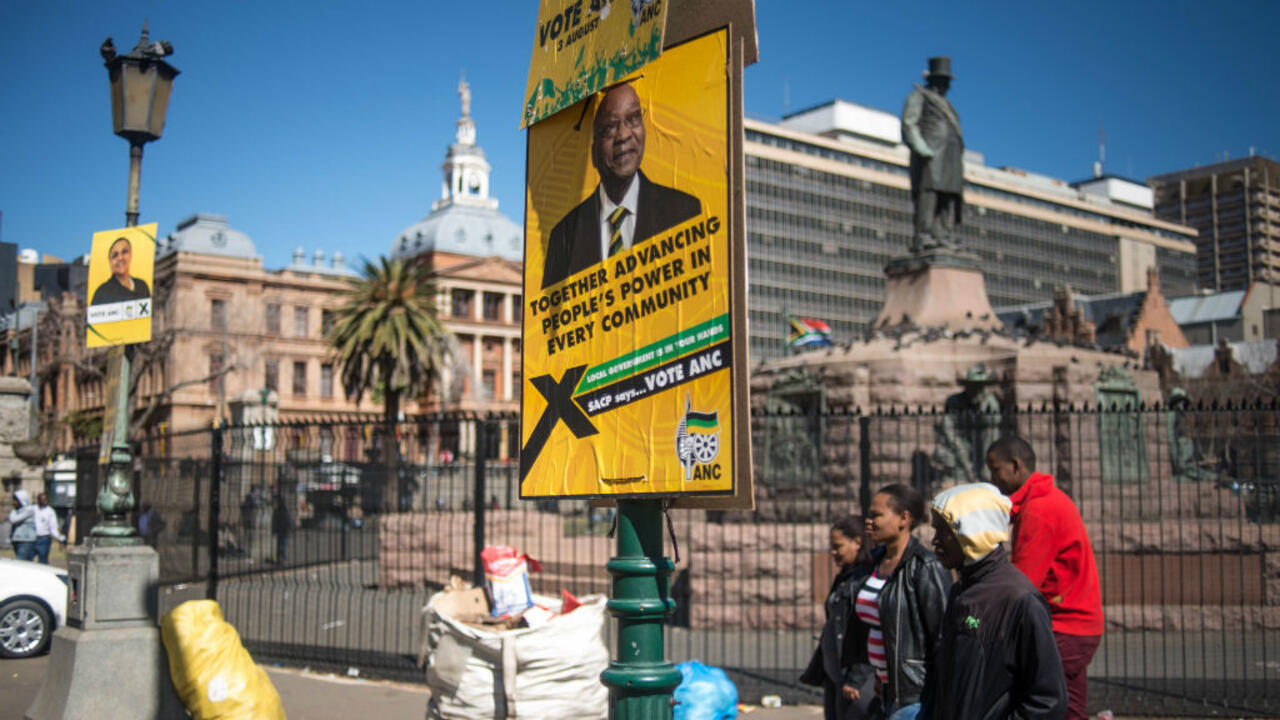
South Africans will go to the polls on November 4 in municipal elections that pollsters and analysts increasingly describe as a referendum on the African National Congress's ability to govern the country's cities. With six days to go, the Electoral Commission of South Africa (IEC) has opened its National Results Operations Centre at the Gallagher Convention Centre in Midrand, and the country's political parties are fighting over a question that would have seemed unthinkable a generation ago: whether the party of Nelson Mandela can still be the largest party in any of the six biggest metropolitan areas.
That question is not rhetorical. Wayne Sussman, who worked on a MarkData poll for the broadcaster eNCA, said the data suggest "a very strong likelihood that the ANC will not be the strongest party in any of the six major metropolitan areas after the election." Sussman also cautioned that the poll was "a snapshot of voter intentions at a particular time," and the metro-level surveys behind the headlines are small and few. Even so, the direction of travel is consistent across pollsters, and the stakes reach well beyond municipal budgets. These are the first local elections since the 2024 general election cost the ANC its parliamentary majority and produced the Government of National Unity (GNU), in which the ANC governs alongside its longtime rival, the Democratic Alliance (DA), and other parties.

The logistics: a very large exercise in democracy
The election machinery is moving into its final phase. According to the IEC, about 29 million people are registered to vote. Special voting, for people who cannot get to a polling station on the main day, takes place on Monday, November 2, and Tuesday, November 3, and about 2.6 million people are expected to cast special votes. More than 190,000 election workers have been trained, and more than 600,000 home visits are planned during the special voting period, 80 percent of them to voters over 60.
IEC Chief Executive Sy Mamabolo said the new results centre is "not mere physical infrastructure" and that it protects the country's democracy. Chief Electoral Officer Mosotho Moepya urged South Africans to cooperate with election workers, saying, "We have trained them." Party representatives, auditors and observers will monitor the results process.
The elections will fill councils in all eight metropolitan municipalities, 205 local municipalities and 40 percent of the seats in the 44 district municipalities, according to a Wikipedia compilation of the electoral calendar. That compilation also reports that about 754,000 people registered during two registration weekends this year, and that roughly 46 percent of the new registrants were under 29.
Background: a decade of eroding support and unstable coalitions
To understand why this election matters, it helps to recall how far the ANC has fallen. Its municipal peak came in 2011, when it won 64.82 percent. In the 2021 local elections it received 45.59 percent, the first time it dropped below 50 percent in a municipal contest and its worst result since the end of apartheid. The DA took 21.62 percent that year, the Economic Freedom Fighters (EFF) 10.32 percent, and the Inkatha Freedom Party (IFP) 5.65 percent, according to the same compilation.
The result of that fragmentation has been what South Africans call coalition chaos. With no party holding a majority in many councils, metros have been governed by fragile alliances that are routinely toppled by no-confidence motions. TimesLive reports that Johannesburg, the country's economic hub, has had seven mayors since the 2021 election. In Tshwane, home to Pretoria, the DA lost power in 2024 when its coalition partner, ActionSA, backed an ANC-led no-confidence motion against its mayor; a multi-party coalition led by ActionSA now governs.
Voters have noticed. An Ipsos survey cited in the compilation found in March 2026 that only 38 percent of South Africans thought their local government was doing a good job, while 63 percent said parties should work together at the local level. Parliament has before it a bill to regulate coalitions, introduced on August 18, though whether it will pass before the vote is uncertain.
Johannesburg: the main prize
Nowhere are the stakes higher than in Johannesburg. The city's finances are strained: a Treasury letter, as summarized in the Wikipedia compilation, reported that it owed R25.2 billion to creditors while holding R3.9 billion in cash.
The DA has named Helen Zille, 75, a former Cape Town mayor and Western Cape premier, as its mayoral candidate, and TimesLive reports that it did so months before its rivals settled on theirs. Her campaign focuses on infrastructure and service delivery. The ANC, by contrast, missed its own promised deadline to name final mayoral candidates, which insiders attributed to factional disputes, according to the Wikipedia compilation.
The polling gap is large. The MarkData survey for eNCA, conducted between August 10 and September 14 with 1,011 respondents in Johannesburg and mostly by telephone, put the DA at 35 percent, the ANC at 21.8 percent, the MK Party at 12.5 percent, the EFF at 11.9 percent and ActionSA at 10.3 percent. The margin of error was about 3 percent, and MarkData modeled turnout at roughly 48 percent. A separate poll by SRF/The Common Sense in July, with a sample of 500, had the DA at 42 percent and the ANC at 18 percent. The numbers differ, but both place the DA well ahead and the ANC in a fight for second place with a cluster of smaller parties.
A DA win would not guarantee the DA the mayoralty. TimesLive notes that the DA and ANC, which have governed together nationally since 2024, could cooperate in Johannesburg, though both might first seek deals with smaller parties. With five parties polling above 10 percent in the MarkData survey, any outcome that falls short of a majority will once again hinge on negotiations, and the history of the past five years suggests that such negotiations are the most volatile part of South African local politics.

The other metros
In Cape Town, the DA has governed since 2006 and has held an outright majority since 2011. MarkData put it at 52.6 percent and the ANC at 23.6 percent, with the EFF at 6.5 percent. TimesLive notes that some analysts expect a tighter race because of property prices and gang violence, but polls suggest the DA will remain above 50 percent.
In eThekwini, which includes Durban, the most dramatic shift is underway. Former president Jacob Zuma's uMkhonto weSizwe (MK) Party, which Zuma backed after his 2023 split with the ANC, is contesting its first municipal election. TimesLive reports polls putting MK between 40 and 50 percent and the ANC in the low teens. An earlier SRF/The Common Sense survey from March was more modest, with MK at 33 percent, the DA at 23 percent, the ANC at 18 percent and the IFP at 16 percent. The gap between those figures is a reminder of how uncertain the picture is in KwaZulu-Natal, where polling is difficult and turnout patterns are volatile.
In Ekurhuleni, east of Johannesburg, TimesLive says the ANC could fall from 38 percent in 2021 to about 25 percent, roughly level with the DA. In Nelson Mandela Bay, the DA is targeting an ANC-led coalition that the newspaper describes as one of the most turbulent in the country. And in Buffalo City and Mangaung, which gave the ANC 59 percent and 51 percent in 2021 respectively, the party's strongest urban bastions will test how much of its base remains.
New entrants and the money
New formations are also testing the field. The South African Communist Party is running independently of the ANC for the first time in a major contest, and Floyd Shivambu's Afrika Mayibuye Movement and a merger of several smaller parties known as Unite for Change are also on the ballot. The DA is led by Geordin Hill-Lewis, who was elected party leader in April 2026 and is contesting his first municipal election at the helm. The Wikipedia compilation also reports that more than 89 percent of political donations declared for September to December 2025 went to the DA, a financial advantage that may help explain its organizational reach.
Analysis: what a bad ANC night would mean
If the polls are even roughly right, the ANC's losses on November 4 will be symbolic and practical. Symbolically, the loss of every metro would reinforce the narrative of an ANC in managed decline. Practically, the party governs many of the country's municipalities where service failures, from water shortages to collapsing infrastructure, are most visible. The compilation notes violent service-delivery protests over water in Ratanda in July.
The more consequential question concerns the national government. President Cyril Ramaphosa has repeatedly said the GNU will endure, most recently in November 2025. But the GNU is a national arrangement between parties that will now compete directly, and sometimes bitterly, in the cities. A DA that wins Johannesburg and Tshwane on the back of anti-ANC sentiment will be tempted to claim a mandate for a harder bargain in Pretoria. An ANC that is humiliated may face internal pressure from factions that never liked the pact with the DA. Neither outcome is certain, and analysts who say the GNU is safe are making a prediction rather than stating a fact.
Turnout will matter as much as vote share. MarkData's modeled turnout of 48 percent implies that a large share of registered voters could stay home, which tends to help parties with disciplined, locally rooted supporters and hurt those that depend on a more diffuse national mood.
What to watch
Several things bear watching in the next week. The first is whether the coalition-regulation bill advances before voting day. The second is whether special-vote days on November 2 and 3 pass without logistical problems, which would blunt claims about the integrity of the count. The third is eThekwini, where the gap between polls is widest and where a decisive MK win would reshape KwaZulu-Natal politics. The fourth is what happens after the count: the real contest in Johannesburg, Tshwane and Ekurhuleni will be the weeks of talks that follow, and the deals struck there will say more about the future of the GNU than the election results themselves.
Published By | News Editor