Written By | International News Agencies
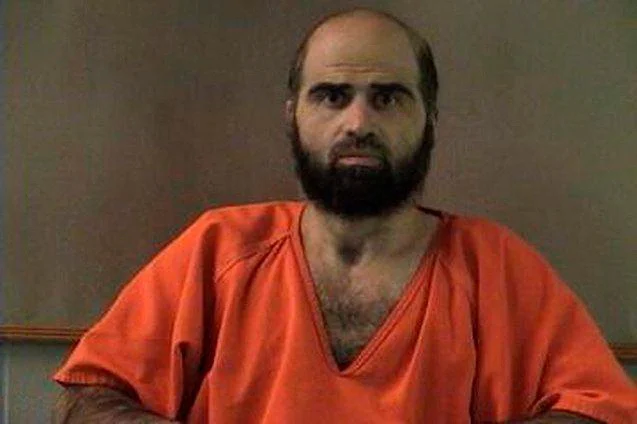
Around October 5, CNN and NPR reported that President Donald Trump had approved the Army's first execution by firing squad since World War II
World Politics
Background
On November 5, 2009, Army psychiatrist Major Nidal Malik Hasan walked into a soldier readiness processing center at Fort Hood, Texas, and opened fire on troops preparing to deploy. Thirteen people were killed and 32 were wounded, making it the deadliest mass shooting at a U.S. military base. Hasan was shot during the attack and has been paralyzed from the waist down ever since. In 2013 a military jury convicted him and sentenced him to death. Reports differ on the exact number of counts: the New York Times account says 45 counts of premeditated murder and attempted premeditated murder, while Newsweek cites 42.
The sentence then sat for more than a decade. Military death sentences require presidential approval, and none has been carried out since 1961, when Private John Bennett was hanged. The Army has said Hasan's appeals were exhausted after the Supreme Court declined to review his case in March 2025. The last time the U.S. military shot a service member by firing squad was during World War II. The question of whether and how to carry out Hasan's sentence therefore reopened a legal and moral debate that the military had not had in a generation.
That debate arrives amid broader scrutiny of American execution methods. Newsweek noted that public unease has grown after a botched execution of Christa Pike in Tennessee, and the move toward firing squads in several civilian jurisdictions has already drawn criticism. What makes the Hasan case different is not only the method but the plan to let the public watch.
Key Developments
Around October 5, CNN and NPR reported that President Donald Trump had approved the Army's first execution by firing squad since World War II. The decision cleared the way for the Pentagon to schedule the sentence. Within days, Defense Secretary Pete Hegseth went further. In an interview with Jack Posobiec of Real America's Voice, recorded aboard the USS Abraham Lincoln, he said the execution would be public and that people would be able to watch. "We'll make sure that people are able to watch it, that it's public," he said, according to the New York Times.
Reports say the execution is set for December 3 at 1 p.m. at Fort Hood, the same day of the week and time of day as the 2009 attack, and that it would be livestreamed online. If carried out as described, it would be the first livestreamed official execution in U.S. history. The Pentagon has not released details of how the livestream would work, who would receive access, or how it would square with Army regulations. The Army's execution manual lists specific witnesses, including the base commander, a chaplain, two members of the news media, the prisoner's family and one victim or victim's family representative, and states that no one under 18 may witness an execution.
Trump's own statements were initially ambiguous. Asked whether he wanted the execution livestreamed, he said the Pentagon was "making a determination" and that Hasan "will be killed," adding that he did not care how Hasan died. Then, on Friday, October 9, when asked directly whether he had approved livestreaming, he answered, "Absolutely I did." The Hill had described the earlier messages as mixed, and the Washington Post reported that the chair of the Federal Communications Commission deferred to the Pentagon on whether such an execution could air on television, suggesting no broadcast arrangement is settled.
Vice President JD Vance added to the uncertainty. He said he did not know whether the execution would in fact be livestreamed and that he would not watch it if it were. That sort of distance between the president, the defense secretary and the vice president is unusual on a decision of this gravity and has fueled questions about whether the livestream will survive the next two months.
Reactions
The sharpest criticism has come from Republicans. Senator Thom Tillis of North Carolina, who is retiring, called the plan "beyond disgusting" and said public executions are what oppressive regimes do. Senator John Curtis of Utah urged Hegseth to reconsider, warning that broadcasting executions feeds an appetite for them as entertainment and citing Seneca. Senator John Kennedy of Louisiana said he would not televise or publicize it because it makes society "coarser," while Senator Lisa Murkowski of Alaska said there is no need to livestream any execution and that it would give Hasan the notoriety he seeks.
House Republicans joined in. Representative Austin Scott of Georgia said he supports the sentence but that livestreaming executions is something jihadists do. Representatives Ann Wagner, Rob Bresnahan, Tom Barrett and Michael Baumgartner all voiced reservations, with Bresnahan saying the focus should be on victims' families rather than a spectacle. Former U.N. ambassador Nikki Haley noted that Iran and North Korea still hold public executions and said that is not the company America should keep. Newsweek reported that Democrats also strongly opposed the plan, though it did not name them.
Security specialists raised a distinct concern. Counterterrorism expert Colin Clarke called the plan "incredibly myopic," warning that video of the execution could become jihadist propaganda. The SITE Intelligence Group has already found extremist posts using the pending execution for recruitment. Retired Admiral James Stavridis, a former NATO supreme commander, said Hasan deserves death but that a public execution is not "who we are."
The administration's defenders frame the policy as justice for the victims and a rejection of what they see as excessive squeamishness. The New York Times linked the idea to Hegseth's wider view that the military was better before "wokeness." Trump has said the death penalty is a fitting punishment and has shown little patience for objections. Notably, even the criticism from the right has largely accepted the sentence itself, objecting instead to the broadcast.
Historical and Legal Context
Public executions were once common in the United States. George Washington ordered soldiers he considered traitors hanged before assembled troops, and executions were public spectacles into the nineteenth century. Northern states largely abolished public hangings by the mid-1800s, regarding them as undignified, and the electric chair and gas chamber moved executions indoors. The last legal public execution in the country was the 1936 hanging of Rainey Bethea in Owensboro, Kentucky, which drew a crowd of up to 20,000 and was widely condemned by historians.
Internationally, public executions are associated with a small number of states. Amnesty International confirmed 17 public executions worldwide last year, mostly in Afghanistan and Iran, and Saudi Arabia has not held one since 2022. Critics of the Hasan plan point to that company as an argument against it.
Legally, the plan raises several questions. The Army manual's witness rules appear to conflict with an open livestream, and the under-18 restriction would be difficult to enforce online. Courts have also previously reviewed executions for adherence to the Eighth Amendment, and a livestream could become a new line of challenge, though Hasan's lawyers have not yet been reported to have filed anything on that basis. Because the Pentagon has not published the legal basis for departing from the manual, observers cannot yet say how vulnerable the plan is.
What's Next
The next two months will determine whether December 3 happens as announced. The Pentagon must clarify whether the Army manual will be waived or amended, who will be admitted to witness the execution, and whether the livestream is a government feed, a media pool or something else. Congressional Republicans who objected may press Hegseth in writing or in hearings, and a handful of senators could use must-pass legislation to constrain the plan, although no such move has been announced.
Litigation is possible from several directions, including Hasan's counsel, civil liberties groups, and potentially victims' families who may disagree with one another about whether the execution should be public. The security implications may also weigh on military planners if intelligence agencies conclude that the footage would be exploited by extremists.
Politically, the controversy gives Democrats and some Republicans a way to question the administration's priorities weeks before the midterms, while giving the president a chance to portray himself as tough on a notorious killer. Whether the plan stands, is narrowed to a conventional closed execution, or collapses under internal opposition will say a good deal about how much resistance the White House is willing to tolerate from within its own coalition.



