Background
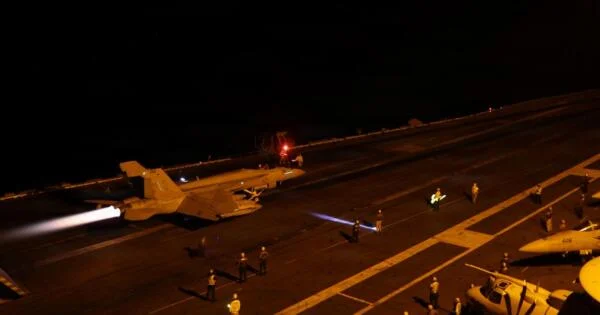
The strike that broke a five-week lull in the U.S.-Iran war landed on Larak Island, a sparsely populated speck of Iranian territory near the eastern mouth of the Strait of Hormuz, late on Sunday, August 30, 2026. It was the first American attack on Iranian soil since July 29, when U.S. Central Command carried out what it called a "heavy wave of strikes" on dozens of Islamic Revolutionary Guard Corps (IRGC) targets across five provinces. That earlier campaign had followed a brutal stretch of fighting after the United States and Israel opened the war on February 28, 2026, with strikes that killed Iran's Supreme Leader, Ayatollah Ali Khamenei, along with several senior commanders and, according to Iranian accounts, dozens of schoolchildren in the southern town of Minab. President Donald Trump predicted at the time that the conflict would last "four to five weeks." Six months later, by nearly every measure, it has not gone to plan.
Iran's clerical establishment did not collapse, as Washington and Israel had hoped; instead it hardened around Khamenei's son, Mojtaba Khamenei, who assumed the title of Supreme Leader and has surrounded himself with hardline military figures. The war has since sprawled well beyond its original front, drawing in Jordan, Bahrain, Kuwait, Qatar, the UAE and Iraq, and repeatedly threatening to choke off the roughly one-fifth of global oil and natural-gas cargo that transits the Strait of Hormuz. A series of ceasefires — an April truce and a June memorandum of understanding — both collapsed within weeks, and by late August the conflict had entered an uneasy stalemate: Trump had abandoned an especially aggressive plan to bomb Iran's energy infrastructure after Saudi Arabia's Crown Prince Mohammed bin Salman personally urged restraint, and U.S. and Omani officials were quietly brokering a framework for Iranian- and Omani-flagged shipping to resume moving through the strait under U.S. Navy escort. Roughly seven million barrels a day had begun flowing again along that Omani corridor in the week before the Larak strike, a fragile sign that the worst of the shipping crisis might be easing.
Key Developments
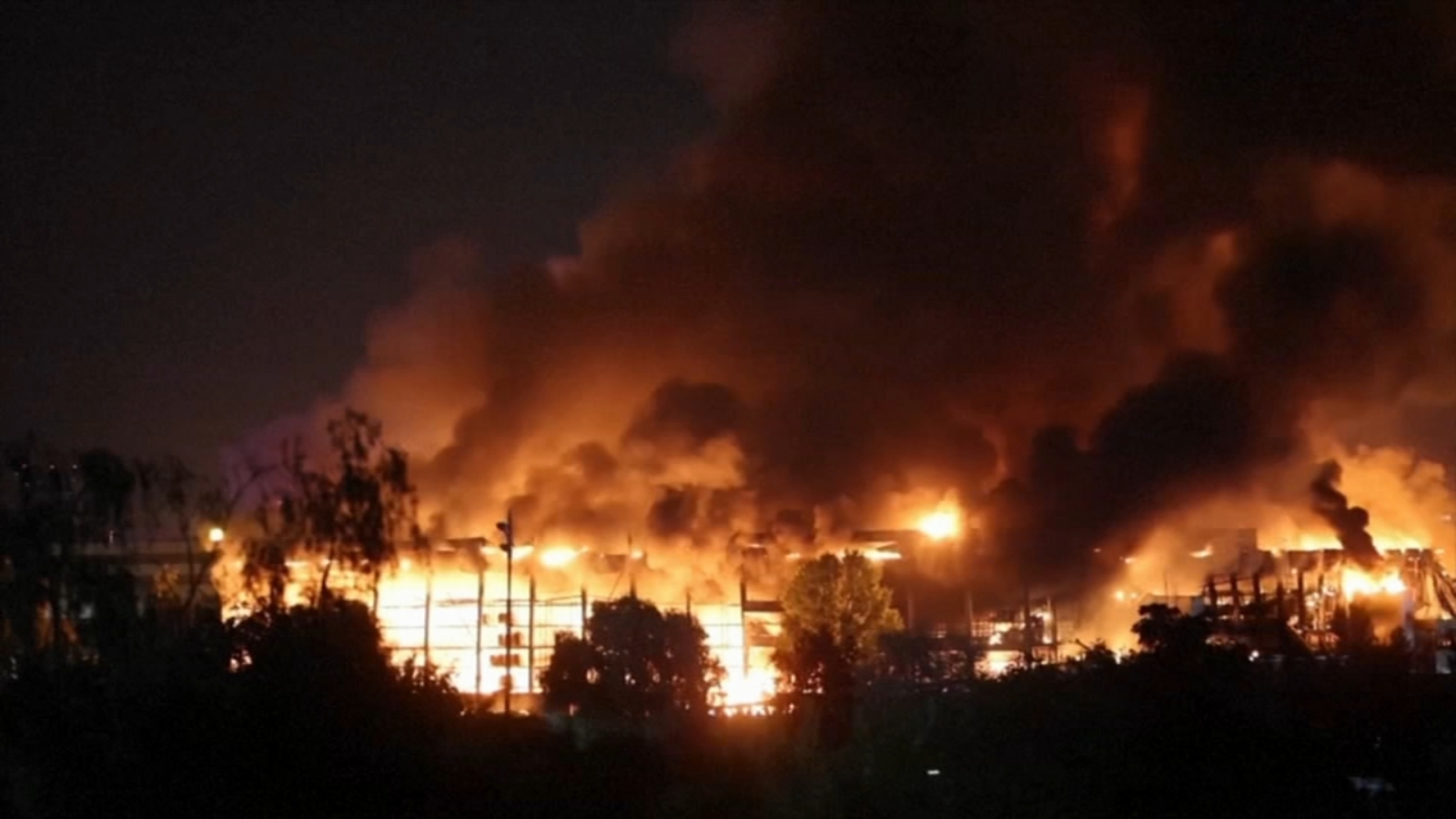
That calm ended abruptly. U.S. officials said intelligence had detected IRGC personnel on Larak Island preparing rocket launchers modified to fire sea mines into the strait's shipping lanes — a tactic Iran had used earlier in the year to disrupt tanker traffic and that the U.S. Navy had only recently finished clearing. American forces struck two of the launch sites overnight on August 30, destroying them before, U.S. officials say, any mines could be deployed. Iranian state media reported that the strike killed two people and wounded two others; Tehran's Deputy Foreign Minister, Kazem Gharibabadi, said the attack would draw a "decisive response," while the IRGC's own statement, carried by the state news agency IRNA, promised the strike "will be responded to" and would lead to "punishment of the aggressor."
Iran made good on that threat within hours, launching ballistic missiles at a U.S. military base in Jordan. American and allied air-defense systems intercepted nearly all of the incoming missiles, and no significant casualties or damage were reported on the American side as of Monday. It was a strikingly familiar pattern for a war that has cycled repeatedly through strike-and-counterstrike sequences since February, but the timing was notable: this exchange came almost exactly at the war's six-month mark, undercutting a wave of commentary — including detailed retrospectives from Al Jazeera, ABC News and others published just two days earlier — arguing that the conflict had settled into exhaustion and stalemate.
Financial markets registered the shift immediately. Brent crude, which had been trending lower amid hopes that the Hormuz corridor was stabilizing, jumped more than 1.5% to around $89–90 a barrel on Monday, while U.S. West Texas Intermediate crude rose to roughly $84.60. Energy analysts framed the strike as evidence of Washington's growing impatience with slow-moving sanctions pressure on Iran, and of Tehran's continued willingness to test American red lines around the strait even as it negotiates, through Oman, over how shipping might resume more durably. Oman's government, for its part, signaled it intends to continue backing the U.S.-brokered shipping arrangement despite the flare-up, though officials in Muscat acknowledged that shipping volumes through the corridor were likely to dip again in the days immediately following the strike as insurers and shipping companies reassessed the risk.

Reactions
President Trump, addressing reporters on Tuesday, framed the Larak strike as a defensive necessity rather than a resumption of offensive operations, warning that "Iran has been notified that any ship or boat placing new mines will be immediately and systematically destroyed." The statement was consistent with the administration's public position since the failed June memorandum of understanding: that the U.S. will not initiate a new bombing campaign against Iranian infrastructure but will respond forcefully to any direct threat to shipping lanes. That position has occasionally put Trump at odds with his own vice president; JD Vance said earlier in August that keeping oil and gas prices low was the administration's paramount goal in the conflict, a framing Trump publicly contradicted days later by insisting that preventing an Iranian nuclear weapon remains the "No. 1" objective.
In Tehran, the government's rhetoric remained defiant. Gharibabadi's promise of a "decisive response" echoed language Iranian officials have used throughout the war, even as the country's economy buckles under the strain: inflation has approached 70–80% by various estimates, and the rial has continued sliding against the dollar. Gulf states that have repeatedly found themselves caught in the crossfire — Bahrain, Kuwait, Qatar, the UAE and Jordan among them — again avoided direct public criticism of either side, a reflection of their precarious position as hosts to U.S. forces within range of Iranian missiles. Congressional reaction in Washington was more muted than after earlier escalations, with lawmakers from both parties largely reiterating existing positions: Republicans generally backing the administration's right to protect shipping lanes, and Democrats renewing calls, so far unsuccessful, for a war-powers debate on the conflict's legal basis.
What's Next
The immediate question is whether the Larak strike proves to be an isolated, defensive flare-up or the opening move in a renewed escalation cycle of the kind that has repeatedly derailed diplomacy over the past six months. Oman-mediated talks over a more permanent Hormuz shipping arrangement were reportedly nearing a more advanced stage before the strike; whether they survive this latest exchange, or the missile attack on the U.S. base in Jordan, will be an early test of both sides' appetite for further conflict. Markets will be watching shipping data out of the Omani corridor over the coming days for signs of whether the roughly seven-million-barrel-a-day flow restored in recent weeks holds up or reverses.
More broadly, the episode underscores how little the underlying dynamics of the war have shifted despite six months of fighting, three failed diplomatic frameworks, and enormous cost on both sides. Iran's leadership, hardened rather than toppled, retains both the capability and apparent willingness to contest the strait by force; the United States, having abandoned more sweeping plans to bomb Iranian energy infrastructure, appears set on a narrower strategy of protecting shipping lanes while relying on economic pressure — sanctions, the naval presence, and diplomatic isolation — to force concessions over time. Whether that narrower approach can produce a durable settlement, or simply resets the clock until the next incident, remains the central unanswered question of the war's second half-year.
Published By | News Editor