Written By | Entertainment Desk
'Ride Lonesome,' released Friday, reunites the musicians who made 'Sea Change' and 'Morning Phase' and completes a trilogy the songwriter spent three decades working up the nerve to finish
LOS ANGELES
There is a particular kind of record that arrives without a marketing hook and immediately reorganises an artist's catalogue behind it. Beck has now made three of them, and as of Friday the set is complete.
'Ride Lonesome,' his fifteenth studio album, came out on September 18 via Capitol Records. It is his first in seven years - the longest gap of a career that began in 1993 - and the reviews landing this weekend are close to unanimous. The album holds an 87 on Metacritic from eleven critics, which the site classifies as universal acclaim. The Guardian's Alexis Petridis called it a stunning end to the heartache trilogy of 'Sea Change' and 'Morning Phase.' Mojo's Tom Doyle called it a masterpiece of melancholia.
Beck's own description, offered to NME this week, was more evocative and more useful: 'slow motion, twilight, Mojave, acoustic, a trance of sound and emotion.'
The Wrecking Crew, reassembled
The album was recorded in Room B at United Studios in Hollywood, and the personnel list reads like a reunion notice. Smokey Hormel, Joey Waronker, Justin Meldal-Johnsen, Roger Joseph Manning Jr. and Jason Falkner - the musicians who played on 'Mutations' in 1998, 'Sea Change' in 2002 and the Grammy-winning 'Morning Phase' in 2014 - are all back. Beck produced. Nigel Godrich, who produced 'Sea Change,' mixed.
Beck calls the group his version of the Wrecking Crew, the Los Angeles session players who quietly made half the hit records of the 1960s. 'It's a relationship over many decades that just gets deeper and has more shapes, colour and nuance through time,' he told NME.
The twelve songs were mostly cut live, five people in a room, with orchestral arrangements layered over the top. 'Take no punches, tape no changes, this is who we are and this is what we sound like together sitting in a space in realtime,' Beck said. He is not evangelising against technology - programming beats on a laptop is fine, he says - but he has spent the last decade drawn to orchestras. 'The beauty of 80 people sitting together, playing a piece of music just feels so humanly indulgent. In a world of things being optimised and streamlined, it just feels so beautifully counterintuitive yet humanising.'
The record he shelved
The seven-year gap was not idleness. Beck toured repeatedly in that window, including an acclaimed orchestral run with the BBC Concert Orchestra at the Royal Albert Hall last year. But the album itself was finished, then abandoned.
'In another era, it probably would have come out a year and a half ago,' he said. 'I was initially going to finish this record and have it come out in 2023, but I ended up shelving it for two years. I wasn't sure about the songs, I didn't think they were strong enough, and I just wasn't in the mood for what the record would require to really fully live it and bring it to life.'
Asked whether that was being hard on himself, he offered a correction: 'I'm realistic. You hope for the best for some of your songs, but as you get older you're a little more realistic about what the song is and what it could be.'
'It's kind of a heartbreak record. It's pretty obvious.'
Where 'Sea Change' documented the end of a nine-year relationship and 'Morning Phase' circled the same territory from a warmer distance, 'Ride Lonesome' finds Beck in his mid-fifties, writing in the wake of divorce, and declining to encode any of it.
'It's kind of a heartbreak record. It's pretty obvious,' he said. 'A lot of the writing is very direct. It's about reckoning with loss, letting things go, navigating these emotionally impossible places and trying to get through those moments. There's romantic loss, there's losing a loved one - a good friend - and just changing eras of your life.'
Then came the line that reframes the entire trilogy. 'These are the kind of songs I wanted to do when I was young, but the musical climate at the time was pretty inhospitable to this kind of music. It took a long time to get that kind of courage to be this direct and emotional.'
Why sincerity was dangerous in 1994
It is easy now to forget how hostile the mid-1990s were to earnestness. Beck remembers precisely: getting up in bars and all-ages cafes, playing finger-picked acoustic songs, being heckled until he switched tactics and ended sets by screaming about MTV to get the crowd's fists back in the air.
He watched friends carry the same burden. 'I was friends with Elliott Smith, Lou Barlow - they were writing more quiet and introspective music at a time when it just wasn't fashionable.'
Sincerity, he agrees, was regarded as 'nauseating.' His response was to build the opposite: a genre-smashing persona that let him hide in plain sight. 'For me the only thing that was punk was to flagrantly smash rap together with country, noise and symbolist poetry and see what happens.' He was told, repeatedly, that this read as insincerity - as a refusal to claim a sound of his own.
That history is why 'Ride Lonesome' matters more than a good late-career album usually does. The artist who spent the 1990s making irony a formal strategy has produced a record with no ironic distance in it at all.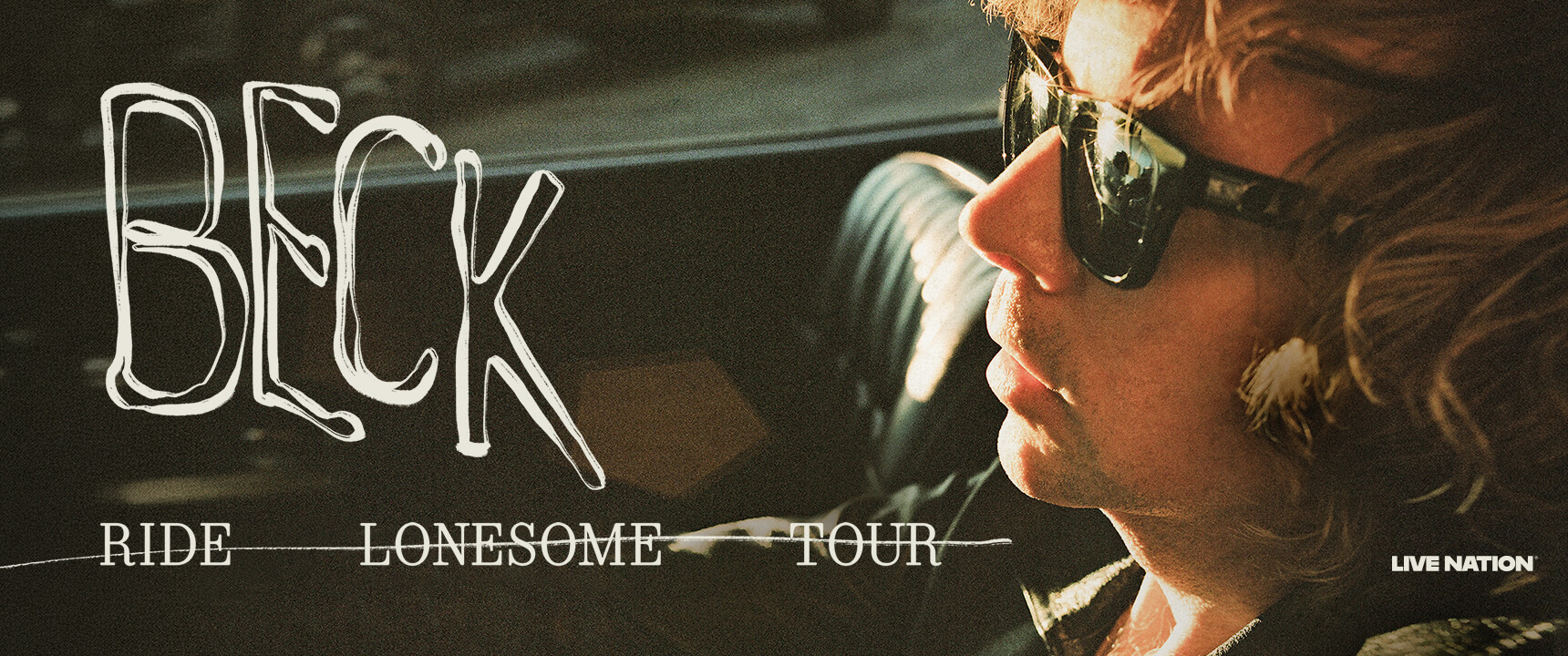
What to listen for, and what comes next
If you have never gone deeper into Beck than 'Loser' and 'Where It's At,' this is an unusually good place to start, because it asks nothing of you except attention. Twelve songs, luxurious orchestral arrangements, a voice that has acquired grain. The title track opens; 'Disappearing Act,' released as the third single on August 19, is the most immediate entry point; 'In the Night' is where the record settles into its deepest register. By Beck's own reckoning it sits closer to 'Morning Phase' than 'Sea Change' - which is to say the grief here has been lived with rather than freshly sustained.
A North American tour opens on September 22, and he is promising something other than a rock show: 'It's going to be slow and dark with a quality of otherness and remoteness. I don't want it to feel like a rock show, I'm going for a theatre production directed by Robert Wilson or something.'
As for the next seven years, he is noncommittal. 'I have records that have been simmering for many years. They're ready when they're ready.' Some of the songs on 'Sea Change,' he points out, were a decade old when it came out. Patience, in this corner of his catalogue, is the method.



