Written By | Business Experts
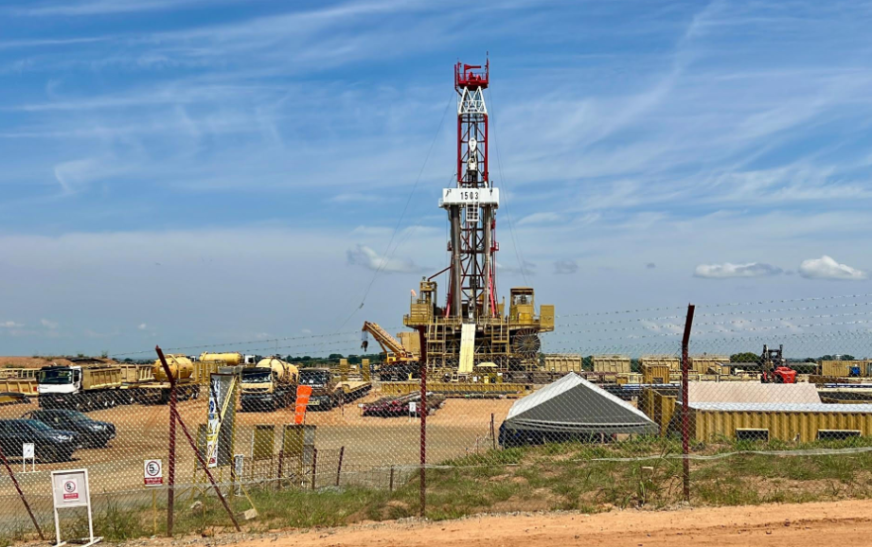
Reports put Tilenga at roughly 97 percent complete, with 164 of a planned 170 wells drilled, while Kingfisher has finished drilling all 19 wells needed for first oil
Business & Economy
Uganda is approaching a defining economic threshold. After nearly two decades of exploration, delay and controversy, the country is on the verge of pumping its first commercial oil from the Lake Albert basin — a milestone the government says will lift growth into double digits. The prospect arrives just as fresh data show the broader economy losing momentum, sharpening both the promise and the pressure of the oil era now beginning.
What is happening
President Yoweri Museveni has repeatedly reaffirmed that 'first oil' will flow in 2026, with officials pointing to targets in the June–July window. The country's two flagship upstream developments are in their final stages: the TotalEnergies-operated Tilenga project, designed to deliver about 190,000 barrels per day, and the CNOOC-operated Kingfisher project, expected to add roughly 40,000 barrels per day. Together, the Lake Albert developments are projected to reach a peak of around 240,000 barrels per day.
Physical progress has been substantial. Reports put Tilenga at roughly 97 percent complete, with 164 of a planned 170 wells drilled, while Kingfisher has finished drilling all 19 wells needed for first oil. The critical piece of export infrastructure — the 1,443-kilometre East African Crude Oil Pipeline (EACOP) running from Kabaale in western Uganda to the Tanzanian port of Tanga — has reached roughly 79 percent completion, with all line pipe delivered and more than 1,000 kilometres already welded. The heated pipeline is designed to move up to 216,000 barrels per day, ramping toward about 246,000.
Growth is cooling as oil approaches
The oil countdown coincides with a visible slowdown in the wider economy. According to the Uganda Bureau of Statistics, the economy grew 5.8 percent year-on-year in the third quarter of the 2025/26 fiscal year — a marked deceleration from 8.5 percent in the same quarter a year earlier. The cooling was broad-based. Agriculture, the sector that employs the largest share of Ugandans, slowed sharply to 2.1 percent growth from 10.3 percent a year before. Industry expanded 5.9 percent, supported by manufacturing (up 4.8 percent) and construction (up 7.2 percent), while services also softened.
Other indicators paint a more stable picture. Annual headline inflation for the year to March 2026 stood at about 2.8 percent, low and broadly steady. The Uganda shilling, however, weakened, averaging about 3,620 to the US dollar in the quarter, a depreciation of roughly 2.3 percent from the previous quarter. Private-sector credit grew modestly, with outstanding commercial bank loans rising 2.7 percent to reach 76.8 trillion shillings — a sign that lending is expanding but not booming.
The key players
The oil project is a three-way partnership. France's TotalEnergies is the lead operator and the largest foreign investor, holding stakes across Tilenga and the pipeline. China's CNOOC operates Kingfisher. The Uganda National Oil Company (UNOC) represents the state's commercial interest and has taken on a growing role, including in the pipeline venture. Overseeing the fiscal and policy framework are the Ministry of Finance, which has tied its medium-term growth projections to the sector, and the Petroleum Authority of Uganda as regulator. The Uganda Investment Authority has projected the economy could approach the 66-billion-dollar mark in 2026, with oil a central driver of the next phase.
Background and context
Uganda discovered commercially viable crude in the Albertine Rift in 2006, but turning that discovery into exports has been a long, contested journey. Disputes over taxation, refining, infrastructure financing and route selection repeatedly pushed back the timeline. In recent years the estimate of recoverable reserves was raised to around 1.65 billion barrels, strengthening the commercial case even as the schedule slipped from one target to the next. EACOP, in particular, became a lightning rod: at a cost of roughly five billion dollars, it drew sustained opposition from climate campaigners and some human-rights groups, and several international banks and insurers declined to participate, forcing the partners to assemble alternative financing.
That controversy has not disappeared. The pipeline remains politically and environmentally charged, and analysts note that 'first oil' is a starting line rather than a finish — commercial ramp-up, steady export volumes and actual revenue will take time to materialize. Some observers have cautioned that full production could stretch toward 2027, and that optimistic mid-2026 targets may prove tight.
Why it matters
For Uganda, oil represents the largest single bet on structural economic transformation in the country's modern history. The government envisions petroleum revenue funding infrastructure, industrialization and a move up the value chain, anchored by a planned refinery and the Kabaale industrial park near the fields. If the sector performs as projected, it could reshape the fiscal picture, ease pressure on the shilling over time, and reduce reliance on agriculture and external borrowing.
But the risks are equally real. Resource booms carry the danger of the so-called 'oil curse' — currency distortions, neglected non-oil sectors, corruption and governance strains. The current slowdown in agriculture is a reminder that the sectors employing most Ugandans need attention regardless of what happens underground. How transparently oil revenues are managed, and how much of the windfall reaches ordinary citizens, will determine whether the milestone becomes a genuine turning point or a missed opportunity.
What to watch next
The immediate signal to watch is confirmation of first oil itself and, more importantly, the pace of ramp-up thereafter. Beyond that, key markers include the completion and commissioning of EACOP, progress on the long-promised domestic refinery, the trajectory of the shilling and inflation as dollar inflows begin, and whether the government publishes clear, credible accounts of oil earnings. Equally important is whether policymakers can reverse the slowdown in agriculture and services so that growth is broad rather than narrowly concentrated in one enclave sector. Uganda has waited two decades for this moment; the coming months will begin to reveal what it is actually worth.



