POLITICS
A 1.3-acre strip of land directly in front of Uganda Railways Corporation's Kampala headquarters, opposite Victoria University, has become the latest flashpoint in Parliament's long-running effort to claw back state property from politically connected businessmen. On July 30, MPs sitting on the Committee on Physical Infrastructure grilled Uganda Railways Corporation (URC) officials over how a company linked to businessman Godfrey Kirumira came to hold what the committee says is a 99-year lease over land the corporation considers its own, reigniting a debate about land governance, corporate transparency and the state's capacity to protect its assets that has simmered in Uganda for years.
What Is Happening
The session, chaired by committee chairperson Hon. Mwine Mpaka, was called to examine a cluster of long-standing complaints against URC: missing railway wagons, disputed land holdings, and irregularities in procurement and staff training. It was the railway land question that dominated proceedings. URC Managing Director Benon Kajuna told MPs that the land was originally leased by the then Kampala District Land Board to Kampala City Council (KCC) for 99 years in 2000. KCC, in turn, granted a five-year lease over the property to Philadelphia Trade and Industry Limited on June 1, 2006. According to Kajuna, when that company later sought to convert its interest into a full 99-year lease, the process stalled because URC lodged a caveat on the property on April 27, 2012, before the extension could be completed.
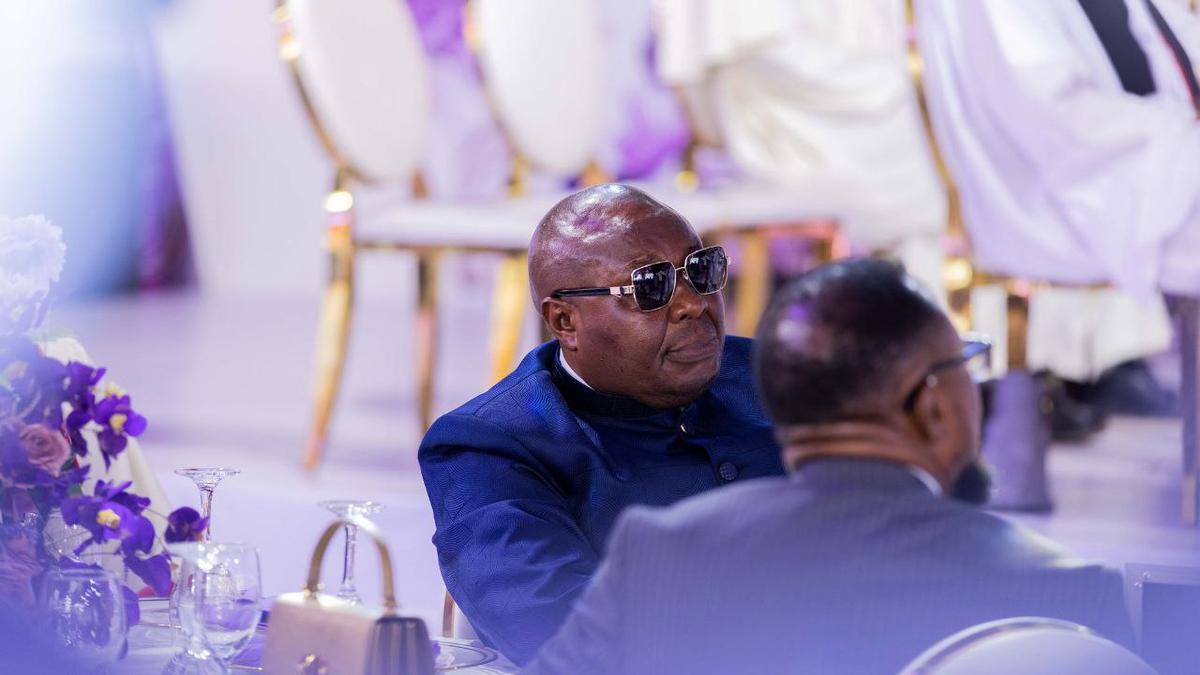
Mpaka rejected that account on the floor of the committee. He said MPs had independently searched the land registry the previous day and found that Philadelphia Trade and Industry Limited already holds a 99-year lease over the land, not the interrupted five-year interest URC officials described. "We did a search as a committee yesterday and he (Kirumira) actually has 99 years on this land and he is MS Philadelphia," Mpaka told the hearing, directly implicating Kirumira as the beneficial owner behind the corporate entity. The committee said a further search at the Uganda Registration Services Bureau (URSB) confirmed that Philadelphia Trade and Industry Limited is owned by members of the Kirumira family. MPs have now resolved to summon Kirumira directly to explain how the company acquired and holds the land.
Background And Context
The dispute did not arise in isolation. It sits inside a much larger, chronic problem for URC: the corporation says it has identified more than 24,600 cases of encroachment on land along its rail corridors nationwide, a figure that illustrates just how much state railway property has been lost, informally settled, or absorbed into private landholdings over the decades since Uganda's railway system began winding down as a functioning transport backbone. Much of this erosion traces back to the 1990s and 2000s privatisation era, when railway assets were leased out, sub-let and, in many documented cases, never properly returned or accounted for.
Kajuna told the committee that URC has repeatedly written to the Ministry of Finance, Planning and Economic Development asking for the return of land titles that were retained by the ministry following the privatisation process, but has not received a response. He warned that, absent ministry cooperation, the corporation may be forced to apply for special certificates of title using whatever documentation it already holds, effectively fighting a title battle on multiple fronts at once. URC's stated response plan includes reopening boundaries, migrating titles, carrying out fresh land surveys, and pursuing legal action against what it calls illegal titles across its network.
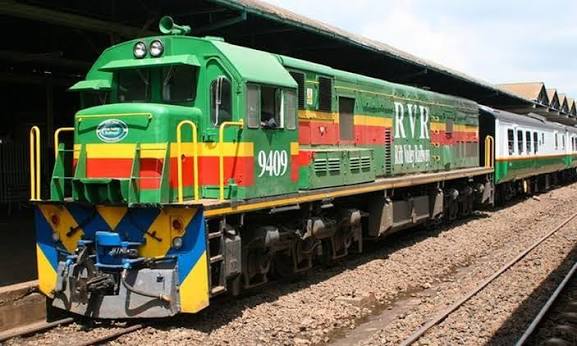
The land dispute also lands at a moment when the Ugandan government is trying to revive rail as a serious freight and passenger alternative. Kajuna told MPs that government has invested more than Shs100 billion in rehabilitating the metre gauge railway and a further Shs105 billion in acquiring and rehabilitating rolling stock and other critical infrastructure, investments the corporation says are meant to improve freight operations, restore passenger confidence, and cut the cost of moving cargo across the country. Losing prime land next to its own headquarters to a private lease undercuts that revival narrative and raises uncomfortable questions about whether the same encroachment pattern playing out along rural rail corridors is also happening in the heart of Kampala.
Who Are The Main Players
Godfrey Kirumira is a well-known Ugandan businessman with interests spanning manufacturing, real estate and other sectors; Philadelphia Trade and Industry Limited is the corporate vehicle at the centre of the dispute, which the committee says is owned by his family. On the government side, URC Managing Director Benon Kajuna represented the corporation's institutional account of events, while Committee Chairperson Mwine Mpaka led the parliamentary pushback, backed by the committee's own investigative search of land records. The Ministry of Finance, Planning and Economic Development is also implicated as the custodian of retained land titles that URC says it cannot get returned.
Why It Matters
Beyond the specifics of one 1.3-acre plot, the case is a live test of Parliament's appetite and capacity to hold both private businessmen and public corporations accountable for the handling of state land — a subject with a long and often disappointing history in Uganda, where politically connected individuals have frequently been accused of acquiring public or contested land with limited consequence. It also matters for URC's institutional credibility at precisely the moment the government is pouring fresh money into rail rehabilitation and trying to convince investors and the public that the corporation can manage its assets competently. A high-profile failure to protect land immediately outside its own headquarters would be a difficult story for URC to counter.
The episode additionally speaks to broader anxieties about land governance across Uganda, where disputes over customary, leasehold and titled land remain one of the most persistent sources of local conflict and litigation. Analysts tracking Uganda's political risk landscape have flagged land disputes, alongside economic stagnation and succession uncertainty, as a rising source of local-level tension, making high-profile cases like this one useful barometers of how seriously state institutions are taking the problem.
What To Watch Next
The most immediate development to watch is whether Kirumira actually appears before the Committee on Physical Infrastructure as summoned, and what explanation he offers for holding what the committee says is a full 99-year lease despite URC's account of an interrupted extension process. Also worth watching is whether URC follows through on its stated intention to pursue special certificates of title and legal action against contested holdings, a strategy that could trigger further court battles given the scale of encroachment the corporation says it faces. Finally, the Ministry of Finance's response — or continued silence — on returning retained land titles to URC will be a signal of whether the executive branch is willing to back Parliament's push on this issue or let it stall, as similar land accountability efforts have in the past.
Published By | News Editor