A name, and what it signals
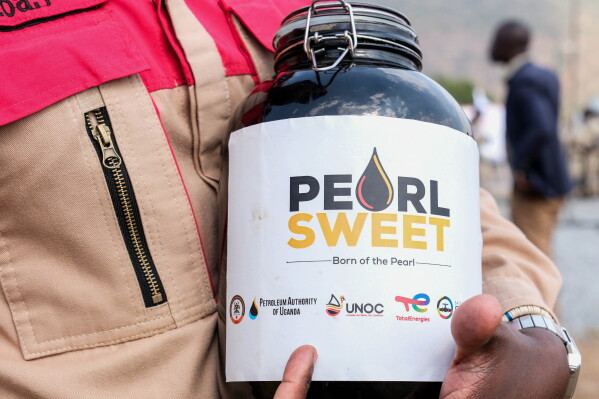
On 2 September, at a ceremony in the Kingfisher Development Area on the shore of Lake Albert, President Yoweri Museveni unveiled the name under which Uganda's export crude will be sold to the world: Pearl Sweet. It is, on its face, a branding exercise. In practice it is the clearest signal yet that a project nearly two decades in the making is about to start earning money.
International crude oils trade as identifiable grades. Refiners, traders, shipping companies, price-reporting agencies and analysts need a name to attach to a cargo so they can recognise its origin and quality and build a pricing history around it. Until this week Uganda's barrels had no such identity. Pearl Sweet will now appear on cargo documentation, refinery specifications and international trading databases — the administrative furniture of a country that sells oil.
The name carries two messages at once. 'Pearl' invokes Uganda's long-standing description as the Pearl of Africa, a phrase attributed to Winston Churchill. 'Sweet' is a technical classification denoting low sulphur content, a quality refiners pay up for. The blend is described as medium-light, with an API gravity in the 28–31 degree range — a profile that yields a higher share of light products and is easier and cheaper to refine.
The projects behind the barrel
Pearl Sweet will combine processed crude from two upstream developments. Tilenga, operated by TotalEnergies EP Uganda, is designed for roughly 190,000 barrels per day at peak. Kingfisher, operated by CNOOC Uganda Limited, is designed for about 40,000 barrels per day. Together they are expected to deliver approximately 230,000 barrels per day at plateau, drawn from the Lake Albert Integrated Development, which is built around some 1.65 billion barrels of recoverable resources.
Crude from both fields will be comingled at the Kabaale Shared Facilities in Hoima before entering the East African Crude Oil Pipeline. EACOP is the piece that turns a landlocked producer into an Indian Ocean supplier: a 1,443-kilometre buried and electrically heated line running from Kabaale to a marine export terminal at Chongoleani, near Tanga on Tanzania's coast. It is the longest electrically insulated crude pipeline in the world, and its heating is not a luxury — Ugandan crude is waxy and would congeal in an unheated line. Construction has reached roughly 92.7 per cent.
The Uganda National Oil Company holds a 15 per cent participating interest on behalf of the government in both upstream projects, and through its wholly owned National Pipeline Company Uganda Limited holds 15 per cent of EACOP alongside TotalEnergies, the Tanzania Petroleum Development Corporation and CNOOC.
Taken together, Tilenga, Kingfisher and EACOP represent an investment programme of about US$15 billion, of which more than US$12 billion has already been spent. First commercial output is expected by the end of September 2026.
Who is saying what
At the ceremony President Museveni framed the moment in terms of national retention of value, telling attendees 'what you sow is what you reap' and recounting the government's long insistence on domesticating the industry rather than exporting raw barrels and importing refined fuel. He argued that refining at home supports the local economy and protects the environment, noted the prohibition on gas flaring, and cautioned that oil is finite and its benefits must reach future generations.
Proscovia Nabbanja, chief executive of UNOC, put the commercial case plainly: Pearl Sweet gives Uganda's crude what every traded grade needs — a clear identity, a defined quality and a name the market can recognise. She described the naming as opening the next phase, taking Uganda's barrels to market and building long-term relationships with refiners and traders.
Lynda Biribonwa, chairperson of the sector regulator, the Petroleum Authority of Uganda, cast the task ahead as conversion: turning petroleum resources into skills, enterprises, infrastructure, technology, industrialisation and energy security. Dr Monica Musenero Masanza, presented at the ceremony as Minister of Energy and Mineral Development, said Uganda's oil journey is anchored on efficiency and responsibility, and that progress at Tilenga and Kingfisher shows the country is ready to produce while safeguarding the environment.

What it means for the economy
The macroeconomic stakes are large. Uganda's economy grew by an estimated 6.4 per cent in real terms in the 2025/26 financial year, up from 6.3 per cent. For 2026/27, which began in July, the Bank of Uganda projects growth of 7 to 7.5 per cent, while more bullish official projections have pointed to double digits — as high as 10.2 per cent — on the strength of first oil, infrastructure investment and export growth. The gap between those forecasts is itself a story: how much oil adds in year one depends on ramp-up speed, the sequencing of EACOP commissioning, and the price environment.
Monetary conditions are, for now, accommodating the transition. At its August meeting the Bank of Uganda held the Central Bank Rate at 9.75 per cent for the eighth consecutive time, unchanged since October 2024. Headline inflation rose to 4.0 per cent in July from 3.7 per cent in June — the highest since September 2025 — but remains below the 5 per cent medium-term target. Policymakers noted that higher international oil prices had not yet produced broad-based price pressure. The central bank projects core inflation averaging 4.0 to 4.5 per cent over the next twelve months and headline inflation in a 5.5 to 6.0 per cent range, and the Governor warned that risks are tilted to the upside. The shilling, meanwhile, appreciated 1.9 per cent against the dollar between May and June and was the best-performing East African Community currency in that period.
There is also a domestic-content story with real numbers attached. Sector employment stood at 22,234 as of March 2026, with 85 per cent of those jobs held by Ugandan nationals, and more than 14,000 Ugandans have been trained and certified in oil and gas disciplines.
The risks
None of this is free of hazard, and the hazards are well documented. The first is price. A producer earning most of its new foreign exchange from one commodity inherits that commodity's volatility; the shilling weakened sharply earlier in 2026 as oil prices and global risk sentiment shifted, a reminder that the exposure runs both ways.
The second is fiscal. Oil revenue arriving in a system with existing debt-service pressure creates an obvious temptation to spend against future receipts. Uganda has legislated a Petroleum Fund and revenue-management rules; whether they bind in practice is a question the first years of production will answer.
The third is the real exchange rate. Large commodity inflows can push up the currency and squeeze agriculture and manufacturing — the classic Dutch disease problem, and a live concern for a country where coffee and other agricultural exports still employ the majority of the workforce.
The fourth is external. EACOP has faced sustained opposition from environmental and human rights campaigners and difficulty attracting some Western financing, and the project has drawn litigation and divestment pressure. Those campaigns have not stopped construction, but they shape the pipeline's cost of capital and its insurance arrangements.
What to watch next
The immediate milestone is first oil itself, expected by the end of this month. After that, the questions become operational and commercial: how quickly Tilenga and Kingfisher ramp toward plateau; when EACOP completes commissioning and the first cargo loads at Tanga; and what price Pearl Sweet actually fetches once buyers can benchmark it against comparable low-sulphur medium-light grades.
Watch, too, for UNOC's marketing arrangements — the identity of the first offtakers and the structure of those contracts will say a great deal about how much value Uganda captures. And watch the refinery. Museveni's remarks reiterated a long-held ambition to process crude domestically rather than ship it all out; the long-delayed Kabaale refinery is the test of whether that ambition becomes infrastructure.
Uganda has been talking about oil since commercial quantities were confirmed in 2006. Naming the crude is the moment the talking stops being hypothetical.
Published By | Business News Editor