HEALTH
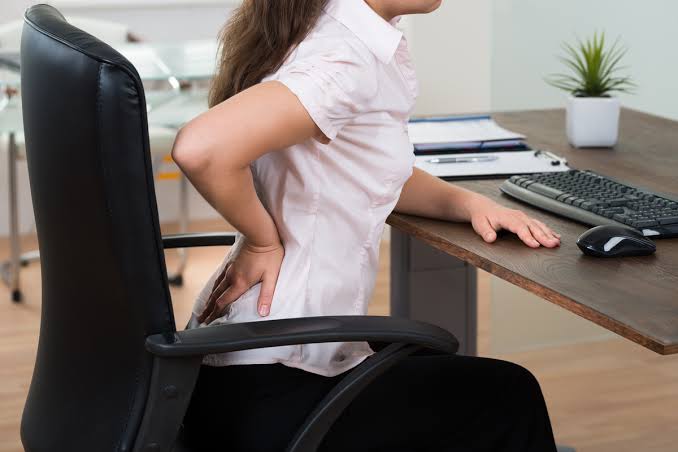
You are probably sitting down right now.
Take a second. Notice it. Notice how long you have been in that position — the desk chair, the sofa, the driver's seat, the train seat, the armchair you sank into after dinner and have not left since. Notice that your body has stopped registering it as a decision. It is just the shape your day takes.
Now consider this: a team of scientists has just tracked more than 91,000 people for twelve years and found that the shape of your day may be quietly loading the dice on whether cancer kills you.
Not how much you sit. How you sit. Specifically: whether you sit in long, uninterrupted, marathon slabs, or whether you keep breaking it up.
The headline number is 9 per cent. Every additional hour per day of what the researchers call "prolonged sedentary behaviour" was associated with a 9 per cent higher risk of dying from cancer. And the finding held after the scientists stripped out the usual suspects.
It is one of the largest and most carefully measured investigations of its kind ever conducted — and it lands a punch that gyms, standing desks and step counters have all been dancing around for a decade.
THE STUDY THAT WATCHED 91,292 PEOPLE FOR TWELVE YEARS
The research was led by Frederick Ho of the University of Glasgow, with first author Ziyi Zhou and a team spanning the United States, Australia, the United Kingdom, Chile and China. It was published in the open-access journal PLOS Medicine — and it has surged back into circulation this month as health outlets across the world picked it up, driving a fresh wave of coverage into the first week of September.
Here is what makes it different from the hundreds of "sitting is the new smoking" stories you have skimmed and ignored.
Most sedentary-behaviour research asks people how much they sit. That is a disaster of a method. Human beings are catastrophically bad at estimating their own sitting time; we forget the commute, we forget the evening, we remember the one walk we took and inflate it into a lifestyle.
Ho's team did not ask. They measured.
All 91,292 participants came from the UK Biobank, the vast British research cohort. Each one wore an accelerometer — a research-grade movement monitor — strapped to their body for seven straight days. The device did not care what they said about themselves. It recorded raw acceleration, second by second, waking and sleeping, for a full week.
Then the researchers waited. And waited. The median follow-up was 12.38 years. Over that span, the team watched who developed cancer, and who died of it.
To turn a week of raw movement data into something meaningful, they built a two-step classifier based on a random forest model — a machine-learning approach with a positive predictive value of 0.88 and a negative predictive value of 0.97 for identifying sedentary behaviour. In plain English: it was very good at knowing when you were genuinely still.
THE CRUCIAL SPLIT: 'PROLONGED' VERSUS 'INTERRUPTED'
This is the part that matters, and it is the part almost every summary gets slightly wrong.
The researchers did not simply add up total sitting hours. They divided sedentary time into two categories, and the definitions are precise.
PROLONGED sedentary behaviour: a bout lasting at least 30 minutes in which at least 90 per cent of that time was spent sedentary. The unbroken slab. The two-hour Zoom marathon. The film you did not pause. The motorway drive.
INTERRUPTED sedentary behaviour: a bout lasting under 30 minutes, or a longer bout in which more than 10 per cent of the time involved actually moving. The desk stint punctuated by a trip to the printer. The sofa evening broken by a walk to the kitchen and back.
Two people can sit for exactly the same total number of hours in a day. Under this framework, they can end up in completely different risk categories.
And that is exactly what the data showed.
THE NUMBERS THAT SHOULD MAKE YOU STAND UP
Greater amounts of prolonged sedentary behaviour were associated with a higher risk of cancer mortality — a hazard ratio of 1.09, with a 95 per cent confidence interval of 1.06 to 1.11. That confidence interval sits comfortably above 1.0, which in research terms means the finding is not a statistical fluke wobbling around zero.
But cancer death was not the only outcome. Prolonged sitting was also linked to higher overall cancer incidence — not just dying of it, but getting it in the first place.
It was linked specifically to obesity-related cancers: oesophageal, liver, kidney, pancreatic, colorectal, breast, ovarian and thyroid.
And it was linked to type 2 diabetes-related cancers.
Then came the mirror image. Interrupted sedentary behaviour — the same hours, chopped up — showed the opposite pattern across every single outcome examined. Lower risk. All of them.
Read that again, because it is the entire story in one sentence: the same amount of sitting, broken into smaller pieces, tracked with less cancer, not more.
THE 12 PER CENT SWAP
The researchers then ran what epidemiologists call an isotemporal substitution analysis — a modelling exercise that asks: what if this hour had been spent differently?
Swapping one hour per day of prolonged sedentary behaviour for LIGHT physical activity was associated with a 12 per cent lower risk of cancer death. Hazard ratio 0.88, confidence interval 0.79 to 0.99.
Light. Not a spin class. Not a 10K. Light activity means pottering. Washing up. Walking to the shop. Carrying laundry upstairs. Standing and shuffling while you take a phone call. Watering the plants.
Separate reporting on the same dataset noted that replacing 30 minutes of prolonged sitting with moderate activity tracked with around an 8 per cent reduction — meaning that on an hour-for-hour basis, simply getting up and moving gently held up remarkably well against sweating.
This is the finding with real-world teeth. Because "do 150 minutes of moderate exercise a week" is advice that a large proportion of the population has heard, understood, and comprehensively failed to act on for thirty years. "Get up more often" is a different order of ask.
WHY YOUR BODY NOTICES THE DIFFERENCE
The authors are explicit that their study cannot prove cause and effect. But they argue the pattern is biologically plausible, and they point to laboratory work to explain why.
"Our findings suggest that the health effects of sedentary behavior may depend not only on total sedentary time, but also on whether that time is accumulated in prolonged bouts or interrupted by activity," the authors write. "This pattern is biologically plausible: experimental studies have shown that interrupting prolonged sitting with short bouts of activity can improve metabolic responses compared with uninterrupted sitting."
The mechanism, as currently understood, runs roughly like this. Skeletal muscle is not passive tissue. When large muscle groups are switched off for extended periods, glucose handling deteriorates and insulin sensitivity drops within the same session. Blood lipids shift. Circulating insulin rises. Chronic elevations in insulin and insulin-like growth factor create a hormonal environment that several cancers find congenial. Add low-grade systemic inflammation and, in many long-term sitters, accumulating visceral fat, and you have a plausible chain from armchair to tumour biology.
That chain is precisely why the obesity-related and diabetes-related cancer groupings lit up in this dataset while other cancers did not show the same signal. The pattern of results is internally consistent with the proposed mechanism — which is one of the reasons this study is being taken seriously rather than filed under "another scare".
Crucially, a short bout of movement appears to reset some of these metabolic responses. The muscle switches back on. Glucose gets pulled out of the bloodstream. The system is nudged back toward baseline. Do that eight times a day and the biochemistry of your afternoon looks meaningfully different from someone who did it zero times — even if the clock says you both sat for the same eight hours.
THE CAVEATS THE SCIENTISTS PUT IN THEMSELVES
To their considerable credit, Ho and colleagues did not oversell this. The limitations section is unusually candid, and any honest account of the study has to carry them.
First, this is a single cohort. UK Biobank volunteers are known to suffer from what researchers call healthy volunteer bias — they are, on average, more physically active, better educated and in better health than the general British population. The results may not transfer cleanly to everyone.
Second, and most importantly: this is an observational study. It cannot establish that prolonged sitting directly causes cancer or cancer death. Association is not causation, and reverse causation is a genuine concern in this field — people in the early, undiagnosed stages of a serious illness often become less active before they know anything is wrong.
Third, the researchers had no information about the context of the sitting. They could not tell whether a participant was sedentary at a desk, behind a steering wheel, in a hospital waiting room or on a sofa. Those situations may carry different risks and different confounders.
Fourth, activity was measured over a single seven-day window and then treated as a proxy for more than a decade of behaviour. Lives change. Jobs change. Bodies change.
The study was funded by the American Cancer Society and the U.S. National Institutes of Health, and the authors state that the funders had no role in study design, analysis or the decision to publish. Ho declares a competing interest as a paid statistical consultant on PLOS Medicine's statistical board.
THE EXPERT VIEW: WHY THIS CHANGES THE ADVICE
The significance of this paper is less about the raw hazard ratio and more about what it does to public health messaging.
For two decades, guidance on movement has been organised almost entirely around exercise intensity. Get your 150 to 300 minutes of moderate activity a week, says the World Health Organization. Or 75 to 150 minutes of vigorous. The 2020 WHO guidelines did recommend reducing sedentary behaviour across all age groups — but conceded that the evidence was not strong enough to set a numerical threshold.
This study is part of the evidence base that starts filling that gap. And it does so by pointing at a variable nobody was measuring: pattern.
"Current health guidelines focus heavily on moderate or vigorous exercise, but our findings show that light movement shouldn't be ignored," the authors say. "Moving forward, clinical trials will help us move beyond blanket advice and develop personalised strategies for breaking up sitting time."
That last sentence is a signal. The next stage is randomised trials — actually assigning people to break up their sitting and watching what happens — rather than observing what people already do. Until those exist, the honest framing is: strong signal, plausible mechanism, not yet proof.
Context matters here too. Physical inactivity is already an established cancer risk factor. Research published in the journal Cancer estimated that roughly 3 per cent of all incident cancers in the United States — an average of about 46,356 cases a year — are attributable to physical inactivity, with strong causal evidence for seven cancer sites including bladder, breast, colon, endometrial, gastric cardia, kidney and oesophageal adenocarcinoma. The sitting-pattern finding does not replace that picture. It sharpens it.
WHAT THIS MEANS FOR YOU
Here is the practical translation, stripped of hedging.
1. Stop counting only your workout. If you run five kilometres at 7am and then sit for eleven hours, this research suggests you have not bought yourself immunity. The exercise is good. The eleven unbroken hours are a separate problem.
2. The magic number is 30 minutes. That is the threshold the researchers used to define a prolonged bout. If you can reliably break your sitting before the half-hour mark, you are moving your day out of the high-risk category as the study defined it.
3. The bar for "movement" is embarrassingly low. Light physical activity carried the 12 per cent association. Stand up. Walk to the window. Refill the water glass. Take the call pacing. Go up a flight of stairs for no reason. It does not need to be exercise. It needs to be not-sitting.
4. Restructure, don't just resolve. Willpower fails; architecture works. Put the printer in another room. Take calls standing by default. Set a repeating timer. Drink more water — the biology takes care of the rest. Move the kettle further from the desk.
5. Attack the evening, not just the office. Most people who successfully break up their workday then collapse into four unbroken hours of television. That is a prolonged bout by any definition. Stand during the ad breaks. Walk the length of the room between episodes.
6. Do not panic, and do not diagnose yourself. A hazard ratio of 1.09 per hour is a population-level signal, not a personal prophecy. Nobody in this study was told they would get cancer. Millions of long-term sitters never will.
THE BOTTOM LINE
The chair is not a murderer. But twelve years of data on ninety-one thousand people suggests it may be an accomplice — and that the difference between a dangerous day and a safer one may come down to something as small as standing up eight times instead of twice.
For once, the intervention costs nothing. No prescription, no gym membership, no app, no supplement, no appointment. Just the decision to stop treating stillness as the default setting of modern life.
The researchers are careful. They say the evidence is associative. They say trials are needed. They say the cohort was unusually healthy.
They also say that swapping one hour of unbroken sitting for gentle movement was linked to a 12 per cent lower risk of dying from cancer.
You have read this far sitting down. Now would be a good time.
Published By | Features Editor