Written By | Business Experts
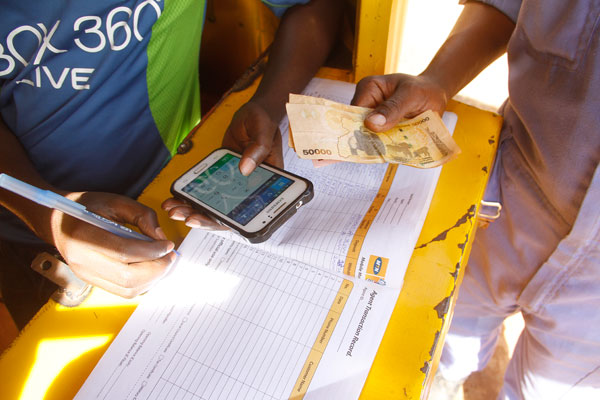
117 million connections, 87 million mobile money accounts, 2.1 billion transactions a quarter — on a base where fewer than half of users hold a smartphone
Technological Transformation
Two numbers from the Tanzania Communications Regulatory Authority's second-quarter 2026 report sit awkwardly beside each other. The first is 87.05 million: the count of registered mobile money accounts in a country of roughly 68 million people, carrying 2.1 billion transactions in the three months to June. The second is 44.74 per cent: the share of the subscriber base using a smartphone. Feature phone penetration, by contrast, stood at 83.38 per cent.
Tanzania has built one of East Africa's deepest transaction layers on devices that mostly cannot browse the internet. That is not a failure — it is an achievement of protocol design, USSD engineering and agent networks. But it defines the ceiling the country is now pressing against. Everything Tanzania wants next from its digital economy — artificial intelligence services, e-commerce, data-driven agriculture, a startup sector that scales beyond payments — requires a screen, a browser and a data session. The rails are laid. The vehicles are the constraint.
The measured base
The growth figures are genuinely strong. Total telecommunications subscriptions reached approximately 117 million by June 2026, up from 111.9 million in March — 4.51 per cent expansion in a single quarter. Internet subscriptions stood at 62.79 million. Average download speeds were 14.26 Mbps on mobile and 31.77 Mbps on fixed broadband. Internet data traffic climbed 11.65 per cent to 1,041 petabytes in the quarter, and 5G population coverage rose to 34.18 per cent from just over 33 per cent three months earlier.
Set that against the position a year earlier — 90.4 million subscriptions in the first quarter of 2025, with average mobile internet speed at 12.5 Mbps — and the trajectory is one of the steeper connectivity climbs on the continent. Subscription counts exceed population because multi-SIM ownership remains normal, so the raw figure overstates unique users; but even discounted heavily, the base has widened substantially and the traffic growth confirms that the added connections are being used rather than merely registered.
The device data is where the story turns. Smartphone penetration moved from 42.50 per cent in March 2026 to 44.74 per cent in June — a gain of 2.24 percentage points in a quarter, which is respectable but implies several years before a majority of the base can access the open web. The GSMA Handset Affordability Coalition is piloting US$30–40 4G smartphones during 2026 in six markets including Tanzania, alongside Uganda, Rwanda, the Democratic Republic of Congo, Ethiopia and Nigeria. If that price point holds at scale, it is arguably a more consequential intervention for Tanzanian digital inclusion than any additional fibre kilometre.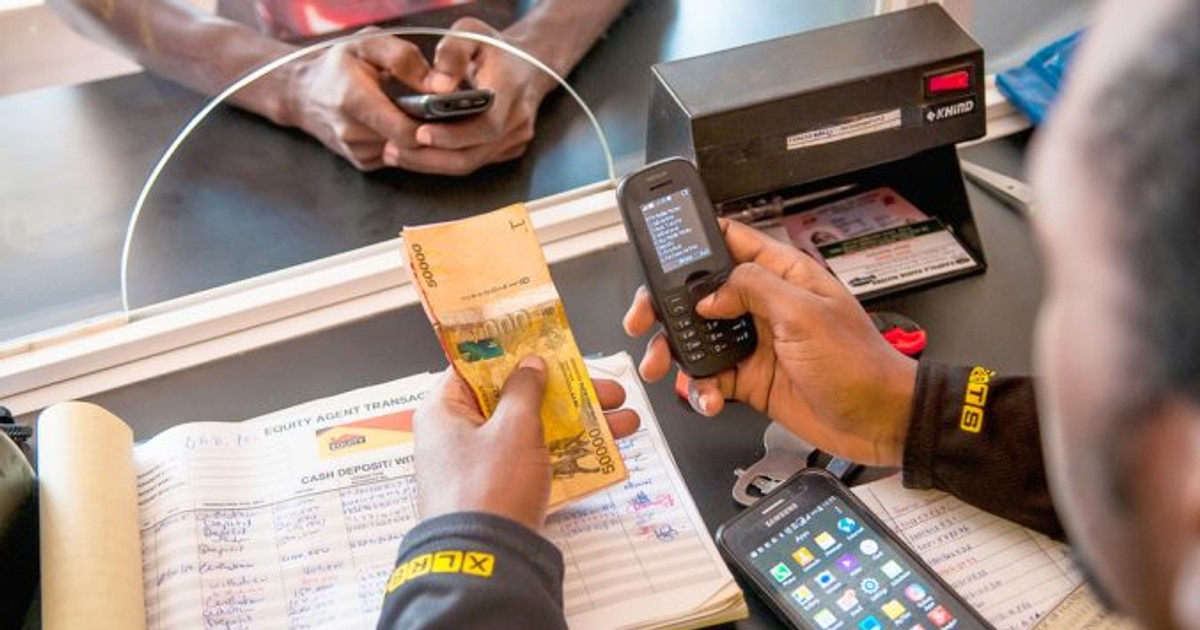
The state takes ownership of the backbone
On 10 April 2026, President Samia Suluhu Hassan inaugurated 758 new communication towers across 85 districts, extended the National ICT Broadband Backbone to 121 of the 139 mainland districts, increased backbone capacity tenfold to 2,000 gigabits per second, and formally transferred the national fibre optic network into government ownership. That last step is the quiet structural change: it converts a network built and operated under varied contractual arrangements into a state-held asset, with all the pricing, access and accountability implications that follow.
The NICTBB is expanding toward a total of roughly 16,280 kilometres, with cross-border links already running to Zambia, Malawi, Kenya, Uganda, Rwanda and Burundi. A link to the Democratic Republic of Congo features in the 2026/27 work programme — commercially attractive because eastern DRC's transit options are limited and Tanzanian ports and cable landings offer a credible route to the sea.
The tower programme reaches further into the interior than the backbone alone suggests. The Universal Communications Service Access Fund project launched in April 2026 covers all 26 mainland regions, with construction in roughly 1,400 villages across 688 wards, bringing service to an estimated eight million previously underserved citizens. UCSAF has separately upgraded 304 existing towers from 2G to 3G and 4G under the Tanzania Digital Project. Helios Towers completed 133 rural sites under the UCSAF programme during 2026, and Airtel Tanzania signed a Phase 10 agreement with the fund to extend rural coverage further. This is the unglamorous work that determines whether a national digital strategy touches a village in Katavi or stops at the edge of Dar es Salaam.
The money layer, and its concentration
Mobile money is where Tanzania's digital economy is genuinely mature. Accounts reached 87.05 million by June 2026, with transactions rising 5.38 per cent to 2.1 billion in the quarter; subscriptions had grown 5.9 per cent and transactions 7.4 per cent in the preceding quarter. Accounts have roughly doubled over five years. In practical terms, mobile money in Tanzania has stopped being a product and become infrastructure — the default rail for wages, school fees, agricultural payments, remittances and merchant settlement.
It is also highly concentrated. Three providers — Mixx by Yas, Vodacom's M-Pesa and Airtel Money — hold 89.78 per cent of subscriptions, led by M-Pesa at 40.97 per cent, Mixx by Yas at 31.02 per cent and Airtel Money at 17.79 per cent. Tanzania's early adoption of full interoperability between wallets mitigates the competitive risk substantially, since users are not locked into a single network's counterparties. But the concentration still means that pricing, outage risk and data governance for the country's principal financial rail sit with three firms.
Budget, data centres and the sovereignty question
The Ministry of Information, Communication and Information Technology tabled a budget of TZS 222.6 billion — roughly US$89 million — for 2026/27, with 94.1 per cent allocated to development projects rather than recurrent costs. The priorities named are rural towers, the NICTBB extension toward the DRC, and the construction of National Data Centres in Dodoma and Zanzibar.
Domestic data centre capacity matters for reasons beyond prestige. Latency for locally consumed services improves when content and applications are hosted in-country rather than fetched from Johannesburg or Europe; international transit costs fall; and the legal position of government and health data becomes clearer. Ninety million US dollars is a modest annual capital programme for a country of Tanzania's size, however, and the data centre ambition will require either private co-investment or multi-year commitment to reach the scale that would make Tanzania a regional hosting location rather than a national one.
The governance layer advanced in parallel. On 12 March 2026 the United Nations Economic Commission for Africa, working with the Tanzanian government and with GIZ, convened a national validation workshop for the Tanzania Electronic Data Governance Strategy — a framework aligning national practice with the African Union Data Policy Framework and covering how data generated across finance, agriculture, health and public administration is held, shared and protected. Validation is a milestone rather than an outcome; the strategy now has to be legislated and resourced. But it puts Tanzania among the African states that have written data governance rules before, rather than after, the AI systems that will consume the data.
Strategy, identity and the AI question
The policy scaffolding is in place. The Tanzania Digital Economy Strategic Framework 2024–2034 provides the ten-year direction, and Vision 2050 sets the aspiration of a technology-driven, high-productivity economy. A national artificial intelligence strategy is under development, led by the ICT ministry, with stated emphasis on ethical frameworks, data privacy, cybersecurity and inclusivity, and on applications in healthcare, agriculture, finance, education and governance.
Identity is the foundation everything else rests on. The National Identification Authority is establishing registration offices in districts nationwide, constructing its headquarters in Dodoma and developing an ICT training and equipment maintenance centre at Kibaha. The central objective is to link the Jamii Namba national identity number to all state services — the step that turns a registration database into usable digital public infrastructure. Until that linkage is broad and reliable, each government service continues to run its own verification, and citizens continue to prove who they are repeatedly to the same state.
A commercial layer that is finally moving
Tanzania's startup ecosystem has historically been the weak link, and 2026 changed the shape of that. Startups raised US$52 million between January and June 2026, making Tanzania Africa's fifth-largest startup funding destination for the period. The comparison that matters is with its own recent history: the ecosystem raised under US$20 million across the whole of 2025, and US$53 million across the whole of 2024. Half a year of 2026 nearly matched the best previous full year, and reaching US$100 million for the calendar year requires a further US$48 million before December.
Context sharpens the achievement. Outside Africa's established 'big four' of Egypt, Nigeria, Kenya and South Africa, only Tanzania, Côte d'Ivoire and Morocco attracted more than US$25 million in the first half of 2026 — and this during a period of continental funding contraction. The persistent structural weakness is the dependence on foreign capital: domestic institutional investors, pension funds and family offices remain largely absent from early-stage venture, which leaves the ecosystem exposed to sentiment shifts in London, Dubai and San Francisco. Diversification beyond payments into artificial intelligence and climate technology, and a reduction in regulatory friction, are the two levers most often named by participants.
The ceiling, restated
Tanzania has done the hard, capital-intensive, politically unrewarding work: laid the backbone, taken it into public ownership, pushed towers into 1,400 villages, built a payments system used by almost everyone, and written its data governance rules before the AI wave arrives. On the supply side, the country is well ahead of where its per-capita income would predict.
What it has not yet solved is the demand side, and the binding constraint there is a handset costing more than many households earn in a month. A feature phone can hold a wallet; it cannot hold a browser, an app store, a video consultation or an AI assistant. Every one of Tanzania's stated ambitions for the next decade — the Vision 2050 productivity economy, the AI strategy, the data-driven agriculture, the startup sector that graduates beyond mobile money — presumes a smartphone in the user's hand. At 44.74 per cent and rising roughly two points a quarter, the arithmetic says the majority crossing arrives around 2028. Whether the affordable-handset programmes now in pilot can pull that date forward is, more than any fibre or data centre decision, the question that will determine how much of Tanzania's digital build-out gets used.



