HARARE, Zimbabwe
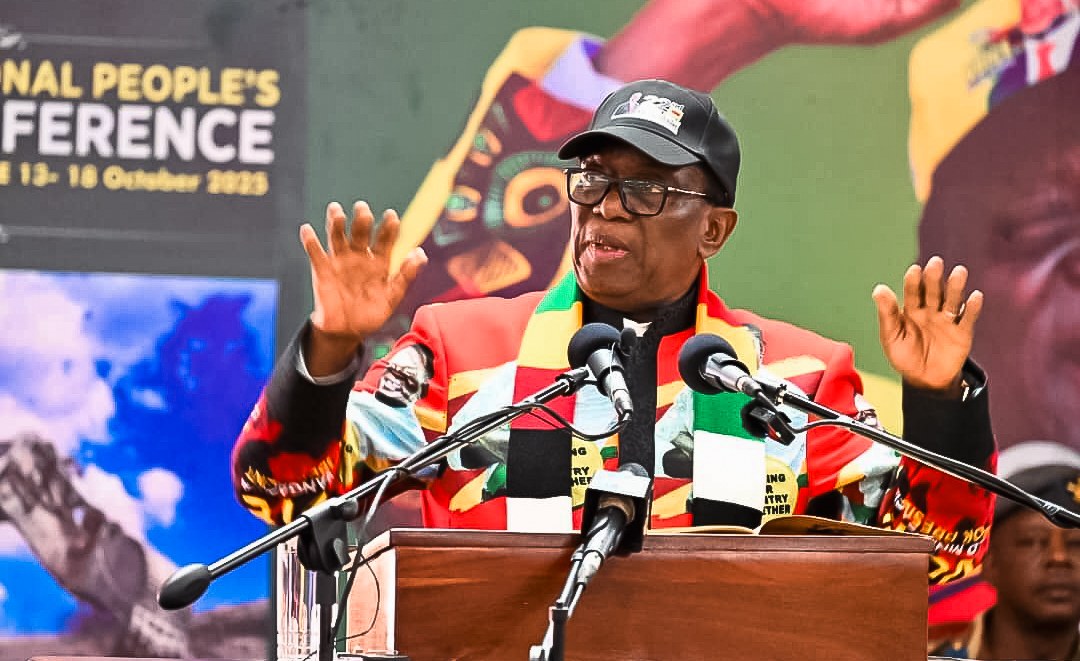
Zimbabwe's main opposition party has mounted a fresh legal challenge to a constitutional amendment that would keep President Emmerson Mnangagwa in office until 2030, arguing in Constitutional Court filings that the changes were unlawfully pushed through without the national referendum the country's own constitution requires. The renewed court battle has taken on added political weight this week after regional leaders meeting at the Southern African Development Community's 46th summit in Durban conspicuously avoided any mention of Zimbabwe's constitutional overhaul — even as they congratulated Harare on winning a seat on the U.N. Security Council and praised Mnangagwa's own tenure as the bloc's outgoing chairperson. Zimbabwean opposition figures this week accused SADC of having become, in the words of one party leader, "a political shelter for incumbent governments rather than a defender of the people of Southern Africa."
The dispute centers on Constitution of Zimbabwe Amendment Act No. 3 of 2026, a sweeping package of changes that Mnangagwa signed into law on July 7 after it cleared the Senate on June 24 by a vote of 75 to 4 and the National Assembly on June 30 by 226 votes to 41. The amendment extends the terms of the presidency and Parliament from five years to seven, pushes back the next harmonized elections from 2028 to 2030, and — in what opposition lawyers describe as its most consequential provision — replaces the direct popular election of the president with a system in which Members of Parliament, sitting jointly, choose the head of state. Mnangagwa, who defeated opposition leader Nelson Chamisa in the 2023 election by a margin of 52.6% to 44.0% in a contest that SADC's own observer mission, along with the Commonwealth and the European Union, criticized for irregularities and voter suppression, would be positioned to remain in power for two additional years beyond his current constitutional mandate under the new framework.
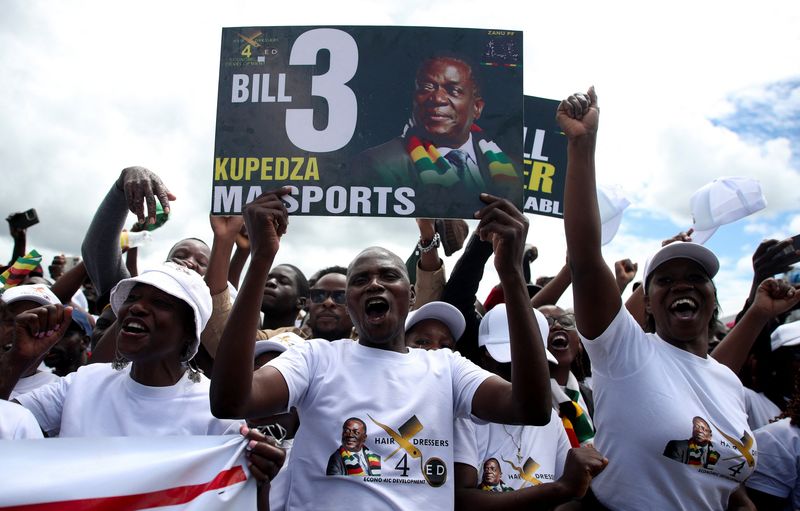
The amendment has already survived one round of legal challenges. In February, a group of six liberation war veterans — Reuben Zulu, Godfrey Gurira, Shoorai Nyamangondo, Joseph Chinyangare, Digmore Ndiya and Joseph Chinguwa — along with former legislator Prince Dubeko Sibanda, brought separate applications seeking to block the amendment before it could be enacted. The Constitutional Court heard arguments on May 20 in a hearing from which media coverage was restricted, and on June 17 a full bench chaired by Justice Bharat Patel dismissed both applications, ruling that the war veterans' case was "fatally defective" on procedural grounds and that Sibanda's challenge was not yet ripe for the court's determination. That ruling cleared the immediate path for the amendment's passage but left the underlying constitutional questions unresolved — an opening the Movement for Democratic Change, led by Douglas Mwonzora, moved to exploit weeks later.
In its application, filed July 10, the MDC argues that Mnangagwa violated the constitution by assenting to the amendment without first submitting it to a national referendum, as the party contends Section 328(6) requires whenever a constitutional bill affects the Bill of Rights. Because the amendment alters Section 92 of the constitution to transfer the power to elect the president from ordinary citizens to Parliament, the MDC's filing argues, it necessarily affects the right of every Zimbabwean over 18 "to vote in all elections and referendums to which the Constitution or any other law applies" — a right the party says has been "effectively removed" from voters and "vested exclusively in Members of Parliament." The application, authorized by a July 8 resolution of the MDC's National Standing Committee, names Mnangagwa, Parliament, Justice Minister Ziyambi Ziyambi and Attorney-General Virginia Mabiza as respondents, and goes further than the earlier war veterans' case by alleging that Mnangagwa faced an inherent conflict of interest in personally assenting to legislation from which he stands to directly benefit. "The untenable situation that the First Respondent finds himself in is that as the direct beneficiary of the Amendment he finds himself with the task of approving the same amendment," the MDC's court papers state, asking the court either to strike down the presidential-election provision specifically or to nullify the entire amendment and compel a referendum within three months.
The legal fight has unfolded alongside an increasingly open succession struggle within Mnangagwa's own ZANU-PF party. Vice President Constantino Chiwenga has publicly broken with the "ED2030" campaign that party loyalists mounted to extend Mnangagwa's rule, a rift analysts have described as a marker of Chiwenga's own positioning ahead of an eventual succession fight rather than principled opposition to term extension itself. Chamisa, for his part, resigned from the Citizens Coalition for Change in January 2024 and has signaled plans to launch a new political movement, but as of this summer no formal new party structure had materialized, leaving Zimbabwe's opposition landscape fragmented at precisely the moment the ruling party has moved to entrench its hold on power. That vacuum has shifted much of the country's live political contest inward, into the rivalry between Mnangagwa and Chiwenga camps within ZANU-PF, even as civic groups and smaller opposition parties continue pressing their case in the courts and in the court of regional opinion.
It is that latter front — regional accountability — where this week's developments have proven most pointed. SADC's 46th summit, held in Durban on Aug. 17, renewed the bloc's commitments to regional integration, industrialization and security but made no specific reference to Zimbabwe's constitutional changes in its final communiqué. Instead, the summit's statement congratulated Zimbabwe on its election as a non-permanent member of the U.N. Security Council for the 2027-2028 term, expressed confidence in the country's ability to represent SADC's interests globally, reiterated the bloc's long-standing call for the removal of Western sanctions on Zimbabwe, and commended Mnangagwa for his contributions to regional integration as he handed the SADC chairpersonship to South African President Cyril Ramaphosa. The contrast was not lost on Zimbabwean opposition figures. Mqondisi Moyo, leader of the Mthwakazi Republic Party, accused SADC of "confusing regime survival with regional stability," arguing the bloc "cannot claim to be a guardian of regional peace while continuously protecting the political comfort of governments at the expense of millions of ordinary citizens." Nicholas Ngqabutho Mabhena, secretary-general of the Zimbabwe Communist Party, was blunter still, saying he found no mention of Zimbabwe's amendment anywhere in the summit resolution. "SADC thinks the constitutional amendments are a sovereign duty which the neighbours have no say," Mabhena said, adding that the bloc's posture was unsurprising "given that Eswatini, for example, is not a democratic state and other countries like Mozambique had disputed election outcomes yet nothing was said. SADC is a club of dictators, we should not look into it for any recourse."

Both critics pointed to the effective collapse of the SADC Tribunal, once the bloc's regional judicial mechanism, as emblematic of the institution's unwillingness to confront powerful member states. The Tribunal ruled against Zimbabwe in the landmark Mike Campbell case over the country's land-reform program and referred Harare's noncompliance to the SADC Summit for action; instead, the terms of the Tribunal's judges were allowed to lapse without renewal, rendering the body effectively defunct. Moyo argued that SADC's decades of what he called "political babysitting" of Zimbabwe has produced consequences that now extend well beyond its borders, citing the sustained migration of Zimbabweans into South Africa as a symptom of the country's deteriorating political and economic conditions — a dynamic South Africa itself raised at the Durban summit in calling for coordinated regional dialogue on migration's underlying drivers. Dr. Khanyile Mlostshwa, a critical studies scholar, framed the test now facing Ramaphosa's incoming chairmanship starkly: "The central question is whether South Africa will use its chairmanship to strengthen regional accountability or simply continue the established practice of quiet diplomacy and consensus among governments."
For now, Zimbabwe's political future runs through two parallel and unresolved processes: a Constitutional Court case whose outcome could either force a referendum on the amendment or let it stand, and a regional diplomatic order that has shown little appetite to intervene either way. Should the court again decline to rule on the merits, as it did with the war veterans' case in June, the MDC's referendum argument would likely migrate to the political arena, where Mnangagwa's opponents have comparatively few levers left to pull. A ruling in the opposition's favor, by contrast, would force a genuine national referendum on the amendment for the first time — a scenario the ruling party has shown every intention of avoiding through procedural means rather than constitutional debate. Either way, the coming months will test whether Zimbabwe's judiciary is prepared to rule on the substance of a challenge to presidential power, and whether SADC's newly installed chairperson is willing to break with the pattern his predecessor just benefited from.
Published By | News Editor