INTERNATIONAL NEWS
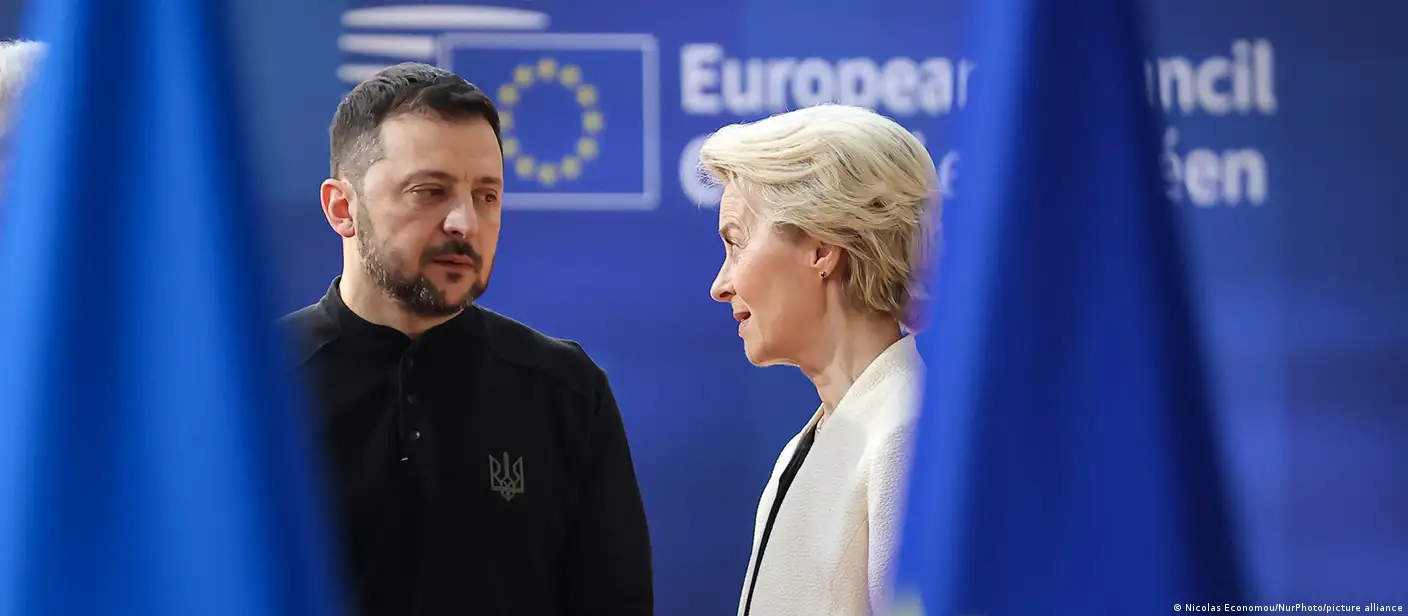
The European Union's enlargement machinery, frozen for nearly two years by a single veto in Budapest, is suddenly moving again. On July 14, EU affairs ministers meeting in Brussels formally opened a fourth negotiating cluster for Ukraine's EU accession bid, covering external relations and foreign, security and defense policy, in a session Brussels itself branded the "Super Tuesday" of its enlargement drive. EU Enlargement Commissioner Marta Kos said that with "the last roadblock" -- the government of former Hungarian prime minister Viktor Orban -- now gone, it is "undeniable" that Ukraine will "soon" become a member of the European Union, a striking change in tone after years in which Hungary's veto made the entire accession process look effectively stalled.
Background
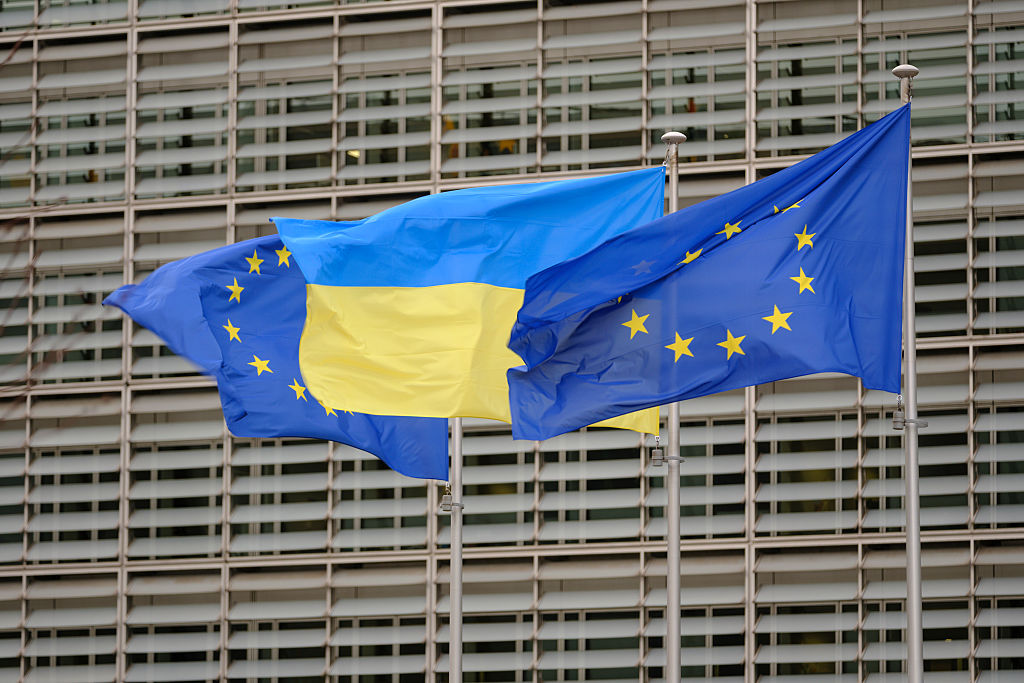
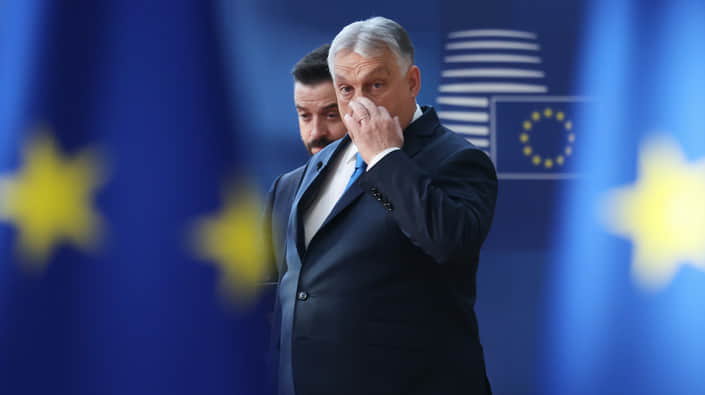
Ukraine applied for EU membership within days of Russia's full-scale invasion in February 2022 and was granted official candidate status that June, an unusually fast timeline driven by wartime solidarity. Formal accession negotiations require unanimous agreement among all 27 member states at each major step, and for most of the period since, one member state stood in the way: Hungary, under Viktor Orban, who maintained close personal and economic ties to Moscow throughout his sixteen years in power and used Hungary's veto to repeatedly block or delay EU financial aid to Kyiv, sanctions packages against Russia, and the formal launch of Ukraine's accession talks, even as the European Council granted candidate status and, later, agreed in principle to open negotiations.
That dynamic changed on April 12, 2026, when Orban's Fidesz party suffered a landslide defeat to the opposition Tisza party led by Peter Magyar, a former Fidesz insider turned Orban's most prominent domestic critic. Tisza won roughly 53.6 percent of the vote and a two-thirds supermajority of 138 seats in the 199-seat parliament, ending Orban's run as the EU's longest-serving head of government and its most consistent obstacle to a unified European position on Russia and Ukraine. European Commission President Ursula von der Leyen and European Parliament President Roberta Metsola both publicly congratulated Magyar, and analysts at the time noted the result would likely reverberate through other European elections, including France's, where Marine Le Pen's National Rally has watched the Hungarian right's collapse closely.
Magyar's government has not simply rubber-stamped every element of Ukraine's EU push; he has voiced reservations about sending additional weapons to Kyiv and has been described as still holding some skepticism toward the pace of Ukrainian membership. But with Orban's veto removed, a roughly 90 billion euro EU loan package for Ukraine that had been blocked moved forward, and the broader machinery of accession negotiations -- which requires sign-off from all member states to open each successive cluster of chapters -- began advancing again for the first time in years.
Key Developments
EU accession negotiations are organized into six thematic clusters covering dozens of individual negotiating chapters, with the first cluster, "Fundamentals" -- covering the judiciary, fundamental rights, democratic institutions and public administration reform -- both opened first and closed last, since its progress sets the pace for everything else. Ukraine and Moldova, which are proceeding on parallel accession tracks, formally opened the Fundamentals cluster at their Second Accession Conference with the EU on June 15, 2026. Less than a month later, at the Third Accession Conference on July 14, the EU General Affairs Council formally opened Cluster 6, "External Relations," comprising Chapter 30 (External Relations) and Chapter 31 (Foreign, Security and Defence Policy) -- chapters where Ukraine's wartime alignment with EU foreign policy positions is expected to be comparatively easy to demonstrate.
The same July 14 Council session also advanced accession chapters for Moldova, Albania and Montenegro, all candidate countries at various stages of the same process, which is why EU officials framed the day as a broad enlargement milestone rather than a Ukraine-specific one. Even so, Ukraine's progress carries particular symbolic and strategic weight given the wartime context: Ukraine unlocked Cluster 6 alongside Moldova, continuing the shift from a two-year deadlock into what Commissioner Kos and other officials describe as steady, incremental progress on reforms tied to rule of law, anti-corruption measures and economic governance.
Notably, the night before the Fundamentals cluster's formal opening in June, Russia launched another deadly missile and drone attack on Kyiv, a pattern EU officials have pointed to as evidence that Moscow views Ukraine's European integration as a strategic threat in its own right, separate from the battlefield. Despite the accession momentum, significant hurdles remain: four of six clusters are still unopened, each chapter requires unanimous member-state approval to close as well as open, and separate disputes -- including Slovak and some southern European objections to other Russia-related measures, and continued friction over agricultural and labor-market provisions that several member states worry Ukrainian accession could affect -- remain live even with Hungary no longer the primary obstacle.
Reactions
Ukrainian President Volodymyr Zelensky has repeatedly framed each new cluster opening as proof that his country's EU trajectory is now irreversible, telling European leaders that "progress cannot be stopped" and that fast-track membership would be the best guarantee of Europe's own future security, arguing Ukraine "merits this because it has paid more than any other country for its right to be free, independent and European." Zelensky has also pressed Hungary's successor government and Poland -- which has its own agricultural and historical disputes with Kyiv -- not to become the accession process's next source of delay, a signal that Ukrainian officials remain wary that Budapest's veto could simply be replaced by resistance from other capitals.
Commissioner Marta Kos has been the most visible EU voice welcoming the shift, describing the opening of Ukraine's first negotiating cluster earlier this year as proof of what "Moscow shows again what it fears most: a democratic Ukraine, firmly anchored in Europe." Brussels' own "Super Tuesday" framing of the July 14 Council session reflects an effort by the Commission to present enlargement as accelerating across multiple candidates simultaneously, a contrast with the country-by-country gridlock of the Orban years. Peter Magyar's government, for its part, has allowed the process to move while stopping short of full-throated enthusiasm, with Hungarian officials continuing to flag concerns about the fiscal and agricultural impact of eventual Ukrainian membership on EU budgets and Hungarian farmers specifically.
Russia has not issued extensive fresh commentary tied specifically to the July 14 cluster opening, but the Kremlin has consistently characterized Ukraine's EU integration as part of a broader Western encroachment it has cited to justify its invasion, and the timing of missile strikes on Kyiv around prior accession milestones has been read by EU officials as a deliberate signal of displeasure. Some EU member states and outside analysts have also cautioned that opening chapters is a procedural milestone, not a membership guarantee, and that the political will in Brussels to actually admit Ukraine -- with its large agricultural sector, wartime economy and ongoing security needs -- while the war continues remains untested at the moment of an actual accession vote.
What's Next
Four of six negotiating clusters remain unopened, and each of the dozens of chapters within them must be individually negotiated and closed, a process that in prior EU enlargement rounds -- such as those of Croatia or the Western Balkan candidates -- has taken years even without an active war complicating reforms and reconstruction. Ukrainian officials have pushed for an accelerated "fast-track" timeline citing the war, but any acceleration still requires unanimous member-state agreement at every stage, meaning a single national election, government collapse, or shift in domestic politics anywhere in the bloc -- as Hungary itself demonstrated for two years -- could again slow or halt the process.
In the near term, attention will turn to whether the EU can open the remaining clusters -- particularly the more economically sensitive ones touching agriculture, competition policy and budget contributions -- before momentum stalls, and to how Hungary's new government continues to position itself between EU solidarity and its own domestic political currents on Ukraine. Zelensky and EU leaders are also expected to keep pressing for a firmer target date for membership, something Brussels has so far avoided committing to even as it accelerates the procedural steps, and the war's trajectory itself -- including whether any ceasefire or negotiated settlement emerges -- will likely remain the single largest variable shaping how quickly, and on what terms, Ukraine's EU accession ultimately concludes.
Published By | News Editor