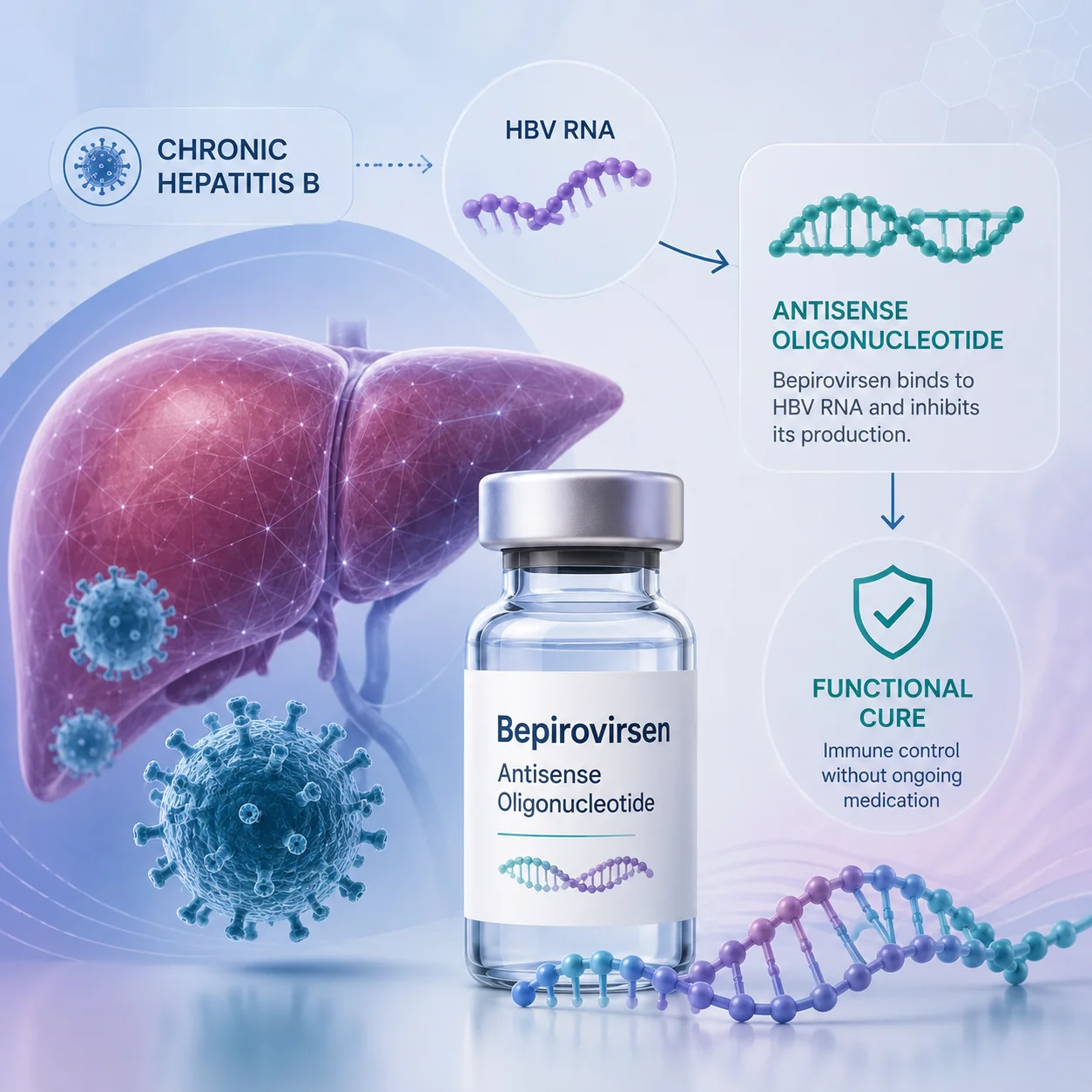
After decades of lifelong pills that only hold the virus back, a six-month injection course has been approved for adults with chronic hepatitis B. About 1 in 5 patients in trials hit the 'functional cure' target; none on placebo did.
HEALTH
For the roughly 240 million people living with chronic hepatitis B around the world, treatment has meant one thing for as long as most can remember: take a daily pill, probably for life, and hope the virus stays suppressed. Now, for the first time, regulators in the United States have approved a medicine designed to go further.
GSK announced on October 20 that the US Food and Drug Administration has approved Hibsago, the brand name for bepirovirsen, for the treatment of chronic hepatitis B in adults. It is a six-month course of injections, taken alongside existing antiviral tablets, and in the pivotal trials it produced what doctors call a functional cure in roughly one in five patients, and one in four among those with lower levels of virus protein in the blood. Among the volunteers who got a placebo, the number who reached that goal was zero.
"This is the start of a new era in treating people living with CHB," said Norah Terrault, MD, of the Keck School of Medicine at the University of Southern California, in the announcement.
What exactly was approved?
Hibsago is approved as combination therapy with a nucleos(t)ide analogue, the class of daily antiviral tablets that has been the backbone of hepatitis B care for years. It is for adults with chronic infection who do not have cirrhosis. To be eligible, patients must have been on the tablet therapy for at least six months, have suppressed HBV DNA, and have levels of hepatitis B surface antigen, known as HBsAg, of 3,000 IU/mL or lower, as measured by an FDA-authorised test.
The drug is an antisense oligonucleotide, a short strand of genetic material that was discovered by Ionis Pharmaceuticals and licensed to GSK in 2019. It is designed to switch off the production of hepatitis B proteins in infected liver cells, with the aim of helping the immune system finally clear what the daily pills cannot.
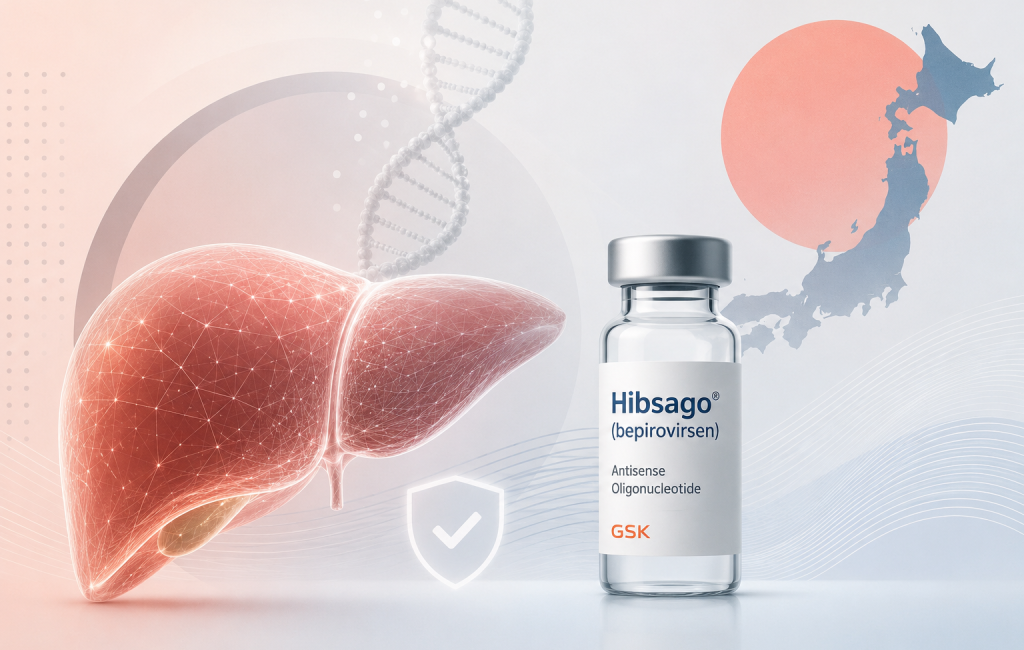
The FDA gave the application priority review and Breakthrough Therapy Designation, two fast-track labels reserved for medicines that may offer a substantial improvement over what already exists. The approval came ahead of the late-October decision date that industry calendars had been tracking. The drug is also already approved in Japan.
The numbers behind the headline
The approval rests on two large, global, randomised, double-blind, placebo-controlled phase three trials, called B-Well 1 and B-Well 2, run in 29 countries. Both met their primary goal of functional cure in the overall study population.
Functional cure, in hepatitis B, means the virus is no longer detectable in the blood and the surface antigen has gone, and that this holds for a period after treatment has stopped. It is not the same as wiping out every trace of the virus from the body, but it is the closest thing to a cure that the field has measured.
Across both trials combined, 19 percent of patients on bepirovirsen reached functional cure: 233 of 1,220 people. On placebo, it was none of 614. Among patients whose HBsAg was at or below 1,000 IU/mL at the start, the rate rose to 26 percent, or 200 of 768 people, compared with zero of 393 on placebo. That group represents about 45 percent of diagnosed chronic hepatitis B patients worldwide, according to the announcement.
For context, standard care alone typically achieves functional cure in fewer than one percent of patients after a year. In an exploratory analysis, bepirovirsen also pushed HBsAg down to 100 IU/mL or below at week 72 in 49 percent of all patients and 62 percent of the lower-level group, which suggests many more people saw big drops in virus protein even when they did not meet the strict cure definition.
The honest flip side is that most patients did not reach functional cure. Roughly four in five in the overall population, and three in four in the best-responding group, still need to stay on their regular antiviral tablets. The new drug is a major step, not a miracle.
How patients will take it
Treatment lasts six months. After the first dose, patients may have the option of injecting at home. Each dose is made up of two injections, which must be given at least 5 cm (2 inches) apart, and injection sites are rotated every week.
The label comes with serious monitoring requirements. Doctors must check platelet counts at least weekly, and monitor liver enzymes (ALT), total bilirubin and kidney function, with a urine albumin-to-creatinine ratio taken before treatment starts. The price and the date it will reach pharmacies were not stated in the announcement.
The risks: a boxed warning
Hibsago carries a boxed warning, the FDA's most serious label alert, for two things. The first is on-treatment hepatic flares, where liver enzymes spike, in some cases to more than 20 to 40 times the upper limit of normal, mostly in the first 12 weeks. The second is thrombocytopenia, a drop in platelets that can be life-threatening.
The drug must not be started in people with acute hepatic impairment or cirrhosis, or in anyone whose platelet count is below 100 x 10 to the ninth per litre before starting. It must be permanently stopped if platelets fall below 50. Other warnings cover worsening kidney function, immune-mediated reactions including vasculitis-like events and autoimmune haemolytic anaemia, omental infarction when injections are given with poor technique, and flares of hepatitis B after the daily antiviral tablets are stopped. It is not recommended in people also infected with hepatitis D.
The most common side effects, seen in at least one in ten patients, are injection-site reactions, fever, fatigue and headache. In the trials, the most frequent adverse events were redness and pain at the injection site and temporary rises in liver enzymes.
In plain terms: this is a specialist medicine that will need careful selection of patients and close follow-up, not a casual prescription.
Why hepatitis B matters so much
Hepatitis B is a quiet, long-running disease. According to the figures cited by Ionis and GSK, about 1.7 million people in the United States live with chronic hepatitis B, and more than 240 million do worldwide. The infection causes around 1.1 million deaths a year and accounts for about 56 percent of global liver cancer cases.
Many people with the infection do not know they have it, because it can cause few symptoms for decades while slowly damaging the liver. Existing tablets work well at suppressing the virus and reducing complications, but they rarely clear it, so people stay on them indefinitely.
Chari Cohen of the Hepatitis B Foundation described chronic hepatitis B as a major public health challenge and said the approval marks progress toward better screening, diagnosis and treatment options. Brett Monia, chief executive of Ionis, pointed to the 1.7 million Americans living with the disease.
The business angle
For Ionis, the approval triggers a new stage in a deal that has been running since 2019. The company has already received an upfront payment, a licence fee, and development and regulatory milestones, and it is eligible for further regulatory and sales milestones plus tiered royalties of 10 to 12 percent on net sales.
For GSK, Hibsago is a flagship in a field where it has long wanted a foothold. The big question for investors will be how many of the eligible patients get treated and at what price, which has not yet been disclosed.
Expert perspective
Specialists see this as a landmark with caveats. A functional cure rate of about one in five is a leap from under one percent. But the monitoring burden, the boxed warning and the limits on who can take the drug mean the first wave of patients will probably be those who are closely followed in liver clinics.
An open question that doctors will be watching is durability: how long patients who reach functional cure stay free of detectable virus after stopping treatment, and whether any need to restart antivirals. Longer follow-up data from B-Well will matter.
Another is access. Chronic hepatitis B is most common in parts of Asia and Africa, where many people have no access to specialist care or even a diagnosis. A drug that needs weekly blood tests will be hard to deliver widely, and advocates will push GSK on pricing and availability beyond wealthy markets.
What this means for you
If you have chronic hepatitis B, do not change your treatment. The new drug is meant to be added to your daily tablets, not to replace them, and it is only suitable for some people. It is approved for adults without cirrhosis who have been on antiviral therapy for at least six months with suppressed virus and a surface antigen level of 3,000 IU/mL or below. Ask your liver specialist whether your most recent HBsAg result puts you in that range, and whether the monitoring schedule would work for you.
If you have never been tested for hepatitis B, this is a good moment to do so. A simple blood test can tell you, and knowing your status matters because treatment can prevent liver damage and cancer. Vaccination remains the best protection for people who are not infected.
If someone close to you has the disease, the approval is a source of real hope, but it is not an overnight fix. Expect a gradual rollout, insurance negotiations and a cautious approach from doctors.
The bottom line
After years of promise, a hepatitis B drug that aims at a cure has cleared the FDA. It will not help everyone, it comes with real risks, and its price is still unknown. But it changes what patients and doctors can aim for. For a disease that has been managed rather than beaten for generations, that is a notable shift, and one that could reshape how hepatitis B is treated worldwide.
Published By | Features Editor