Written By | Political Desk
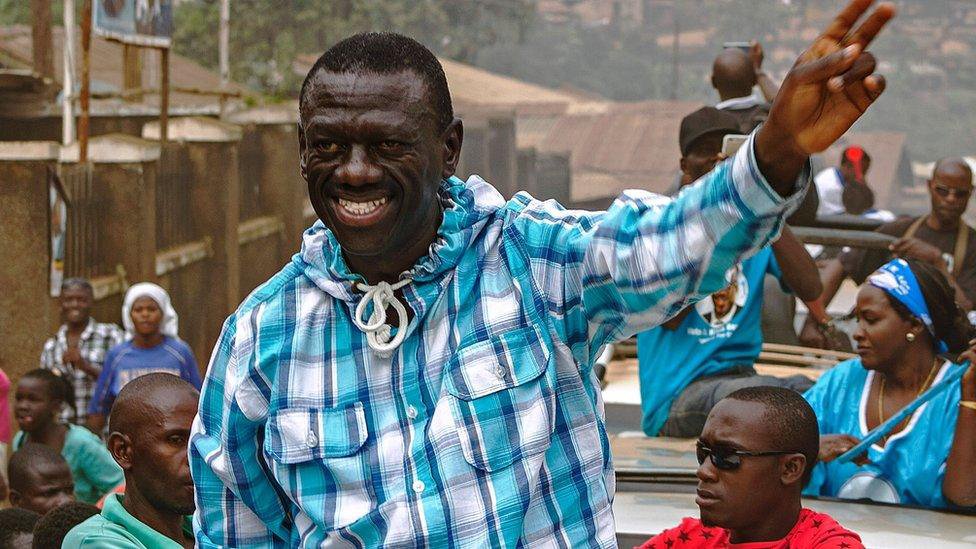
Weeks of contested recordings give way to a transcription expert, a judge warns against delays, and an unconfirmed back-channel effort to resolve the case is reported.
Uganda's High Court in Kampala resumed the treason trial of veteran opposition figure Dr Kizza Besigye on 5 October 2026 with the prosecution moving on to its second witness after weeks of testimony from its first. The hearing came amid reports, so far unconfirmed by any official source, that behind-the-scenes talks are under way to secure Besigye's release. Together, the courtroom proceedings and the political manoeuvring make the case one of the most closely watched in the country.
What happened in court
The trial, presided over by Justice Emmanuel Baguma, centres on allegations that Besigye and his co-accused, his aide Obeid Lutale and army officer Captain Denis Oola, took part in meetings as part of a plan to overthrow the government. The prosecution says those meetings took place in Uganda and abroad, including in Geneva, Athens and Nairobi.
On 5 October the court heard from Dr Medadi Erisa Ssentanda, a senior lecturer in Makerere University's Department of Languages, whose team transcribed the audio and video recordings that form the core of the state's case. Reporting from the hearing says the transcription work was commissioned at a cost of Shs59.32 million and that the recordings run to more than 25 hours combined. A development at the start of the session simplified matters: the defence team for Lutale withdrew its objection to the prosecution's transcription reports. Justice Baguma said he had a ruling on the issue ready but that, in light of the new development, even reading it would be moot. He ordered that the audiovisual material be played first, with the transcripts consulted afterwards, rather than reading transcripts alongside the recordings.
The defence has not abandoned its challenge to the evidence. Lawyers argue that the chain of custody is in question, asking whether the flash disk produced in court matches the original source material. Dr Ssentanda is due to face further questioning, including cross-examination on the accuracy of the transcriptions.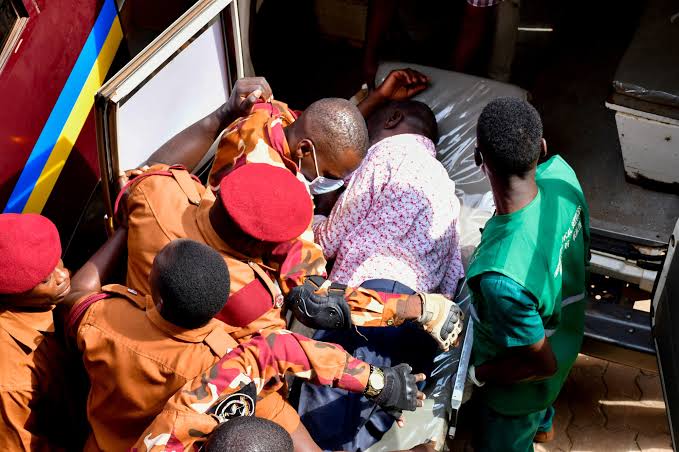
The first witness and the quality of the evidence
The prosecution's first witness was Andrew Wilson, described in court reports as a private security investigator. In testimony in late August he presented video and audio clips allegedly captured during the meetings, together with eleven covert recording devices that included cameras concealed in chargers, USB devices, wall sockets, a necklace and a power bank. Wilson told the court the recordings showed Besigye discussing plans to train opposition supporters in paramilitary skills and to acquire weapons, including firearms, grenades and ricin.
Journalists and observers in the courtroom reported that the recordings were noisy and hard to understand, and some people reportedly left the proceedings saying the material did not establish guilt. Wilson promised the court better-quality versions the following day. The poor audibility helps explain why the transcripts, and the dispute over their reliability, have become so important. Other evidence referred to in coverage of the case includes two pistols and counterfeit currency allegedly found during the November 2024 operation in Nairobi that preceded Besigye's transfer into Ugandan custody.
A trial marked by delays and an absent defendant
The proceedings have been repeatedly interrupted. On 23 September the hearing was adjourned after state prosecutors failed to appear on time. Justice Baguma voiced his frustration, saying, "This is not a court of games," and describing the adjournment as his last. When the case resumed he warned that the court would not continue to be adjourned without good reason.
Besigye himself has not attended recent hearings. He collapsed in court on 29 July while protesting over his legal representation and has been absent since, with reports before the 5 October hearing noting that his physical presence was still in doubt. Earlier in the year the court dismissed his bid to have constitutional questions referred to a different court and cleared the way for the trial; a preliminary hearing concluded in June with assessors appointed over defence objections and no matters agreed between the sides. Besigye has now been in detention for roughly two years.
The political track: reports of release talks
Alongside the trial, PML Daily reported on 5 October that fresh negotiations are under way to secure Besigye's release. According to that report, General Caleb Akandwanaho, better known as Salim Saleh and a brother of President Yoweri Museveni, is reportedly leading the effort. The report recalls that in August the Chief of Defence Forces, General Muhoozi Kainerugaba, said Besigye's matter would be handled by Gen. Saleh, who had received authority from the President. Participants named in the reporting include figures from the ruling National Resistance Movement, opposition groups such as the People's Front for Freedom and the Forum for Democratic Change, religious leaders and other prominent Ugandans. An earlier attempt to bring Besigye and former Kampala Lord Mayor Erias Lukwago together with Gen. Saleh reportedly failed because of ill health.
The same report is explicit about its limits: there is no official confirmation that any deal has been reached or that charges will be dropped, and the High Court trial is continuing regardless. Readers should treat the talks as a developing and unverified claim rather than an established fact.
Wider political context
The case unfolds against a tense post-election backdrop. President Museveni won the 14 January 2026 election with about 71 percent of the vote, according to reporting by The Independent, after which opposition leader Robert Kyagulanyi (Bobi Wine) left the country and has been campaigning from Washington. Human Rights Watch said in July that Uganda's military had seized at least five government critics since mid-June, naming among others lawyer Erias Lukwago, activist Miria Matembe, journalist Timothy Kalyegira and opposition deputy president Muwanga Kivumbi, and said the military was being used against dissent. The government's handling of critics is therefore as much a part of the story as the evidence in Besigye's own courtroom.
Why it matters
For supporters, Besigye's prosecution is the clearest example of the state using the courts, and the security forces, against its most persistent challenger. For the state, the trial is a test of allegations of serious plotting against the government. Either way, the quality and admissibility of the covert recordings, and the transcription of them, are likely to decide how the case is judged by the court and by the public. The judge's repeated warnings about delay also signal impatience with the pace of a prosecution that has dragged on for years.
What to watch next
Several things bear watching in the coming weeks: the cross-examination of Dr Ssentanda and whether the defence can cast doubt on the reliability of the transcripts; whether the judge rules on the chain-of-custody objection to the flash disk; whether Besigye returns to court in person; and whether the reported talks led by Gen. Saleh produce any official announcement, such as a withdrawal of charges or a negotiated resolution. Until then, the trial continues on the court's timetable, with political developments running alongside it.



