Written By | Fashion Experts
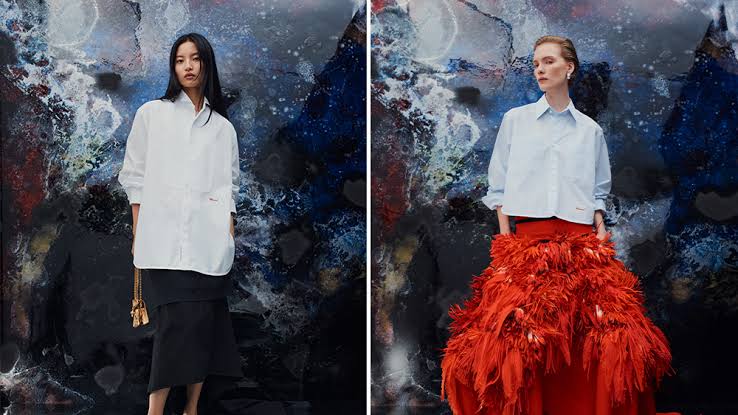
With its quiet acquisition of Charvet, the Place Vendôme institution founded in 1838, Chanel bets on heritage, menswear, and a bond that reaches back to Gabrielle Chanel herself.
PARIS
On a discreet corner of the Place Vendôme, where the jewelers keep their windows hushed and the doormen keep their voices low, sits a shop that has quietly outfitted the powerful for nearly two centuries. Charvet has made shirts for Winston Churchill and John F. Kennedy, for kings and prime ministers and the occasional scandalous dandy. This week, it acquired a new and rather famous owner. Chanel — the house of tweed and camellias and No. 5 — announced on July 2 that it had taken full ownership of Charvet, the storied French shirtmaker that claims, with some justification, to be the oldest in the world.
Financial terms were not disclosed, as is customary for the famously private, family-controlled Chanel. But the symbolism of the deal is anything but quiet.
A house older than the department store
Charvet was founded in 1838 by Joseph-Christophe Charvet, the son of Napoleon's personal dresser, and it has occupied its address on the Place Vendôme for generations. It is credited with essentially inventing the modern concept of the shirtmaker's shop — a single destination where a customer could be measured, advised, and dressed in bespoke linen — predating the great Parisian department stores. Owned since the 1960s by the Colban family, it has remained fiercely, almost stubbornly, independent, turning out bespoke shirts that can run around $750 apiece and a rainbow of ties beloved by connoisseurs.
Its client book reads like a syllabus in twentieth-century power: Churchill and Kennedy, yes, but also the Irish statesman Charles Haughey and, crucially for this story, Gabrielle 'Coco' Chanel herself.
The thread back to Coco
The acquisition is not merely a business transaction; it is, in a sense, a family reunion. Coco Chanel was a Charvet customer, and famously bought the house's shirts for her lover, the English polo player and industrialist Arthur 'Boy' Capel — the man widely credited with financing her first boutiques and shaping her early aesthetic of borrowed-from-menswear ease. The soft, unstructured lines that would come to define Chanel owe a quiet debt to the very tradition Charvet embodies.
That historical bond was rekindled, of all people, by Chanel's new artistic director, Matthieu Blazy. For his debut collection for the house — the spring 2026 line unveiled in October — Blazy commissioned Charvet to produce three oversize cotton button-up shirts. They became instant objects of desire, worn on red carpets and in magazine spreads by the likes of Nicole Kidman, Jessie Buckley, and Jacob Elordi, and counted among the standout pieces of his celebrated first outing.
Why Chanel wants a shirtmaker
The purchase fits a broader strategy that has quietly reshaped the luxury industry: rather than simply advertising heritage, the biggest houses are buying it outright. Over the past decade, Chanel has invested heavily in its Métiers d'Art — the constellation of specialist ateliers, embroiderers, feather-workers, and bootmakers whose survival it underwrites in order to protect the crafts on which haute couture depends. Charvet slots neatly into that philosophy.
In announcing the deal, Chanel framed its intention as stewardship rather than takeover: to support, over the long term, the passing down of unique savoir-faire and the continued existence of an iconic French heritage house, while fully respecting its creative independence. The company signaled that Charvet would continue to operate as an independent business, precisely because — as people close to the deal put it — the group wanted to keep it 'so exclusive, so special,' at a level of sophistication that mass ownership would erode.
There is a strategic dimension, too. Chanel's menswear ambitions have long been an open secret; the house has no standalone men's ready-to-wear line to rival its couture and womenswear empires. Owning the world's most revered shirtmaker gives it both a manufacturing jewel and a credible foothold in a category it has never fully claimed.
It also arrives at a moment of transition for the house. Blazy's appointment as artistic director marked the end of a long, closely watched search to succeed the late Karl Lagerfeld's successor, and his early collections have been read as a bid to reconnect Chanel with the tactile, craft-forward instincts of its founder. Buying the very shirtmaker that once dressed Coco's inner circle is, in that light, more than a supply-chain decision — it is a statement of creative direction, a way of anchoring the house's future in the fabric, quite literally, of its origins.
An expert's perspective
Analysts who cover the luxury sector see the Charvet deal as classic Chanel: patient, heritage-driven, and indifferent to short-term returns. Because Chanel is privately held and answerable to the Wertheimer family rather than to public shareholders, it can afford to buy a tiny, high-craft house for reasons that have little to do with quarterly earnings and everything to do with protecting a lineage. In an era when so much luxury is manufactured at scale, observers note, control of genuine, irreplaceable savoir-faire has become the rarest currency of all.
What this means for you
For most shoppers, a $750 bespoke shirt will remain firmly in the realm of aspiration. But the Charvet acquisition matters beyond the rarefied world of Place Vendôme. It is a signal of where luxury is heading: away from logos and toward craft, away from the disposable and toward the enduring. Expect Charvet's influence to surface in Chanel's future collections, and expect other houses to keep hunting for their own heritage ateliers to acquire before someone else does.
The bottom line
In buying Charvet, Chanel has done more than add a shirtmaker to its portfolio. It has closed a loop that began nearly a century ago with Coco Chanel folding a man's shirt into a shopping bag for the love of her life — and, in the process, placed a very expensive bet that the future of luxury lies in guarding its past.