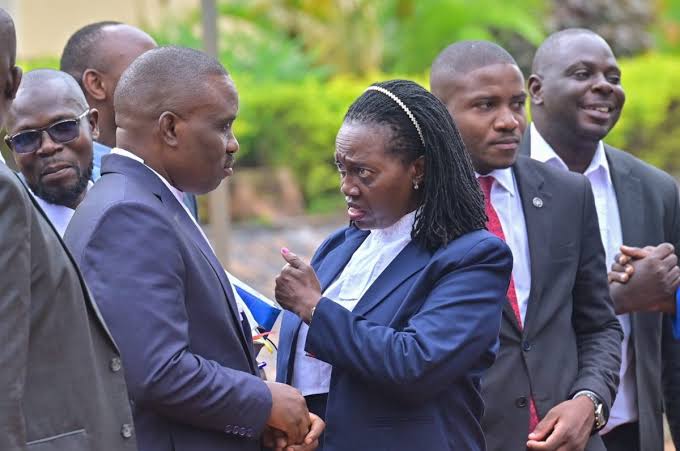
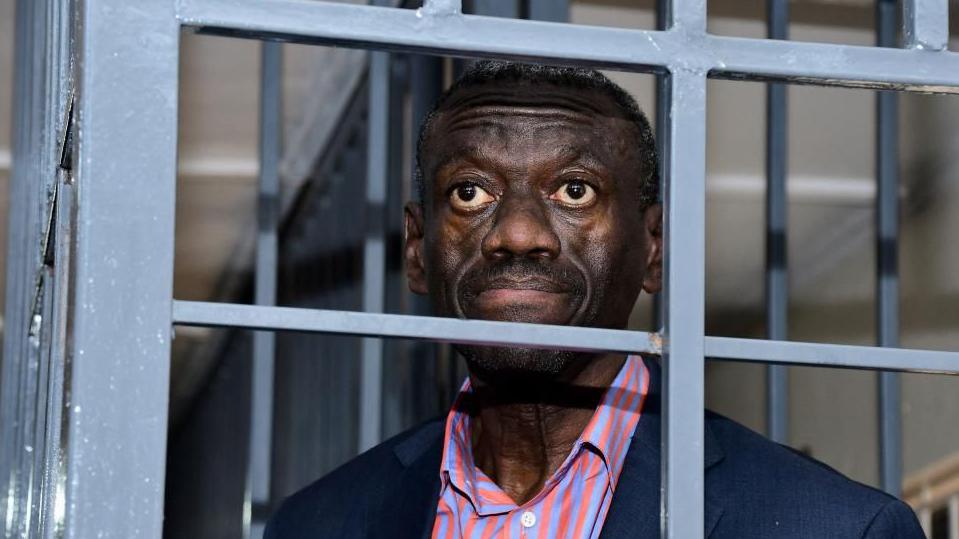
Six months after Uganda's disputed general election, the country's political crisis has moved from the ballot box to the courtroom — and increasingly, to the shadows. Veteran opposition leader Kizza Besigye remains on trial in Kampala, but the proceedings have been thrown into disarray after his lead defense lawyer was seized by armed security operatives and a second lawyer, Kenyan senior counsel Martha Karua, was turned away at the border. The episode has become the clearest illustration yet of how far the Museveni government is prepared to go to control the legal and political space left to its opponents.
The backdrop is the January 15, 2026 presidential and parliamentary election, in which incumbent President Yoweri Museveni was declared winner with a reported 71.65 percent of the vote. The poll was violent and heavily disputed: the United States Senate branded it a "hollow exercise," and Human Rights Watch documented widespread human rights abuses in the run-up to and aftermath of voting. No detailed public tally was ever released, deepening opposition and international suspicion that the result did not reflect the will of voters. Besigye, a four-time presidential candidate and Museveni's most persistent rival since the 1980s, was already in detention at the time of the vote, having been extradited from Kenya in late 2024 to face charges widely viewed by rights groups as politically motivated.
The latest flashpoint began on June 15, 2026, when heavily armed security operatives arrived at the Wakaliga residence of Erias Lukwago, the Kampala Lord Mayor and lead advocate on Besigye's defense team, and took him away. Lukwago's whereabouts were unknown for more than 48 hours — a disappearance rights organizations describe as an enforced abduction rather than a lawful arrest. During that window, General Muhoozi Kainerugaba, the Chief of the Defence Forces and son of President Museveni, repeatedly and publicly claimed responsibility for the detention in a series of posts on the social media platform X, stating that he had "captured" Lukwago and taken him to his "basement." Lukwago was eventually produced and formally charged, but the episode — a serving military chief boasting online about seizing a sitting elected official and practicing lawyer — has alarmed diplomats, the Uganda Law Society and international legal observers, who see it as a signal that even lawyers representing the opposition are no longer safe from direct state intimidation.
Days later, on June 22, Martha Karua — a former Kenyan justice minister and one of East Africa's most prominent human rights lawyers — flew to Entebbe intending to join Besigye's legal team in court. Ugandan immigration officials denied her entry, confiscated her mobile phones, and put her on a return flight to Nairobi. No official reason was given for barring her, even though a colleague who traveled with her, Law Society of Kenya president Charles Kanjama, was allowed through. Karua's exclusion drew swift condemnation from Kenyan and regional legal bodies, who framed it as part of a broader pattern of Kampala restricting cross-border legal solidarity for the Ugandan opposition.
The cumulative effect has been to paralyze Besigye's defense. When the case resumed before trial judge Emmanuel Baguma, Besigye and his co-accused, Hajji Obeid Lutale, refused to proceed with substitute lawyers, insisting they would only be represented by Karua and Lukwago. "I would rather rot in jail," Besigye told the court, in remarks that captured both his defiance and the depth of the standoff. The judge, visibly frustrated by the impasse, demanded an explanation for the defense team's absence, but the boycott has continued, leaving the trial at a standstill with no clear date for resumption.
The legal drama has unfolded alongside a broader tightening of the information environment. Uganda's independent media has come under intensifying pressure from the military, with journalists and media leaders reporting being targeted online as security agencies increase scrutiny of coverage critical of the government. Press freedom advocates say the pattern mirrors the crackdown on legal representation: an effort to narrow the channels through which government conduct can be scrutinized or challenged, whether in a courtroom or in the press.
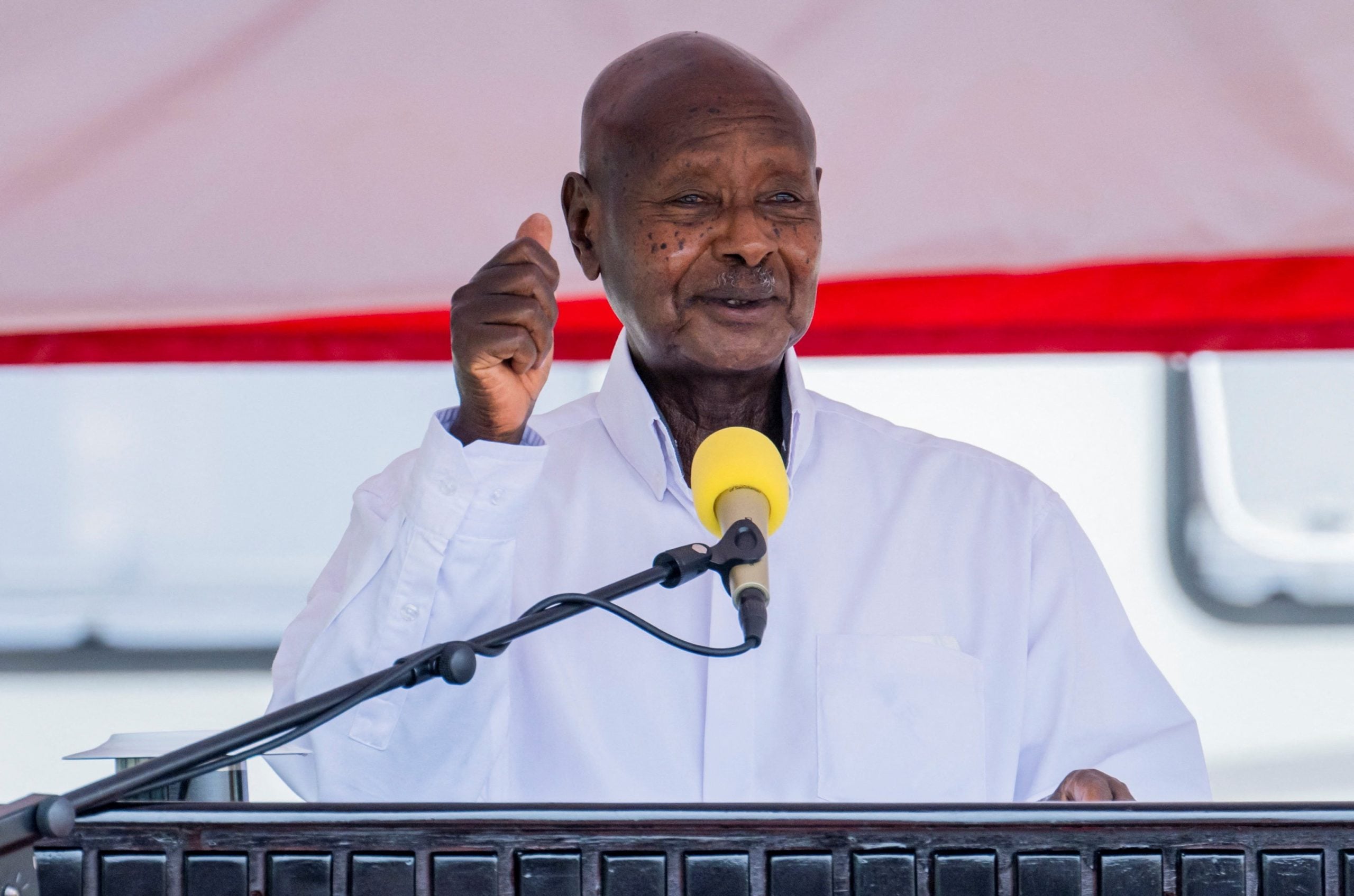
Why this matters extends well beyond the fate of one trial. Besigye has been the central figure of Ugandan opposition politics for more than two decades, and his prosecution — now compounded by the removal of his chosen lawyers — is widely read as a test case for how much space, if any, the Museveni government intends to leave for organized dissent following a fourth-decade-plus hold on power. The treatment of Lukwago, an elected city official, sends a parallel signal to Uganda's opposition-aligned local government structures. And the blocking of Karua, a well-known continental human rrights figure, signals that the government is willing to accept diplomatic friction with Kenya and the wider region rather than allow greater international legal scrutiny of its domestic prosecutions.
International reaction has been notable but so far limited to statements rather than concrete pressure. Rights organizations including FIDH have formally flagged Lukwago's case as an enforced disappearance and arbitrary detention, a designation that typically precedes referral to UN human rights mechanisms. Kenyan legal bodies have escalated Karua's exclusion as a diplomatic matter between Nairobi and Kampala, though it remains unclear whether the Kenyan government itself will press the issue formally. Meanwhile, Uganda's Western development partners — the United States and European Union chief among them — have criticized the January election but have not signaled any change to broader engagement, including on security cooperation in the region.
Watch for several developments in the coming weeks: whether the Baguma-led court forces the trial forward with state-appointed counsel over Besigye's objection, which would likely trigger fresh legal challenges over the right to counsel of choice; whether Lukwago faces additional charges tied to the case he was serving on Kainerugaba at the time of his abduction; whether Karua or other foreign counsel attempt to re-enter Uganda and are again denied; and whether the media crackdown escalates into formal restrictions ahead of any further opposition mobilization. Each of these threads will shape whether Uganda's post-election period settles into a durable, if repressive, status quo, or whether it produces a fresh political crisis testing the durability of Museveni's rule.
Published By | News Editor