Written By | Staff Writer

The academy will train farmers, exporters and regulators to meet foreign quality standards from the field to the consumer's plate.
Agriculture
Uganda has spent the past decade building a reputation as one of the world's leading organic producers. On Friday it took a step towards protecting that reputation at the border. The Ministry of Agriculture, Animal Industry and Fisheries (MAAIF) pledged a partnership with the newly launched Control Union Academy in Kampala. The academy will train farmers, exporters and regulators to meet foreign quality standards from the field to the consumer's plate.
The announcement, reported by Nile Post on 30 October 2026, is not a headline-grabbing policy shift. It is a practical response to a stubborn problem. Ugandan produce that looks good at harvest often arrives overseas damaged, contaminated or poorly documented. The result is rejected consignments, destroyed cargo and lost premium contracts.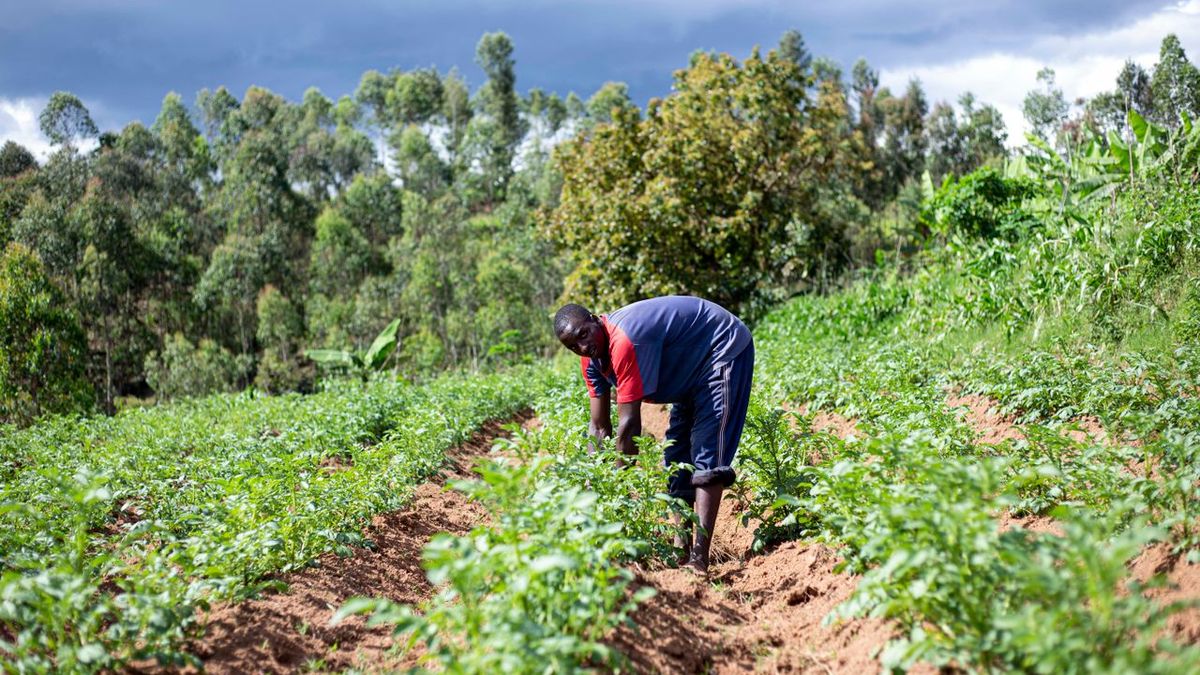
What was announced
The academy was launched in Kampala by Control Union Uganda, the local arm of the international inspection and certification group. Speaking for the Agriculture Minister, Dr Teddy Asio, MAAIF's Assistant Commissioner for Seed Inspection and Certification, said the ministry would retrain its own staff using the academy's programmes. She added that MAAIF is running a European Union-funded project to strengthen regulatory functions and export certification, which the new training is meant to complement.
The academy's focus is on high-value products: organic coffee, fine tea, fresh fruits, vegetables and specialised grains. The stated goals are fewer export rejections and better access to premium markets in Europe, the United States, Canada and Japan. Those markets each run their own rulebook. The standards cited at the launch included EU Organic, the US Department of Agriculture's National Organic Program, Canadian organic requirements, Bio Suisse in Switzerland, KRAV in Sweden, Naturland in Germany and the Japanese Agricultural Standards (JAS).
Tadeo Kalamaga, Managing Director of Control Union Uganda, said the academy would prioritise smallholder farmers, whose limited technical knowledge he identified as a major barrier to compliance. Chariton Namuwooza, Chairperson of the National Organic Agricultural Movement of Uganda (NOGAMU), welcomed the move and urged farmers and exporters to add value to their products rather than ship raw commodities.
Why quality, not volume, is the constraint
Uganda's organic story is one of rapid numerical growth. According to NOGAMU figures cited at the launch, certified organic farmers rose from 230,000 in 2019 to 741,000 by December 2025. That would place Uganda second in the world for certified organic farmers, behind only India. The scale is impressive. Certification, however, is only the entry ticket. Whether a farmer's produce is accepted at a European port depends on what happens after certification: how it is harvested, dried, stored, transported and documented.
The launch itself named the weak points as the quality of produce deteriorating during harvesting, storage and post-harvest handling, with some returned produce ultimately destroyed. This matches the longer record. A 2025 report on an EU-funded programme run by CABI, MAAIF, HortiFresh and COLEAD to improve Uganda's sanitary and phytosanitary (SPS) compliance said more than 787 interceptions for harmful organisms were recorded between 2015 and 2024 in the EU's EUROPHYT/TRACE system. About 70 per cent of those hit fresh fruit and vegetable exports. A further 308 interceptions were for documentation problems, 71 per cent of them on fresh produce.
The same report said 60 per cent of Uganda's horticultural exports went to the EU in 2023, worth about EUR 58 million, and that up to US$150 million in potential revenue was being lost to pests, diseases and non-compliance. Rejections for pesticide residues above permitted limits, errors against Codex standards and paperwork mistakes were the recurring causes.
Earlier European warnings have been sharper. Uganda has previously received yellow warnings over chemical contamination of horticultural produce, and the threat of a wider ban hung over exporters during past audits. The lesson from those episodes is that rejections are rarely the fault of a single farmer. A single bad consignment can trigger tighter inspection on an entire country's produce, raising costs for exporters who did everything right.
The training gap
Why would an academy matter if inspectors and standards already exist? Because the compliance chain in Uganda is long and fragmented. A smallholder who sells to a trader who sells to an exporter may never see the buyer's specification sheet. Pre-harvest decisions, such as which pesticide to spray and when, determine whether residue limits are met. Post-harvest decisions, such as drying coffee on tarpaulins rather than bare ground or cooling horticultural crops quickly, determine whether quality holds.
Training that reaches farmers directly, and trains the government staff who supervise them, addresses a link that fines and bans cannot. Dr Asio's commitment to retrain MAAIF staff is arguably as significant as the farmer outreach. Regulators who understand how a foreign buyer's audit works are better placed to catch problems before a container leaves Kampala.
There is also a market logic. Organic and certified products earn premiums only when buyers trust the system behind them. Uganda's organic export value has grown, but earlier reporting on the sector showed that export value per certified farmer is modest relative to the number of farmers certified. Raising quality and cutting rejections is one of the few levers that increases what each farmer earns without requiring more land or more farmers.
What is still unclear
The launch reporting leaves several questions open. No budget, fee structure or training timetable was published. It is not stated how many smallholders the academy aims to reach, how it will serve farmers outside the Kampala area, or whether courses will be subsidised. Control Union is a commercial certification body, so farmers and cooperatives will want to know how the academy's training relates to the cost of certification itself. The article also gives no export volumes or revenue figures tied to the initiative.
Independence is a related concern. A certifier that also trains the people it certifies must show that the two functions are kept apart. Government and NOGAMU, which welcomed the move, will likely need clear safeguards so that smaller local certifiers and cooperatives are not squeezed out.
Implications for farmers and the economy
For farmers, the immediate message is practical: the cheapest shilling in export agriculture is the one spent preventing a rejection. Cooperatives that organise group training, record-keeping and shared drying or cooling facilities will find it easier to benefit than individual growers.
For exporters, better-trained suppliers and better-trained inspectors reduce the risk of costly returns and the reputational damage that follows. For the wider economy, the stakes are foreign exchange. Coffee, tea, fruits and vegetables are among the country's most important agricultural earners, and each avoided rejection protects both farmer income and the credibility of the Uganda brand with European buyers.
The academy will not fix post-harvest losses, input quality or transport on its own. Those require investment in cold chains, extension services and enforcement against counterfeit agrochemicals, all themes that have featured in recent months. But it fills a specific gap, and it arrives as buyers abroad demand ever more documentation. The real test will be measured in a few seasons: fewer interceptions, fewer destroyed consignments and a larger share of Uganda's certified farmers actually earning a premium.



