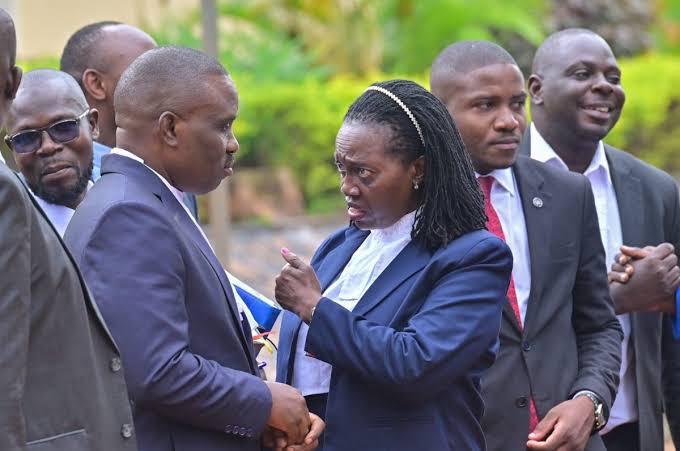
Six months after Uganda held a general election that international observers and rights monitors described as violent and disputed, the country's most prominent opposition figure, Dr. Kizza Besigye, is fighting a legal battle that has become as much about the survival of his defence team as about the treason-related charges he faces. In a letter dated July 1, 2026, and sent from Luzira Government Prison, Besigye and his co-accused, Hajj Obeid Lutale, told the High Court they refuse to abandon their chosen lawyers, Kenyan senior counsel Martha Karua and former Kampala Lord Mayor Erias Lukwago, even though the state has effectively removed both from the case through detention and deportation.
The dispute came to a head on July 3, 2026, when Besigye appeared in court and again rejected the bench's suggestion that he accept alternative counsel. His refusal set up a standoff: the state has made it practically impossible for Karua and Lukwago to represent him, yet Besigye argues that being forced to accept substitute lawyers would itself violate his constitutional right to a fair trial and to counsel of his choosing.
The chain of events began on June 15, 2026, when heavily armed security operatives arrested Lukwago at his residence in Wakaliga, Kampala. He was subsequently charged with misprision of treason, an offence that carries a maximum sentence of life imprisonment and which, in Ugandan law, criminalises the knowing concealment of a treasonous act. Lukwago's lawyers filed for bail on health grounds, but on July 7, 2026, the court rejected the application, leaving him in detention pending further proceedings.
A week after Lukwago's arrest, on June 22, 2026, Martha Karua — a veteran Kenyan human rights lawyer, former presidential candidate, and long-time advocate for East African democracy — arrived in Uganda to work on Besigye's case. According to Amnesty International, she was arbitrarily arrested and held incommunicado at Entebbe International Airport before being forcibly deported. Kenyan and Ugandan civil society groups have since demanded an explanation from Kampala, framing the incident as an affront to regional legal cooperation and to the free movement of counsel across East African Community member states.
Besigye's legal team argues that the state's actions amount to a deliberate strategy: by neutralising Lukwago through detention and Karua through deportation, prosecutors have denied the defendants meaningful legal representation ahead of a trial with the gravest possible stakes. Besigye's lawyers have publicly demanded Karua's immediate and unconditional release from any residual restrictions, while Lukwago's team continues to press for bail and for his case to be separated from broader treason proceedings.
To understand why this dispute carries such weight, it helps to recall the context that preceded it. Uganda held general elections on January 15, 2026, in which President Yoweri Museveni — in power since 1986 — sought a seventh term. The vote was marred by allegations of intimidation, arrests of opposition figures, and communication blackouts in various parts of the country. The U.S. Senate characterised the process as a "hollow exercise," while Human Rights Watch documented what it called serious human rights abuses connected to the vote and its aftermath. Besigye, a former Museveni ally turned four-time presidential challenger and one of the country's most durable opposition figures, has spent much of the year since the election in detention.
The pressure on Besigye's defence is unfolding alongside a broader tightening of the civic and media space. Journalists and independent media outlets have reported increased online targeting and surveillance, with military and security pressure on newsrooms intensifying through the first half of 2026. Press freedom organisations have linked this pattern to the same climate that produced the arrests of Lukwago and the deportation of Karua: an environment in which lawyers, journalists, and opposition figures who challenge the government's account of events face escalating personal risk.
The United Nations has taken formal note of the situation. In a statement issued through a spokesperson, the UN Secretary-General said he was closely following developments in Uganda and expressed concern over reports of the detention of political and civic actors, noting specifically that the whereabouts of some individuals had not been clearly established at various points during the crackdown. The International Federation for Human Rights (FIDH) went further, characterising Lukwago's arrest as an enforced disappearance and arbitrary detention, a categorisation that, if borne out, would implicate Uganda in violations of binding international human rights obligations.
The principal figures in this unfolding story extend beyond Besigye himself. Erias Lukwago is a well-known figure in Ugandan politics in his own right, having served for years as Lord Mayor of Kampala and built a reputation as an outspoken critic of the central government from within the capital's local administration. Martha Karua brings a regional dimension to the case: as a former Kenyan justice minister and one of Kenya's most prominent human rights lawyers, her detention and deportation have drawn attention from Kenyan civil society and government circles, threatening to strain diplomatic relations between Nairobi and Kampala. Hajj Obeid Lutale, Besigye's co-accused, has largely remained in the background of public reporting but has consistently backed Besigye's insistence on retaining the same legal team.
Why does this matter beyond the individuals involved? First, it tests the independence of Uganda's judiciary at a moment of heightened international scrutiny: courts must decide whether to proceed with a trial in which the defendants say they have been denied effective counsel, a decision that will shape perceptions of due process in Uganda for years to come. Second, it has become a proxy for the broader question of civic space in the country following a disputed election — whether lawyers, journalists, and opposition politicians can operate without fear of arrest, disappearance, or deportation. Third, it carries regional implications, given that a Kenyan lawyer's treatment at the Uganda border has drawn scrutiny from neighbouring governments and East African civil society networks that have historically supported cross-border legal representation in politically sensitive cases.
The dispute also lands at a delicate moment domestically. Uganda's Electoral Commission has scheduled nationwide Local Council One (LC1) elections for July 28, 2026 — the first such elections in years — with preparations including resident verification and voter register compilation now underway. LC1 councils form the lowest tier of Uganda's local government structure and have historically been an important mechanism of political control and patronage at the grassroots level. Holding these elections while the country's most prominent opposition figure remains in detention, and while his lawyers face prosecution or deportation, is likely to keep international attention focused on Uganda's broader human rights and governance record through the rest of 2026.
Looking ahead, several threads are worth watching. The High Court must decide how to resolve the impasse over Besigye's legal representation — whether by facilitating Karua's return, allowing Lukwago's release on bail, or forcing the defendants to accept alternative counsel over their objections. Lukwago's own treason-related case will proceed separately and could take months to resolve, given the gravity of the charge. International bodies, including the UN and regional human rights organisations, are likely to continue monitoring the case closely, and any further incidents involving foreign lawyers or civil society figures at Uganda's borders could escalate diplomatic friction with Kenya and other neighbours. Finally, the conduct of the July 28 LC1 elections — and whether they proceed peacefully and credibly — will offer an early indicator of whether the patterns seen since January's disputed general election are easing or hardening further.
Published By | News Editor