Background
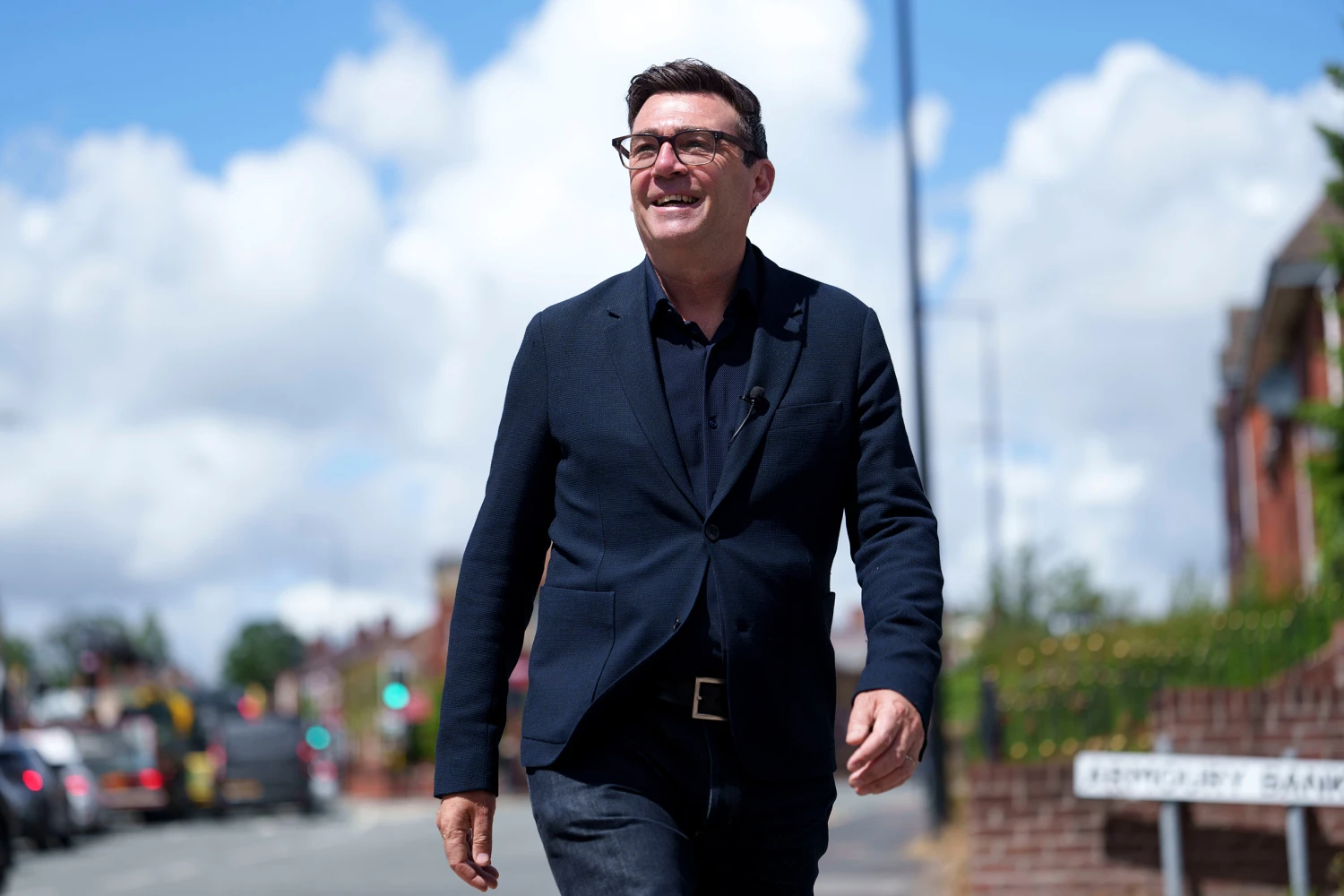
Andy Burnham's ascent to 10 Downing Street on Monday, July 20, 2026, capped a month of turmoil inside Britain's governing Labour Party that began with Keir Starmer's resignation in late June. Starmer's fall followed a string of dismal results for Labour in the May 2026 local elections, as the party watched its support bleed away to Nigel Farage's insurgent Reform UK on the right and to the Greens and independents on the left. Discontent had been building for months over the government's economic record and a series of political missteps, but the proximate trigger was a scandal that ensnared one of Starmer's own appointments: the extent of former ambassador to the United States Peter Mandelson's relationship with the convicted sex offender Jeffrey Epstein became widely understood in September 2025, forcing Starmer to dismiss him and inflicting lasting damage on the prime minister's judgment and authority.
The dam broke in May 2026. Health Secretary Wes Streeting resigned from the cabinet on May 14, and by the same day 103 Labour MPs — well over a quarter of the parliamentary party — had publicly called on Starmer to resign or lay out a timetable for departure. Rather than face a formal leadership challenge, Starmer announced he was stepping down as party leader while remaining as caretaker prime minister until Labour chose a successor. That set off a contest that Andy Burnham, the outspoken former mayor of Greater Manchester, entered as the clear front-runner, drawing on a base of support built over a decade as one of Labour's most visible regional leaders and a persistent, if unofficial, leadership-in-waiting figure.
Burnham's path back to Westminster required a seat in the House of Commons, which he secured through a by-election, before formally entering the Labour leadership race. His campaign leaned heavily on his identity as a champion of England's post-industrial north and a critic of what he cast as London-centric, market-friendly orthodoxy that had defined Labour under Starmer, and to some extent under predecessors going back to Tony Blair.
Key Developments
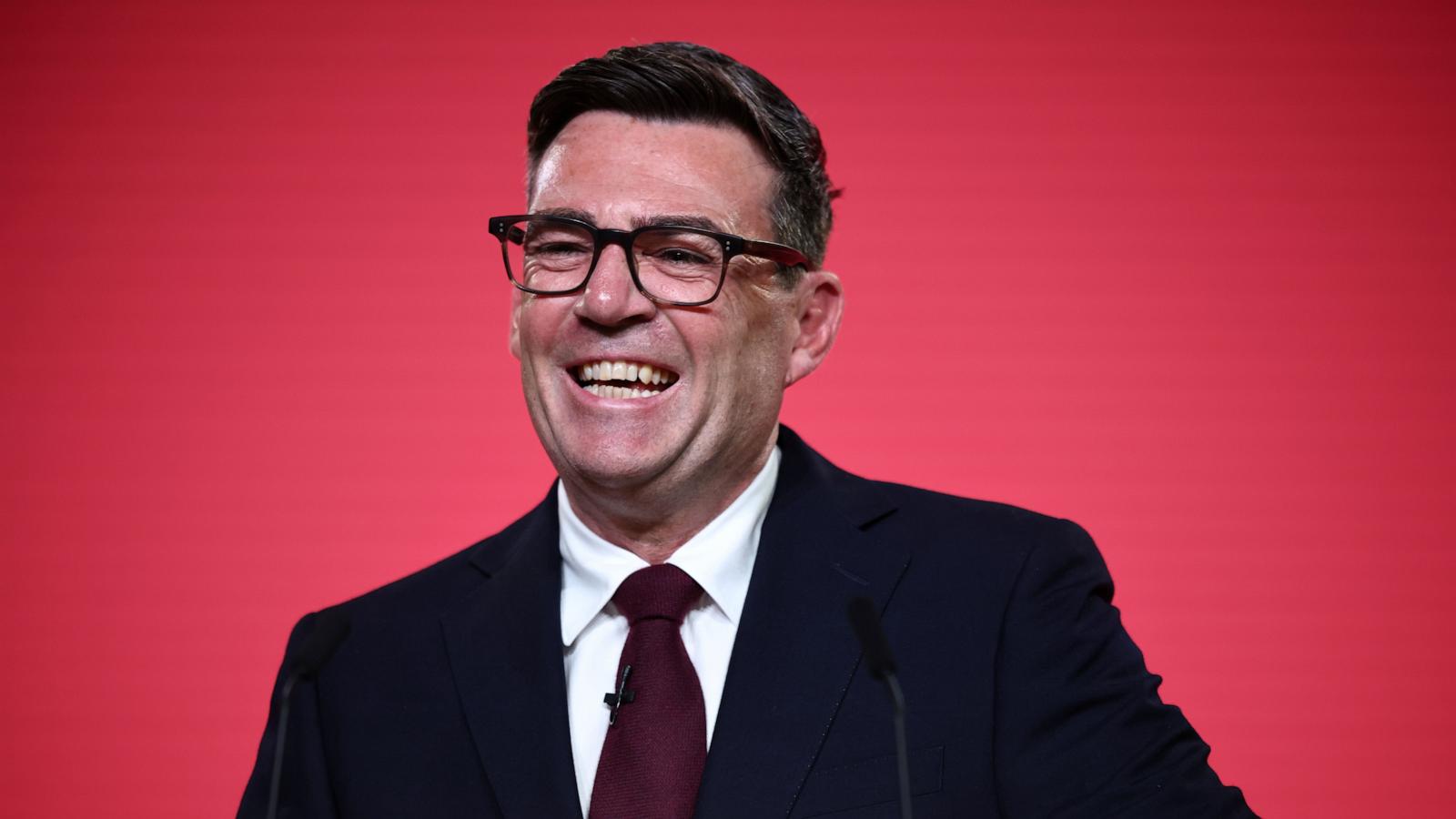
Burnham's path to the top job was formally cleared on July 17, when he was confirmed as leader of the Labour Party after securing nominations from 379 of the 403 Labour members of the House of Commons — an overwhelming show of support that left little doubt he would face no serious internal rival. Three days later, the transfer of power played out in the traditional ceremonial choreography of British politics: Starmer traveled from Downing Street to Buckingham Palace on the morning of July 20 to formally tender his resignation to King Charles III. Burnham then made the same journey, where the King invited him to form a government — a moment known in British constitutional tradition as "kissing hands" — after which Burnham became prime minister without need for a general election, since the transition occurred entirely within the sitting Parliament.
Burnham is Britain's 59th prime minister and, remarkably, the seventh person to hold the office in the past decade, a run of turnover that includes David Cameron, Theresa May, Boris Johnson, Liz Truss, Rishi Sunak and Starmer. In his first remarks as party leader the previous week, Burnham signaled a decisive leftward shift for the party, explicitly rejecting the economic legacy of Margaret Thatcher and pledging what he described as the biggest council and social housing building programme since the immediate postwar period. He argued that both political and economic power in Britain had become dangerously concentrated — "political power was centralised and economic power was privatised," as he put it — leaving wealth and decision-making in the hands of an ever-smaller number of people and places, chiefly London and the southeast of England.
Notably, Burnham used his early remarks to stake out a distinct positioning against both Reform UK on the right and the Greens on the left, telling supporters that Labour under his leadership would not try to "out-Green the Greens or out-Reform Reform." The line reflects a strategic bet that voters drifting toward Farage's party are better won back with an authentically redistributive economic offer than by chasing Reform on immigration or cultural issues, an approach some Labour strategists see as a gamble and others view as the only viable answer to a fragmenting electorate. Burnham has some evidence for the approach: he previously helped see off a Reform UK challenger in the Makerfield by-election that returned him to Parliament.
Reactions
Reaction within Labour has been largely one of relief mixed with anxiety. Many MPs who pushed Starmer out see Burnham's coronation as a chance to reset the government's relationship with voters ahead of a general election that must be held by 2029 but which speculation suggests could come earlier if Labour's poll numbers do not stabilize. Others worry that a sharp leftward turn, and the scale of new public spending commitments implied by a mass housebuilding programme, will alarm financial markets and independent economic forecasters at a moment when the public finances remain under strain from years of sluggish growth and elevated borrowing costs.
Opposition parties have offered starkly different assessments. Reform UK figures have cast Burnham's ascension as proof that Labour has abandoned the political centre altogether, a framing they hope will accelerate the flow of working-class voters toward Farage's party in traditional Labour strongholds across the north of England and the Midlands. Conservative critics, for their part, have focused on the unelected nature of the transition, noting that Burnham takes office having never led Labour into, let alone won, a general election — a criticism previously leveled at Gordon Brown when he succeeded Tony Blair in 2007 and at several of the Conservative prime ministers who followed Cameron.
Financial markets showed a cautious, watchful reaction in the run-up to the handover, with attention focused on how quickly Burnham would spell out the fiscal detail behind his housing and public-ownership pledges and on the makeup of his incoming cabinet, both of which are expected to become clearer in the days immediately following his first full day in office.
What's Next
Burnham's most immediate task is assembling a cabinet capable of uniting a Labour Party that split badly during Starmer's final months, bridging figures loyal to the outgoing prime minister's more centrist instincts with the broader coalition of MPs who backed Burnham's leftward platform. How he balances that cabinet will be an early signal of whether his government intends to govern from the position staked out in his leadership campaign or moderate it in office, a pattern common to British prime ministers who discover the constraints of government after the freedom of opposition or a leadership contest.
Beyond personnel, Burnham faces the substantive challenge of translating rhetoric about ending "trickle-down economics" and rebuilding council housing at postwar scale into a fundable legislative program, all while reassuring bond markets and the Office for Budget Responsibility that the public finances remain on a sustainable path. He will also have to decide how aggressively to confront Reform UK's continued rise in the polls, and whether his strategy of refusing to chase Farage on his own turf will hold once an actual general election campaign is underway. With Labour having now cycled through two prime ministers without a fresh national mandate, pressure is likely to build — from opposition parties and potentially from within his own party — for Burnham to call an early election to secure his own democratic mandate, even though he is under no legal obligation to do so before 2029.
Published By | News Editor