SOMERVILLE, Mass.
The experiment had a beautiful piece of deception at the heart of it.
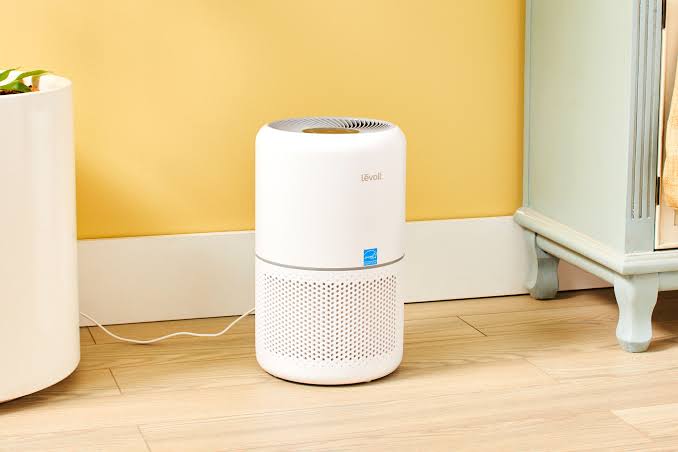
Researchers went door to door in a dense working-class city wedged between Interstate 93 and Route 28, signed up 119 residents, and put an air purifier in each of their homes. Some of those purifiers were genuine HEPA units, scrubbing the invisible soot of the highway out of the living room air. The others were shams: same box, same lights, same hum, same reassuring whoosh — and no filter inside at all.
The residents did not know which they had. Neither, when the tests were scored, did the people scoring them.
One month later, the participants aged 40 and over who had been breathing genuinely filtered air completed a standard test of executive function about 12 per cent faster than the same people did after a month with the decoy.
The finding, published in the journal Scientific Reports by a team led by researchers at the University of Connecticut and Tufts, is one of the cleanest pieces of evidence yet that the air inside an ordinary home may be quietly dragging down the ordinary brain — and that a plug-in appliance can pull some of it back within weeks.
HOW THE TRICK WORKED
The study is a secondary analysis of a trial called HAFTRAP — Home Air Filtration for Traffic-Related Air Pollution — and its design is the reason the result is being taken seriously.
Somerville, Massachusetts was chosen deliberately. It is a densely packed city just outside Boston, sliced by two major highways, with a large population living inside 200 metres of heavy traffic and correspondingly high levels of traffic-related air pollution. Recruitment was done the unglamorous way: word of mouth, door-to-door canvassing, and outreach through community organizations, in English and Spanish.
Participants ranged in age from 30 to 74 and lived full time in homes without mechanical air-handling systems — no central HVAC quietly filtering the air already.
Then came the crossover. Each household got one month with a real HEPA purifier and one month with a sham, separated by a month-long washout period, with the order randomly assigned. That design is powerful because every participant serves as their own control. There is no comparison group of different people with different genes, jobs, diets and stress levels. It is the same brain, in the same apartment, one month apart.
After each month, participants sat a cognitive assessment. One portion asked them to draw lines connecting sequential numbers as fast as they could — a measure of visual scanning and motor speed. The second, harder portion asked them to alternate: number, letter, number, letter. That second task is a workhorse test of executive function and mental flexibility, the mental gear-shifting that lets a person hold a rule in mind and switch between two streams of information without losing the thread.
It was on that second task that the difference appeared.
THE NUMBER, AND WHAT IT IS WORTH
Participants aged 40 and older — about 42 per cent of the sample — finished the executive function section roughly 12 per cent faster after a month of real filtration than after a month of sham filtration.
The effect survived the obvious objections. It held after the researchers accounted for how much time each person actually spent indoors during each month, and after accounting for how stressful the participants themselves rated the test.
Under 40, the benefit did not appear.
Twelve per cent will strike some readers as underwhelming. Nobody in that study sat up in bed suddenly able to do long division. But the authors offer a useful yardstick: the size of the improvement is comparable to what people gain cognitively from increasing their daily physical activity — an intervention that requires sustained effort, willpower and time, rather than an appliance and a wall socket.
And they make a second, blunter point. Preventing cognitive decline matters enormously over a lifetime, and even small measured decreases in cognitive functioning have been associated with a higher risk of death. In brain health, the currency is not dramatic gains. It is the slope of the line.
WHY 40 IS THE HINGE
The age cutoff is not arbitrary. Research has found that air pollution begins to bite into cognitive function particularly strongly around age 40, and that those effects may grow more pronounced with each passing decade — which is precisely the pattern this study picked up.
The proposed mechanism is unsettling in its simplicity. Fine particulate matter — the microscopic grit thrown off by combustion engines, brake dust and tyre wear — is small enough to cross from the lungs into the bloodstream and provoke inflammation throughout the body. Some studies suggest that exposure to particulate matter reduces the brain's white matter, the insulated wiring that carries electrical signals between regions and keeps distant parts of the brain talking to one another.
Here is the detail that ties the whole thing together: the brain regions most damaged by air pollution in prior research are the regions that govern mental flexibility and executive function. Those are exactly the domains where the Somerville participants got faster.
The team is not claiming to have proven that chain. They have said explicitly that it remains unclear how air purifiers improve cognition, and their next step is to look for biochemical fingerprints — measuring how levels of metabolites, the molecules cells produce as they work, change in response to breathing polluted versus filtered air, and whether cleaner air is genuinely protecting white matter.
THE STUDY'S OWN FINE PRINT
The authors are notably candid about the limits, which is worth respecting in an era of overheated health headlines.
First, the sample was small — 119 people, of whom fewer than ten were over the age of 60. That is a serious gap. If air pollution's cognitive toll compounds with age, the group with the most to gain from filtration is precisely the group this study barely included.
Second, the exposure was brief. One month. It is entirely possible that longer filtration would sustain the benefit, or deepen it, or that the effect fades. Nobody knows yet.
Third, and most technically important: cognition was not what this trial was built to measure. HAFTRAP's primary outcome was blood pressure. The full trial enrolled 172 households and 207 participants and reported last year in the Journal of the American College of Cardiology that in-home HEPA purifiers produced clinically important reductions in systolic blood pressure among people with elevated readings — and did so in an environment with relatively low fine particulate concentrations to begin with. The cognitive result published now is a secondary outcome analysis. Secondary outcomes are hypothesis-generating, not verdicts.
What makes this one harder to wave away than most secondary findings is the sham. Placebo-controlled, blinded, within-person crossover designs are rare in environmental health research, where most evidence comes from observational studies that can only ever show association. This one was an actual experiment.
THE BIGGER PICTURE: AIR AND THE AGING BRAIN
The result lands in the middle of a fast-moving argument about how much of dementia is environmental.
The 2024 Lancet Commission on dementia formally included air pollution among its fourteen modifiable risk factors, assigning it a weighted population attributable fraction of about 2.6 per cent and estimating that air pollution is accountable for roughly 3 per cent of global dementia cases — some 1.65 million people.
Three per cent may sound modest until you consider the denominator. Dementia is one of the defining medical burdens of the century, and unlike genetics, air is something governments and individuals can actually change.
Exposure is close to universal. More than 90 per cent of the world's population breathes annual fine particulate concentrations above the World Health Organization's guideline of 5 micrograms per cubic metre. And air pollution has been shown to degrade mental performance after just a few hours of exposure — not years, hours.
There is also an unavoidable equity dimension, and the researchers raise it themselves. People living near highways and major roadways are exposed to more air pollution and suffer higher rates of pollution-related disease. Those people are disproportionately people of colour and people on low incomes, because that is how American cities were built and where cheap housing ended up. A $150 appliance is not a substitute for cleaner transport policy — but for a family who cannot move away from I-93, it may be the only lever they actually control.
WHAT THIS MEANS FOR YOU
The practical takeaway is unusually concrete for a brain-health story.
If you are over 40 and you live near a highway, a busy arterial road, a bus depot or an industrial corridor, a HEPA purifier in the room where you spend the most time — usually the bedroom, where most people log seven or eight uninterrupted hours — is a low-cost, low-risk intervention with a plausible upside. Environmental health researchers have been recommending them for years to cut particulate exposure; this study suggests the payoff may include the brain.
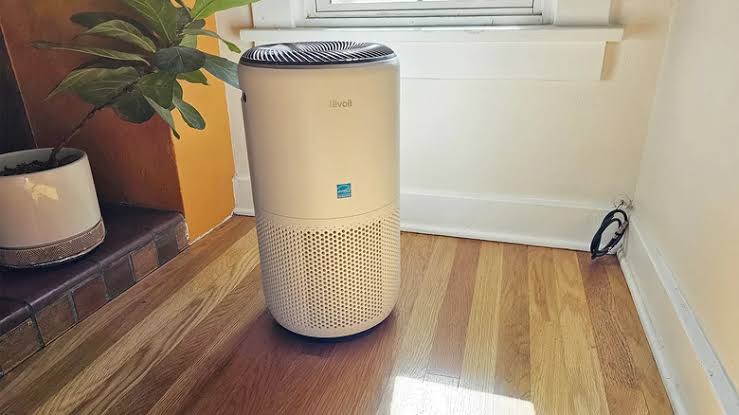
Look for a true HEPA filter rated for the square footage of the room, and remember that the filter is a consumable. A purifier with a clogged, unchanged filter is functionally the sham unit from this experiment.
Do not, however, buy one expecting to feel anything. A 12 per cent improvement in a timed pen-and-paper task is invisible from the inside. Nobody in Somerville reported a sudden sensation of mental clarity. The benefit here is the kind you only ever see in aggregate, on a graph, years later.
And do not treat it as a substitute for the interventions with far bigger effect sizes. Blood pressure control, hearing aids, exercise, sleep, education and social contact all carry more weight in the dementia risk models than air pollution does. Clean air is an addition to that list, not a replacement for it.
THE BOTTOM LINE
For decades, the case against dirty air was made in lungs and hearts — asthma, emphysema, heart attacks. The case is now being made in brains, and the evidence keeps getting harder to dismiss.
What is striking about the Somerville experiment is not the size of the effect. It is the speed. One month of cleaner indoor air, in ordinary homes, in an ordinary American city, produced a measurable change in how quickly middle-aged people could think — and the participants who got the fake machines got nothing.
The air in your living room is not neutral. It is doing something to you, every hour, and until this study most people had no idea that any of it could be undone in thirty days.
Published By | Features Editor