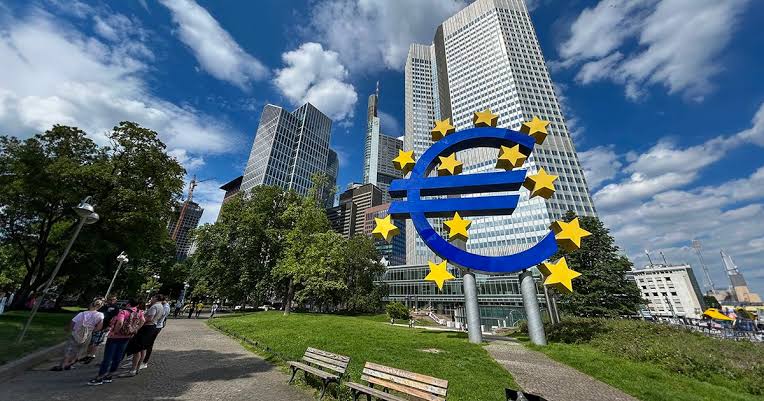
Frankfurt, Germany
Most cities that win the title of World Design Capital treat it as a branding exercise: a year of ribbon-cuttings, glossy pavilions, and carefully staged photo opportunities meant to signal a metropolis has arrived on the global design map. Frankfurt RheinMain, the sprawling metropolitan region anchored by Germany's financial capital, is doing something considerably more ambitious. Its theme for 2026 — "Design for Democracy: Atmospheres for a Better Life" — treats design not as decoration but as civic infrastructure, and this month, roughly seven months into its year-long reign, the program is hitting its stride.
A Region, Not a City, Steps Into the Spotlight
Awarded the title back in September 2023 by the World Design Organization, based in Montreal, Frankfurt RheinMain beat out Riyadh, Saudi Arabia, to win the designation — a decision that in retrospect looks almost pointed, given how differently the two finalists might have approached the honor. Where a single-city bid might have concentrated its energy on one signature museum or one flagship district, Frankfurt RheinMain's bid, put together by the nonprofit Design FRM gGmbH, spans more than 70 cities and towns across Germany's second-largest metropolitan region. That scale is the whole point: WDC 2026 is less a festival than a distributed experiment in what happens when an entire region — not just its cultural elite, but its municipalities, universities, hospitals and transit systems — is asked to think seriously about design as a tool for public life.
The numbers involved are substantial for what is, at its core, a cultural initiative: roughly 2,000 events, spanning 450 partner organizations including museums, universities, charities and private industry, unfolding across the full calendar year. The program officially launched on January 16, 2026, and runs through the end of the year, meaning this August marks something close to its midpoint — a natural moment to take stock of what "design for democracy" has actually looked like in practice, beyond the slogan.
Where the Program Lives: A Hub, a Traveling Pavilion, and a Street Festival
Anchoring the year-long program is the WDC Hub, housed inside the Museum Angewandte Kunst — Frankfurt's applied arts museum — which organizers describe as the "vibrant heart" of the initiative, a space intended for dialogue and encounters rather than static exhibition-viewing. Running in parallel is the WDC Pavilion, a modular, mobile structure touring the region between mid-April and the end of September, making stops in Bad Homburg, Offenbach, Wiesbaden and Darmstadt — a deliberate choice to push the program's energy outward from Frankfurt proper into the smaller municipalities that make up the wider region, rather than letting the capital city absorb all the attention.
This month's marquee event was the Module Festival, held August 13 to 16 at the Kulturcampus Frankfurt — a street festival built around music, design and social issues, explicitly organized under the "Design for Democracy" banner. Unlike a conventional design fair focused on furniture or product launches, Module leaned into design's social and political dimensions: public space, civic participation, and the ways design choices — from the layout of a public square to the accessibility of a transit app — shape who gets to fully participate in democratic life and who gets left out.

A Theme With Uncomfortable Timing
It's worth pausing on just how deliberately provocative "Design for Democracy" is as a curatorial theme in 2026. Across much of the world, democratic institutions have faced sustained pressure — from populist movements, disinformation, and eroding trust in civic institutions — making Frankfurt's chosen framework feel less like an abstract design-school prompt and more like a direct response to the political moment. The bid materials describe the goal as creating "atmospheres for a better life," language that sounds soft until you consider what it's implicitly arguing: that the physical and digital environments people move through every day — transit systems, public buildings, hospital waiting rooms, voting infrastructure — are themselves a form of political expression, shaping civic trust and participation whether or not anyone thinks of them that way.
That framing places Frankfurt RheinMain's WDC year in a different category from prior design-capital hosts, many of which leaned into design as economic development or tourism strategy. Here, the explicit goal is to demonstrate that thoughtful design can be a form of democratic maintenance — a way of rebuilding public trust one well-considered public space, transit interface, or accessible civic building at a time.
What Comes Next
With the WDC Pavilion continuing its regional tour through the end of September and the Museum Angewandte Kunst hub programming running through year's end, Frankfurt RheinMain still has roughly a third of its designated year ahead of it — including, organizers have signaled, further programming expected to intensify around the fall design calendar, when Europe's broader design and architecture world traditionally turns its attention toward year-end retrospectives and the following year's Milan Design Week preview cycle.
For the design world, Frankfurt's tenure will likely be remembered less for any single flagship building or splashy installation and more for whether its central bet — that an entire metropolitan region can be mobilized around design as civic infrastructure — actually produces measurable change in how the region's public spaces function, or whether it remains, as skeptics of design-capital designations often argue, an elegant framing exercise that fades once the year-long spotlight moves on to the next host city.

What This Means for Readers
Even for those with no plans to visit Frankfurt this year, the region's WDC 2026 program offers a useful lens for thinking about design closer to home: the crosswalk that either does or doesn't accommodate a wheelchair, the public library that either does or doesn't feel welcoming, the transit app that either does or doesn't work for someone who doesn't read the local language fluently. Frankfurt's central argument — that these are political choices as much as aesthetic ones — is one increasingly echoed by urban planners and civic designers well beyond Germany's borders, part of a broader shift in how the design profession understands its own responsibilities.
Conclusion
Halfway through its year as World Design Capital, Frankfurt RheinMain has resisted the easy version of the honor — the one built around a single dazzling building or a week of parties for the design-industry elite — in favor of something slower, more diffuse, and considerably harder to measure: an entire region asking, out loud and in public, whether design can help hold a democracy together. Whether that ambition survives contact with the ordinary difficulties of municipal bureaucracy and competing local priorities will be one of the more interesting design-world storylines to watch as 2026 heads into its final stretch.
Published By | Features Editor