MOGADISHU
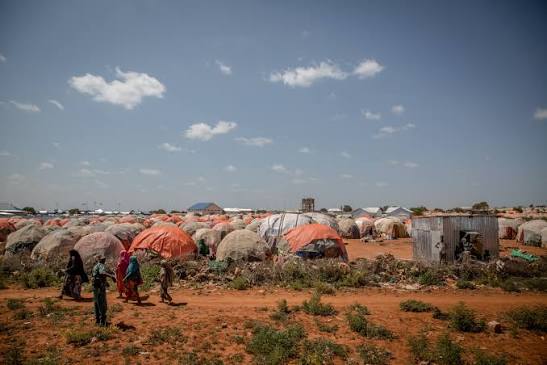
Fighting returned to the streets of Baidoa this week as forces loyal to a deposed regional president clashed with Somali government troops and those of the federally backed leader of South West State. Children have been killed and injured and a health facility was damaged, according to UNICEF, in a city where 26,000 people already face catastrophic food insecurity. The violence is the latest and most dangerous chapter in a political quarrel over how power is shared between Somalia's central government and its federal member states, and it is unfolding as President Hassan Sheikh Mohamud tours regional capitals to shore up support.
Why it matters now
Baidoa, roughly 250 kilometers (about 155 miles) west of Mogadishu, is the capital of South West State and a base for operations against the militant group al-Shabab. A dispute that began as an argument over constitutional change and a contested regional election has been militarized in stages: first in March, then on Aug. 17, then on Sept. 3, and now again this week. Each round has made a negotiated settlement harder, and each has pulled Somali forces away from the fight against al-Shabab, which the Eastleigh Voice noted is running in parallel to the clashes.

What happened this week
Fresh fighting broke out in Baidoa on Monday, Sept. 28, between forces backing South West State President Sheikh Aden Mohamed Nur Madobe and fighters loyal to the former regional president, Abdiaziz Hassan Mohamed Laftagareen, allAfrica reported. UNICEF said the clashes flared after thousands of local fighters entered the city. Local reports said Laftagareen-aligned forces had moved closer to areas surrounding Baidoa in recent days. Neither the federal government nor Madobe's administration had officially confirmed the fresh fighting at the time of the allAfrica report, which described some military movements as unverified.
Laftagareen's camp has said it will continue operations to "liberate" South West State, while Madobe's administration asserts its authority over Baidoa. A civic body, the South West Peace, Unity and Development Council, urged both sides to "first agree to a ceasefire and enter talks."
UNICEF said, "Children are once again bearing the heaviest burden of violence," and called on all parties to "protect children from harm, ensure the protection of schools, and health facilities." No casualty figures were provided in the agency's statement as reported.
How the dispute began
The reporting from Somali and regional outlets traces the crisis to a clash over constitutional change. Laftagareen, who had led South West State since 2018, opposed constitutional changes backed by President Hassan Sheikh Mohamud, according to the Eastleigh Voice. The Somali Guardian described his March 2026 election as disputed. On March 30, federal forces took control of Baidoa and Laftagareen resigned, the Somali Guardian reported; Garowe Online used different language, saying he was "removed from office" by the federal government. The two accounts agree that the outcome was a change of leadership imposed under federal military pressure.
In June, Madobe, a former speaker of the Somali parliament, was elected president of South West State, a result Laftagareen rejected. He was inaugurated in July with Hassan Sheikh Mohamud present, according to the Somali Guardian. The federal government's backing of Madobe is central to the grievance of Laftagareen's supporters, who see the process as an overreach.
Armed conflict erupted on Aug. 17. Garowe Online reported that Laftagareen's spokesman, Ugas Hassan, claimed the "South West State Darwish forces have fully taken control of Baidoa and restored its freedom and dignity." Government military officials said they had repelled the attack. Neither side offered independently verified casualty figures, and residents reported sporadic gunfire afterward. Federal troops regained control, the Somali Guardian said.
On Sept. 3, fighting broke out again in Baidoa's Al-Faras, Boonkaay and Al-Axmaar neighborhoods, the Eastleigh Voice reported, disrupting electricity and causing fires in residential areas. Ugas Hassan announced operations to "take control of Baidoa," and a commander claimed the capture of three armed vehicles, which could not be verified. The Somali Guardian summarized the toll of the broader violence as "dozens killed or wounded," including civilians. A separate outlet, the Rio Times, headlined its report on the fighting "Baidoa Fighting Wounds 71 in Somalia's Southwest"; the article itself could not be retrieved for this story, so that figure is unconfirmed here.

A humanitarian emergency under the gunfire
The political crisis is landing on a population with little margin. According to the allAfrica report on the UNICEF and World Food Program statements, 2 million children are acutely or severely malnourished across Somalia and 26,000 people in Baidoa face catastrophic food insecurity. Hameed Nuru, the WFP's country director, said that "severe funding shortfalls mean we are only reaching a fraction of those in need." The agency, which previously assisted more than 4 million people each month, now supports just over 670,000.
The report included the account of a woman named Hawo, who said her father was killed by mortar fire and her brother died in the fighting. "Some days we eat just once a day," she said. Her daughter showed signs of malnutrition, but a local clinic turned them away for lack of resources. The story illustrates the compounding effect of conflict and aid cuts: the same fighting that damages clinics reduces the capacity of the humanitarian system to respond.
The regional dimension
President Hassan Sheikh Mohamud has responded with a diplomatic tour. The Somali Guardian reported that he met Ethiopian Prime Minister Abiy Ahmed in Addis Ababa on Tuesday and Djibouti's president, Ismail Omar Guelleh, on Wednesday, with a visit to Egypt expected, possibly Friday, with meetings in New Alamein. The paper framed the trip as a test of regional alliances.
Each of the three capitals has a stake. Ethiopia has deep security and political interests in southwestern Somalia, and the paper described the relationship as a partnership with tensions. Djibouti is a historical ally that hosts the regional bloc IGAD. Egypt has expanded military cooperation with Mogadishu and takes part in the African Union mission, AUSSOM. The timing is awkward for Mogadishu: Ethiopia is now consumed by its own war in Tigray, Afar and Amhara, and has accused Egypt of backing the rebels it is fighting. A Somali president who courts both Addis Ababa and Cairo is walking a narrow line, and the Horn's rival camps are shifting around him.
Analysis: a federal system under strain
The dispute in Baidoa is, at root, a contest over the terms of Somali federalism. Somalia's member states have long resisted what they see as Mogadishu's attempts to dictate regional outcomes, and the federal government has argued that constitutional reform is needed to build a functioning state. When a regional leader opposes the reform, and the center responds with troops and a favored successor, the case for the regional leader's grievance writes itself, regardless of the merits of the reform. That dynamic helps explain why Laftagareen's fighters have been able to attract thousands of local supporters, at least by UNICEF's account.
The government's position is not without logic. It controls the machinery of the state and faces an al-Shabab insurgency that thrives on disunity. But the strategy of resolving a political question by force has so far produced three rounds of fighting in six weeks, none decisive. The risk is that the conflict hardens into a prolonged struggle in which both sides can mobilize local fighters, and in which the federal army becomes a party rather than an arbiter.
Several caveats apply. Much of the reporting from Baidoa relies on partisan claims, some explicitly unverified, and the federal government has not confirmed the latest clashes. Casualty counts are scarce; the "dozens" figure is imprecise and the 71-wounded number could not be checked. Readers should treat the claim that Laftagareen's forces "seized" the city as unproven, as the government has contradicted similar claims before.
What to watch
Three things bear watching in the coming days. First, whether the peace council's call for a ceasefire and talks finds a champion; the reporting does not show that either side has accepted it. Second, the outcome of Hassan Sheikh Mohamud's tour: a public security commitment from Addis Ababa, Djibouti or Cairo would signal how much outside support Madobe's administration can count on, while silence would suggest the regional partners are distracted. Third, the humanitarian trajectory. With WFP reaching a fraction of its former caseload, a prolonged siege or displacement from Baidoa could push the 26,000 people now in catastrophic hunger toward worse conditions quickly.
Published By | Features Editor