Written By | International News Agencies
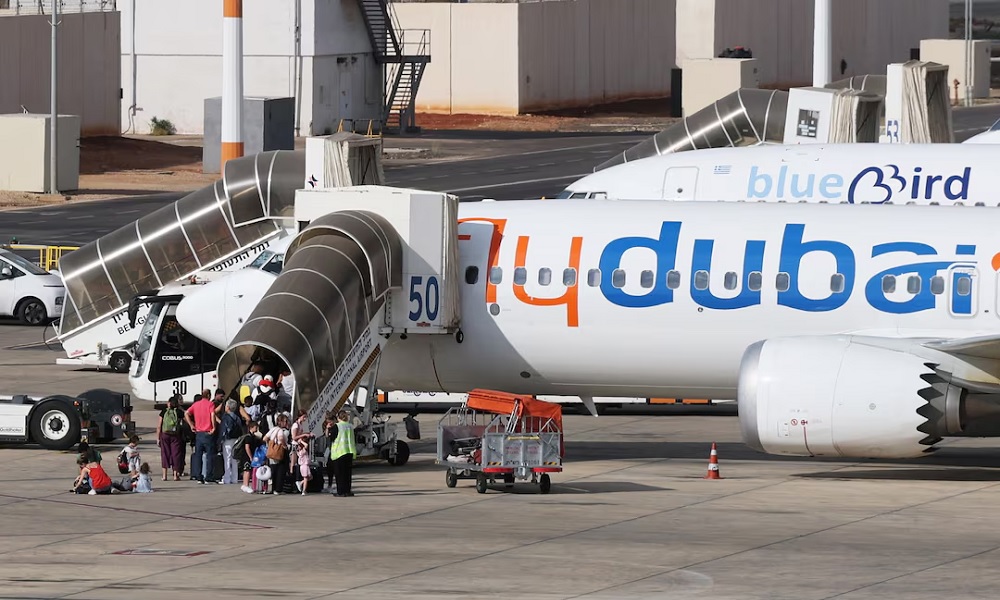
Israeli officials say a co-pilot, reportedly an Omani national, attacked the captain and tried to bring the aircraft down, and that Israeli passengers helped overpower him
World Politics
Overview
A flydubai passenger jet carrying roughly 170 to 180 people from Dubai to Tel Aviv made an emergency landing at Tabuk Airport in northwestern Saudi Arabia on Wednesday morning after a violent struggle in the cockpit. The flight, FZ1073, sent out the international squawk code for a general emergency and then the code for unlawful interference, the signal pilots use to indicate a hijacking. Israel scrambled fighter jets, its prime minister and defense minister convened an urgent security consultation, and for a stretch of the morning Israeli officials treated the event as a possible terrorist attack. By midday the plane was on the ground, all passengers were reported safe, and both pilots were in hospital.
What began as an aviation emergency has quickly become a political one. Israeli officials say a co-pilot, reportedly an Omani national, attacked the captain and tried to bring the aircraft down, and that Israeli passengers helped overpower him. Israel's transportation minister has demanded that flydubai's flights to Israel be suspended and that the United Arab Emirates be investigated for breaching its aviation agreement with Israel. The incident lands in a region already strained by the war involving Iran, and only years after the Abraham Accords opened direct commercial flights between the Gulf and Israel, one of the most visible dividends of that diplomatic breakthrough.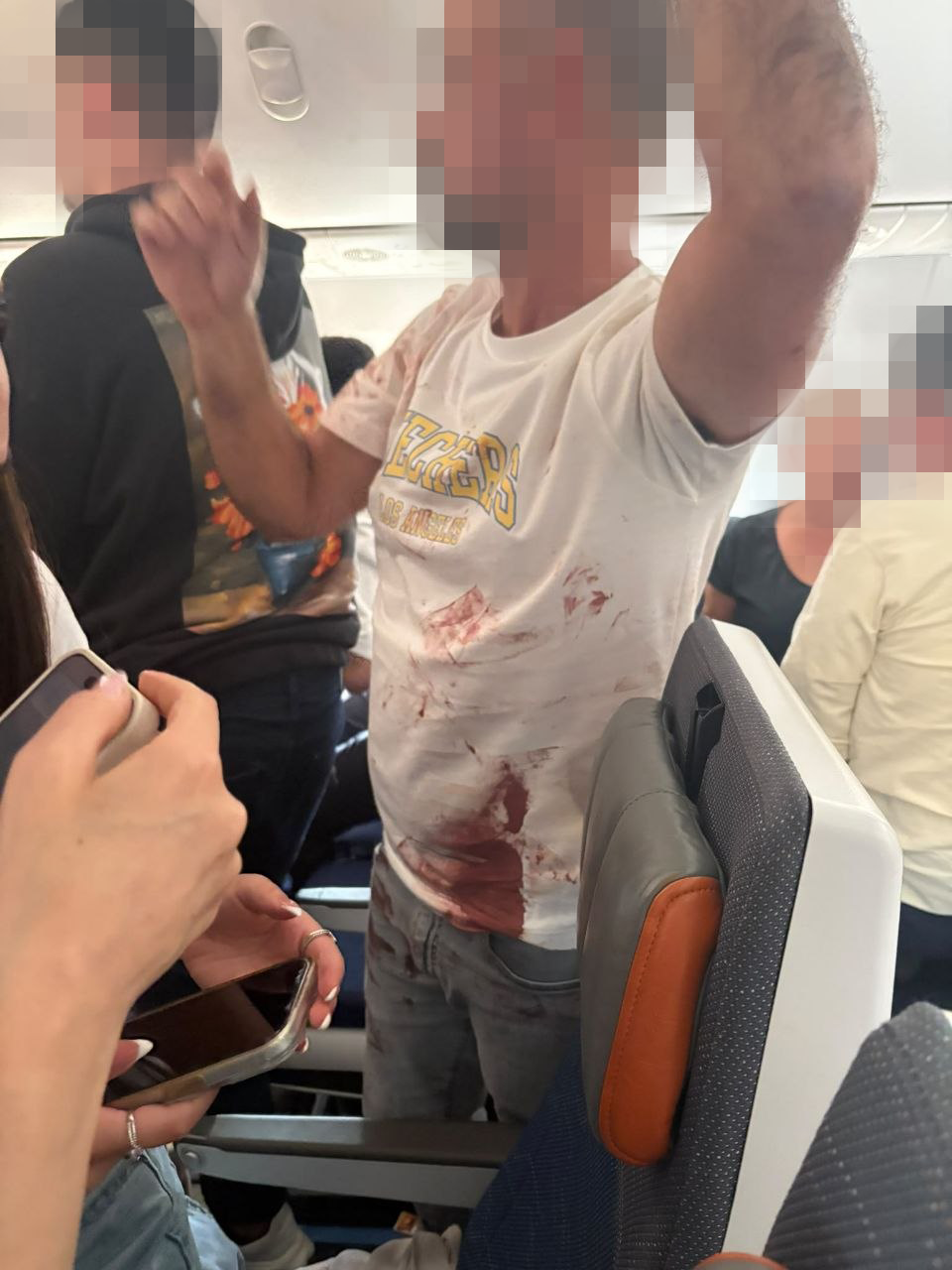
Background: A Route Built on Normalization
Flydubai, the Dubai government-owned low-cost carrier, began flying to Tel Aviv in 2020, shortly after the UAE and Israel normalized relations under the Abraham Accords. The launch was celebrated at the time as a landmark, and the route has since carried large numbers of Israeli tourists and business travelers to the Emirates and beyond. Because the flights cross Saudi and Jordanian airspace, they also depend on the Gulf's evolving airspace arrangements.
According to a source in Israel's Transportation Ministry quoted by the Jerusalem Post, the operating agreement between flydubai and Israel explicitly requires that all pilots on Israel-bound flights hold passports from countries that have normalized relations with Israel. Oman does not have diplomatic relations with Israel. If the co-pilot is indeed an Omani national, as Israeli officials have said based on initial investigation, that would be a clear breach of the arrangement in the ministry's view. The same report notes that it contained no statement from flydubai or the UAE and no official confirmation of the pilot's nationality, so the claim should be treated as unverified for now.
The wider backdrop matters too. Israel is a participant in the US-Israel war with Iran that has dominated the news for months, and Israeli security services have long treated civil aviation as a target. Israeli officials cited the memory of the hijackings of the 1960s and 1970s when explaining why the response was so swift and so forceful.
Key Developments: What Happened in the Air
According to flight-tracking data summarized by Flightradar24, the aircraft departed Dubai at about 03:05 UTC, which is 7:05 a.m. local time, and reached a cruising altitude of roughly 34,000 feet. At about 05:21 UTC it began a sharp descent, and by around 05:33 UTC it had leveled off near 15,000 feet with pronounced altitude oscillations. Other outlets described a drop from 34,000 feet to about 14,000 feet, and one Israeli report put the descent at around 4,000 meters, figures that are broadly consistent. The transponder sent code 7700 at about 05:28 UTC and code 7500 at about 05:35 UTC, then returned to 7700 on approach to Tabuk. The aircraft briefly appeared to turn toward Jordanian airspace before reversing toward Saudi Arabia and landing at about 06:58 UTC, which is about 9:58 a.m. in Saudi Arabia; the Times of Israel put the diversion at around 9:45 a.m. local time.
Passenger accounts paint a frightening picture. Tzvika Manes, the chief executive of Bank Leumi's underwriting arm Barak Capital Underwriting, told the business outlet Calcalist that his wife, seated near the cockpit, heard a commotion from the flight deck and alerted an off-duty relief pilot traveling nearby. According to Manes, the relief pilot called for help and he and two other men entered the cockpit and subdued the attacker. He said he was covered in blood and described the experience as insane. A doctor aboard reportedly treated the injured pilot's wounds, and Israeli media reported that a dentist among the passengers also gave life-saving treatment. Passengers quoted by the Times of Israel said they heard screams and felt the aircraft dive.
Israel's response was immediate. Prime Minister Benjamin Netanyahu and Defense Minister Israel Katz held an urgent consultation, Israeli Air Force jets were scrambled, and a joint command center among security agencies was set up to monitor the situation. Netanyahu's office later said the situation was under control and that authorities were working to bring the passengers home. Flydubai arranged a replacement aircraft to return travelers to Tel Aviv.
Conflicting Accounts
Early reporting is inconsistent on several points, and readers should treat details cautiously. Reports differ on who was stabbed: the Times of Israel reported that the co-pilot, allegedly an Omani national, stabbed the captain, while a Jerusalem Post report described the suspect as having stabbed the co-pilot. Most outlets agree that both pilots ended up hospitalized. Ynet reported the two pilots as having come to blows and framed the event as a physical altercation rather than a confirmed hijacking, quoting an Israeli security official who said there was no definitive information about a hijacking and that the pilot had activated a distress signal.
The passenger count also varies. Ynet reported 174 passengers including 27 children, the Times of Israel put the figure at about 180, mostly Israelis, and another report said more than 100 Israelis were aboard. The aircraft type is disputed as well, with Calcalist identifying a Boeing 737 MAX 8 and the Flightradar24 summary referring to an Airbus. Finally, the interpretation of intent differs. Israel's Security Minister Itamar Ben-Gvir said the pilot planned to crash the plane, while Israeli officials speaking to other outlets said his purpose was unclear, whether a hijacking, an intentional crash or something resembling the September 11 attacks. CNN and Reuters, as cited by Flightradar24, described the disturbance simply as a physical altercation between the pilots. No motive has been publicly established, and no charges have been announced.
Reactions
Transportation Minister Miri Regev asked Israel's Shin Bet security service to halt all flydubai flights to and from Israel and called for an investigation into whether the UAE violated the aviation agreement. Israeli security services also reportedly asked for a suspension. Opposition figures praised the passengers' bravery while accusing the government of exploiting the episode for political gain with elections approaching, according to the Times of Israel.
Flydubai confirmed the incident in restrained language, saying its teams were working closely with the relevant authorities, that all passengers were safe and accounted for, and that more updates would follow as confirmed details became available. As of the reports reviewed, there was no substantive statement from the UAE government or from Oman on the pilot's identity, and Saudi authorities had said little beyond a regional official acknowledging that an altercation had broken out in the cockpit apparently involving the pilots.
Aviation analysts caution that cockpit fights are rare but not unprecedented. Two Air France pilots were suspended in 2022 after a physical fight on a Geneva-to-Paris flight that nonetheless landed normally. The difference here, if Israeli accounts hold, is the alleged use of a weapon and an attempt to take the aircraft down.
What Comes Next
The immediate questions are factual. Investigators, most likely Saudi and UAE aviation authorities with Israeli participation, will need to establish the identity and nationality of the co-pilot, how a weapon reached the cockpit, whether a crash was truly intended, and what the flight data and cockpit voice recorder show. Their findings will determine whether this is a story about a mentally or personally driven crisis by one individual or about terrorism, and Israel's political reaction will track that answer closely.
Diplomatically, the episode tests the Israel-UAE relationship at a delicate moment. A suspension of flydubai's Israel flights would be a tangible blow to normalization, while a quick, transparent UAE investigation could contain the fallout. The nationality issue is a second pressure point: if a pilot from a country without relations with Israel was rostered on an Israel route, Israel will press the UAE on its compliance, and airlines across the Gulf may have to revisit crew assignments and screening.
Security agencies will also revisit cockpit protocols. Questions about how a knife-type weapon was carried aboard, whether reinforced door procedures worked, and how an unplanned struggle unfolded so close to passengers will feed a broader review. For now, the most reliable facts are that a flight with well over a hundred people aboard plunged some 20,000 feet, that passengers helped end the struggle, and that everyone on board landed alive. Everything beyond that remains under investigation.



