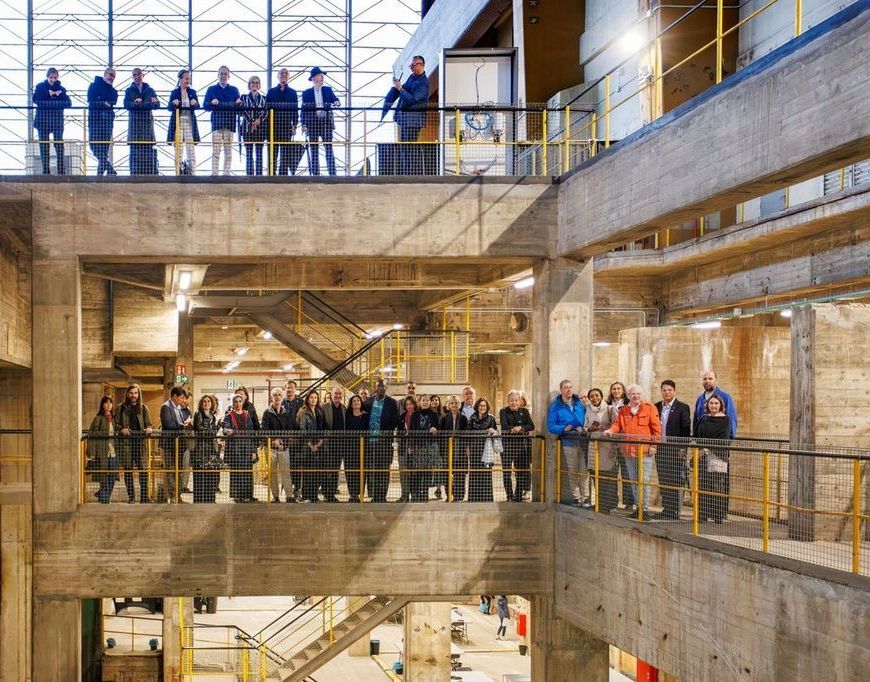
The UIA World Congress of Architects opened tonight with a theme — “Architectures for a Planet in Transition” — that treats climate change, AI, and inequality as design problems, not background noise.
BARCELONA, SPAIN
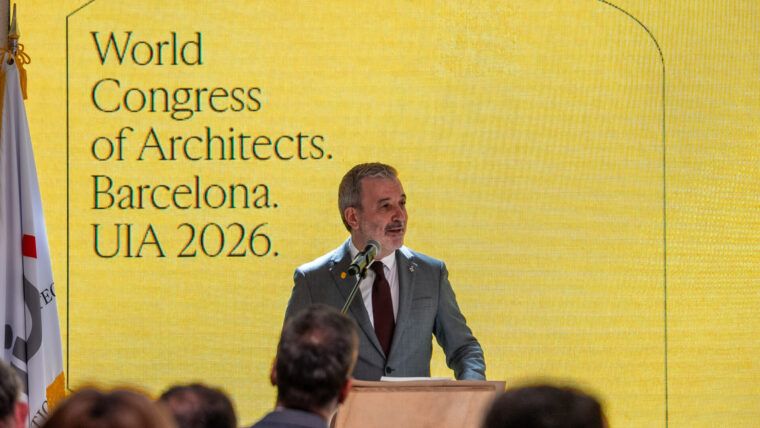
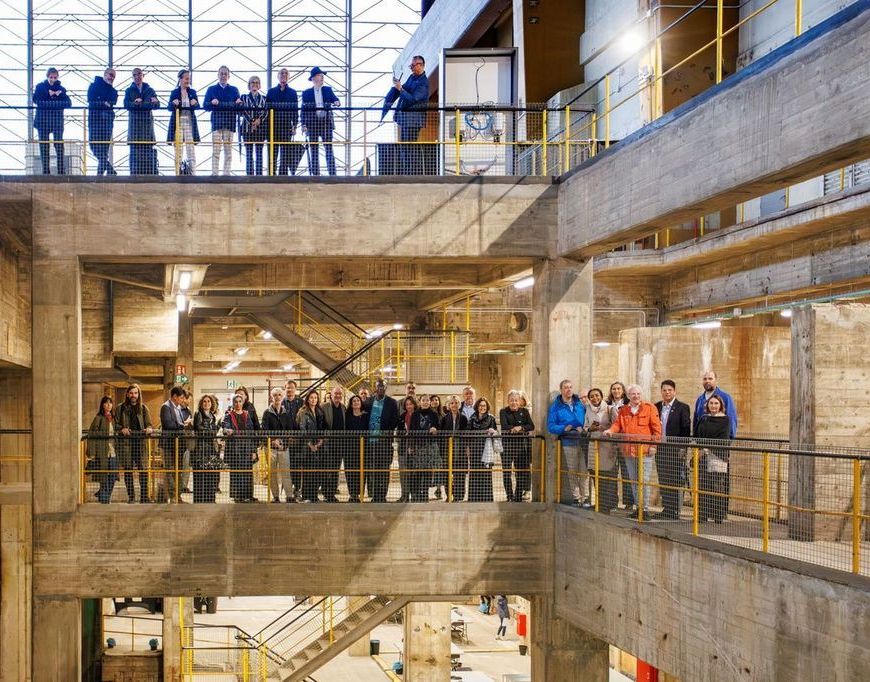
Tonight at Les 3 Xemeneies del Besòs, a converted industrial power station on Barcelona’s waterfront, more than 10,000 architects, urbanists, and designers from upward of 130 countries gathered for the opening ceremony of the UIA World Congress of Architects 2026 — the 29th edition of a triennial gathering that functions as something like the Olympics of the architecture profession. Over the next five days, through July 2, the Congress will run more than 100 sessions across eight stages, anchored by a 4,000-square-metre central exhibition and seventy architectural itineraries threading through the city and the wider region. It is, by any measure, one of the largest assemblies of design talent the world will see this year.
A Theme With Teeth
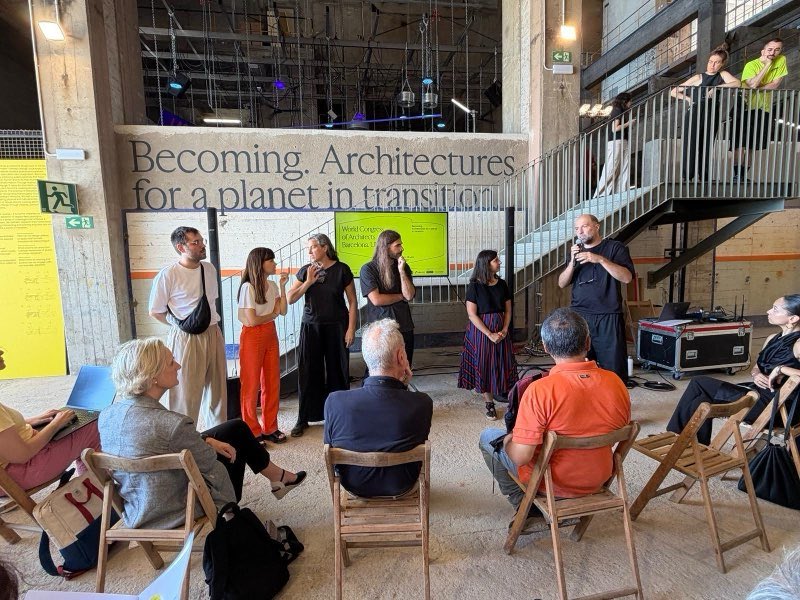
What distinguishes this edition from previous Congresses isn’t just its scale — it’s the bluntness of its framing. The central exhibition and the Congress’s entire program are organized under the title “Architectures for a Planet in Transition,” a phrase that refuses the profession’s old habit of treating sustainability as a checkbox or an add-on. Organizers structured the five days around six thematic lines, each given a half-day of dedicated programming: Becoming More-than-human, Becoming Circular, Becoming Embodied, Becoming Interdependent, Becoming Hyper-conscious, and Becoming Attuned. The deliberately unfinished, present-tense framing — “becoming” rather than “become” — signals an intent that runs through the whole Congress: architecture is being asked to treat itself as a discipline mid-transformation, not one with settled answers to hand down.
“Becoming More-than-human” pushes designers to consider non-human life — ecosystems, other species, the materials themselves — as stakeholders in design decisions rather than externalities. “Becoming Circular” tackles the construction industry’s outsized share of global carbon emissions and waste, pressing for material reuse and demolition-resistant design. “Becoming Interdependent” and “Becoming Attuned” both lean into questions of equity and context — who gets to shape a building, and whether a design genuinely answers to the place and people around it, rather than to an architect’s signature style.
Why Barcelona, Why Now
The choice of host city is not incidental. Barcelona has spent the past three decades as one of the world’s most-studied case studies in urban transformation — from its 1992 Olympics-driven waterfront overhaul to its more recent, more contested “superblock” program, which has reclaimed swaths of street space from cars for pedestrians and green space, drawing both international praise and local pushback over gentrification and uneven rollout. A Congress dedicated to architecture’s role in planetary transition staged in a city still actively renegotiating its own relationship with cars, tourism, and density gives the abstract program a very concrete backdrop. Several of the Congress’s seventy architectural itineraries are built directly around these contested Barcelona case studies, letting delegates walk the arguments rather than just hear them debated on stage.
An Industry Under Pressure From Every Direction
The Congress arrives at a moment when architecture as a profession is being squeezed from multiple directions simultaneously. Climate regulation is tightening building codes and embodied-carbon requirements across Europe and beyond. Artificial intelligence tools are already reshaping early-stage design and visualization workflows, raising open questions about authorship and labor that the profession has barely begun to resolve. And a global housing affordability crisis has put pressure on architects to defend the value of design quality against developers and policymakers increasingly willing to treat housing as a purely numbers-driven commodity. The Congress’s programming touches all three pressures directly, with sessions spanning AI’s role in design practice, material circularity standards, and housing equity — a sign that the UIA, the international body representing architects worldwide, sees this moment as a genuine inflection point rather than a routine professional gathering.
A Discussion Worth Watching
Among the more pointed sessions on the schedule is a panel titled “Beyond Recognition: Exploring the Role of Architectural Awards,” scheduled for Monday, which will interrogate whether the profession’s prize culture — the Pritzkers, the RIBA medals, the endless circuit of awards that shape which buildings and which architects get remembered — actually serves the discipline’s stated values, or whether it rewards spectacle and personal branding at the expense of the more communal, circular, context-sensitive work the Congress’s own theme is asking for. It’s a rare moment of a major institution turning its own incentive structures into a topic of public scrutiny rather than treating them as settled and uncontroversial.
“Architectures for a Planet in Transition.”
— Central exhibition theme, UIA World Congress of Architects 2026 Barcelona
What This Means for You
Even if you will never commission a building, the conversations happening in Barcelona this week will eventually reach you through the spaces you already move through. Decisions about embodied carbon in concrete and steel show up later as the building codes that shape what your city allows developers to build. Debates over circular construction and material reuse show up as the renovated-rather-than-demolished buildings on your block, or don’t. And questions about who design genuinely serves — raised explicitly under the Congress’s “Becoming Interdependent” theme — are, in plainer language, questions about whether the next decade of housing, schools, and public space gets built around the people who will actually use them or around the metrics that are easiest to put in a developer’s pitch deck.
The UIA Congress runs through July 2, and its real output won’t be fully visible for years — in the codes it nudges, the case studies it elevates, the careers of younger architects who walk away from a five-day immersion in “becoming” rather than “being.” But the opening ceremony at a repurposed power station on the edge of the Mediterranean was, in its own way, the argument made physical: even the building hosting the architects who will shape the next decade is itself a piece of adaptive reuse, proof that the planet in transition the Congress keeps invoking is not an abstraction. It is just the neighborhood you are already standing in.
Published By | Features Editor