Written By | International News Agencies
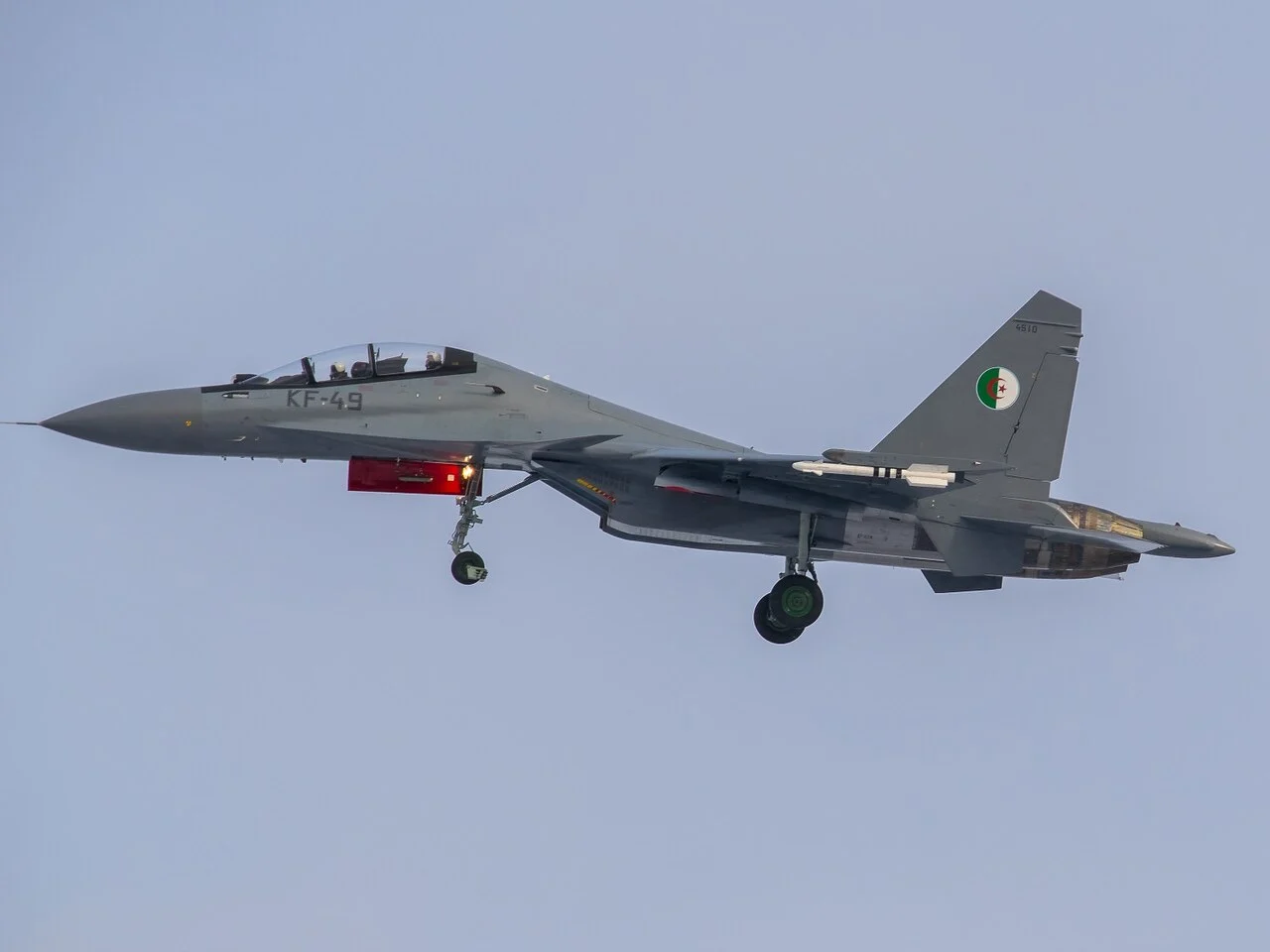
According to Al Jazeera's account of the timeline, Niger's Prime Minister, Ali Mahaman Lamine Zeine, visited Algeria on August 26 and 27 to deepen bilateral cooperation
NIAMEY, Niger
Five weeks after a failed uprising by soldiers at Niamey's main airbase, the political consequences are still unfolding, and the latest revelation has changed how the episode is understood. Algerian President Abdelmadjid Tebboune confirmed in recent days that Algeria sent fighter jets to Niger at the end of August to help the military government of Abdourahamane Tiani, a disclosure Al Jazeera reported on October 3. Russia's Africa Corps forces also helped defend the regime, according to analysts and news reports. The episode shows how dependent Niger's junta has become on outside patrons and how divided its own army remains.
What happened in Niamey
According to Al Jazeera's account of the timeline, Niger's Prime Minister, Ali Mahaman Lamine Zeine, visited Algeria on August 26 and 27 to deepen bilateral cooperation. On August 28 and 29, gunfire and explosions erupted in the capital, and renegade soldiers attacked Air Base 101, the state broadcaster and the presidential palace. Niger's defense minister confirmed that military personnel had tried to detain colleagues and then opened fire on strategic locations. On August 30, Algeria's Ministry of Defence announced the deployment of four Sukhoi Su-30 fighter jets along with refueling support.
Accounts differ on dates because the fighting spanned the night. The Wikipedia entry on the episode gives August 28 to 29 and says the mutiny lasted roughly a day, while the Time News report places the attempt on August 30 and says government forces had regained control by August 31. The weight of the sources supports the August 28–29 date for the attack and August 30 for the Algerian deployment.
The government side suffered casualties. The Wikipedia summary reports that at least three members of the Presidential Guard were killed and that several mutineers were killed or captured, though exact figures were not published. Time News reported that state television broadcast footage of alleged rebels being arrested by the Presidential Guard, and that no casualty figures or detainee numbers were disclosed. These numbers are therefore incomplete, and readers should treat any firm toll with caution.
The target mattered. Time News reported that the airbase hosts military aircraft, drones and counterterrorism units serving the Alliance of Sahel States (AES), and that Russian and Italian forces are stationed there. An attack on that facility struck at the junta's most valuable military asset.
Why the soldiers rose
The Wikipedia summary says the plotters were young officers who called themselves the Armed Forces for the Restoration of the Fatherland (FARP), with units from Ouallam, Téra and Dosso involved. Their grievances centered on inequality inside the army: the Presidential Guard, which protects the regime, received better equipment and safer rear positions, while frontline units fighting Islamic State and al-Qaeda affiliates took heavy losses. Time News likewise described frustration among frontline units.
Analyst Heni Nsaibia, quoted in a comment published by the conflict-monitoring group ACLED, argued that soldiers at Air Base 101 "seemingly hoped other military units would join them, but that support never materialized," characterizing the episode as a mutiny rather than a coordinated coup. That distinction is important. A mutiny reflects discontent that did not become a broader movement, at least on this occasion, while a coup implies an organized challenge with allies across the security forces.
ACLED's data illustrate the backdrop. Under Tiani, between July 2023 and July 2026, Niger recorded 1,490 political violence events and 5,836 fatalities, compared with 1,390 events and 3,199 fatalities in the prior three-year period. That is an increase of about 80 percent in deaths, against a rise of about 7 percent in incidents, according to ACLED's comparison. In other words, the violence has become markedly more lethal even though it is not much more frequent. ACLED also noted that the Islamic State Sahel Province and the al-Qaeda–affiliated JNIM have intensified operations in western Niger, expanding into the Dosso region and southern Tahoua since early 2024.
Moscow, Algiers and a contested narrative
Niger's military government accused France of orchestrating the failed coup, and France denied involvement, Al Jazeera reported. No independent evidence for the accusation appears in the sources reviewed. The charge fits a pattern in which the junta, which has shifted away from Western partners toward Russia since seizing power in July 2023, attributes internal threats to its former colonial power. Time News noted that the government recently tightened its control over uranium resources, seizing assets from France's Orano company.
Russia's role appears to have been decisive. ACLED said the regime suppressed the mutiny with assistance from Russia's Africa Corps, and the Wikipedia summary says the Africa Corps provided ground and aerial support at the government's request. One expert quoted there said: "I don't think it's an exaggeration to say that the Russians saved the day."
Algeria's involvement is the more surprising element. Tebboune told local media that the mutiny was "a provocation against us" and added "and I too will send planes," according to Al Jazeera. He indicated that parties had "gone too far," without naming them, and did not specify whom he meant. The Africa Press report notes that Algeria views stability in the Sahel as essential to its national security and shares a long border with Niger. The timing, with the Prime Minister's visit immediately preceding the uprising, suggests that Niamey and Algiers were already coordinating closely, though the sources do not say whether Algeria had advance warning.
Reaction across the region split along predictable lines. The Wikipedia summary lists Burkina Faso, Mali, Algeria, Egypt, Libya, Qatar, Turkey and Russia as backing Tiani's government. Nigeria expressed what the entry calls "deep concern" about political instability, while the Alliance of Sahel States called the episode a "destabilization plot" that was "thwarted." Time News quoted the alliance describing it as "a betrayal by a group of soldiers involved in an attempt at destabilisation."
Analysis: a regime secured from outside
The mutiny failed, but the means of its defeat are politically revealing. A government that came to power in 2023 on a promise of sovereignty now depends on Russian paramilitaries and Algerian air power to survive a revolt from within its own ranks. That dependence cuts two ways. It deters rivals inside the army, who must now weigh the cost of challenging a regime that foreign forces will defend. But it also hands leverage to external patrons and exposes the junta to the charge that it cannot protect itself.
The grievances behind the uprising have not disappeared. The gap between the privileged Presidential Guard and the units absorbing losses on the front is a structural problem, and ACLED warned that internal military divisions could force the diversion of resources from counterinsurgency, further weakening Niger's ability to fight the jihadist groups. Any crackdown that purges frontline officers risks deepening the same resentment. It would be speculative to predict a second attempt, but the conditions that produced the first remain in place.
Algeria's disclosure also complicates the regional picture. Tebboune's description of the mutiny as a provocation against Algeria suggest that Algiers sees the Niger crisis as part of a wider contest, and his reference to parties who had "gone too far" invites the question of who they are. Because he did not name them, observers should avoid assuming a particular target. What is clear is that Algeria has chosen to put military assets on display, which signals an intention to remain a principal player in Niger's security.
What to watch next
The first thing to watch is the junta's treatment of the detained soldiers: whether trials are held, whether names are published, and whether the units from Ouallam, Téra and Dosso face reprisals. The second is whether the Russian and Algerian presence becomes more permanent. The third is the state of the fight against jihadists in western Niger, where the ACLED figures show deteriorating conditions. The fourth is the junta's relationship with France and with uranium customers, given the Orano seizure and the new accusation against Paris. The fifth is whether Niger's AES partners, Mali and Burkina Faso, offer more than statements of support.
The uncertainty is considerable. Official casualty and detainee figures have not been released, the junta's allegation against France is unsubstantiated in the sources reviewed, and Algeria's intentions are described largely through the words of its own president. As more details emerge, they will show whether this was an isolated outburst or a symptom of a divided army.



