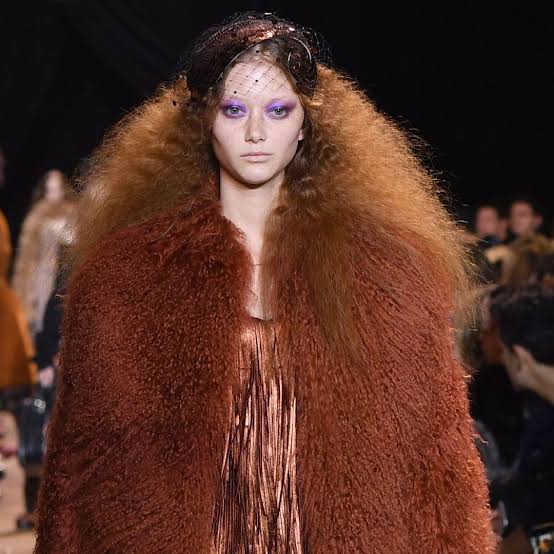
NEW YORK
New York Fashion Week opens this morning, and for the first time in its history, nothing on the official schedule will be made of an animal that was killed for its pelt.
The Council of Fashion Designers of America's fur ban, announced in December 2025 and deliberately delayed nine months to give houses time to adjust their supply chains, is now in full force. It applies to every brand on the Official NYFW Schedule — roughly 70 runway shows and presentations running from today through September 15.
The prohibited list is specific: farmed or trapped fur from animals killed for their pelts, including but not limited to mink, fox, rabbit, karakul lamb, chinchilla, coyote and raccoon dog. One exemption survives, for fur obtained by Indigenous communities through traditional subsistence hunting practices — a carve-out that acknowledges a distinction between an industry and a way of life.
The Quietest Revolution in Fashion
Here is the awkward truth that makes this story more interesting, not less: almost nobody will notice.
CFDA chief executive Steven Kolb has been disarmingly candid about it, noting that there was "already little to no fur shown at NYFW" and framing the policy as aspirational rather than corrective — a hope that American designers will "think more deeply about the fashion industry's impact on animals."
In other words, the CFDA has banned something that had largely already left the building. Fur had been drifting off the New York runway for a decade, pushed out by consumer indifference, a generation of designers who never worked with it, and the reputational calculus of a business that lives on Instagram.
This does not make the ban meaningless. It makes it a ratification. Industry bodies rarely lead; they codify a consensus and then take credit for the weather. What matters is that the consensus is now written down, enforceable, and attached to the calendar that determines who counts as a New York designer.

New York Joins the Queue
The move also ends an oddity. New York was, until today, well behind the smaller cities that set the pace on this issue. London Fashion Week, run by the British Fashion Council, ended its promotion of fur in 2023; Copenhagen, Berlin, Stockholm, Amsterdam, Helsinki and Melbourne followed. Milan and Paris — home to the conglomerates with the deepest ties to fur ateliers — remain the conspicuous holdouts, and will be asked about it constantly over the next four weeks as the season moves across Europe.
The Industry That Refuses to Concede
The fur trade has not accepted the framing. Its counter-argument has shifted over the past decade from tradition to ecology: that fur is a natural, biodegradable, long-lived material, and that the alternative — petroleum-derived synthetic pile — is an environmental problem dressed up as an ethical solution.
One American Fur Council board member put the position bluntly: "The false narrative pushed by well-funded NPOs needs to stop and if you are looking for sustainability — fur is the way to go." The trade also points, fairly, to employment: furriers, patternmakers and cutters are a specialised craft workforce in New York that has shrunk for years and has no obvious second act.
The counter-evidence is substantial. Humane Society International's "Fur's Dirty Footprint" report documents the emissions, water use, and chemical load involved in fur farming and tanning, and argues that the "natural" claim collapses once the full production chain is measured rather than assumed.
Both sides are right about the other's weakness. Fur farming carries environmental costs the industry prefers not to itemise. Conventional faux fur is plastic, sheds microfibres, and is not obviously the moral high ground. The interesting work is happening in neither camp — it is in the bio-based and recycled pile materials a handful of labs are now bringing to market, and which are precisely what the CFDA wants designers to find.
What the CFDA Is Actually Offering
To its credit, the organisation has not simply issued a prohibition and walked away. It has committed to educational materials and a materials library — a physical and searchable resource where designers can handle alternatives rather than order them blind from a swatch card. For a small label without a sourcing team, that is the difference between compliance and paralysis.
The Season the Ban Arrives Into
The timing is fortunate. This is a season heavy on debuts and returns, with Diane von Furstenberg opening the calendar this morning, Thom Browne closing it on September 15, and anchors including Tommy Hilfiger and Calvin Klein in between. A schedule full of first collections has very little institutional attachment to any material — the new arrivals were never going to show fur anyway.

What It Means for What You Buy
For shoppers, the effect will arrive slowly. Runway policy does not govern what a brand sells; it governs what a brand shows. A house can comply fully in September and still sell a mink collar in a Milan boutique in November.
But shows shape orders, and orders shape shop floors. What is more useful for the consumer is the shift in vocabulary the ban accelerates. Expect "fur-free" to stop functioning as a marketing claim — because it will be the baseline — and expect the meaningful question to become what the alternative is actually made of. Recycled polyester pile, bio-based fibre, and virgin plastic are three quite different propositions currently hiding behind the same word.
Industry research suggests the audience is ahead of the runway here: more than 70 percent of American consumers say they want fashion companies to invest in sustainable, animal-free materials, and over a quarter report already avoiding animal-derived fashion altogether.
The Real Test
The ban's success will not be measured this week, when compliance costs nobody anything. It will be measured the first time a major American house wants to use fur for a reason it considers artistically serious, and has to decide whether the New York calendar is worth more than the idea.
That test is coming. Fashion's appetite for transgression is durable, and prohibition is historically one of the more reliable ways to make a material interesting again. For now, every venue on the schedule will be, for six days, entirely free of it — and the fact that this barely registers as news is the most telling thing about it.
Published By | Features Editor