Written By | International News Agencies
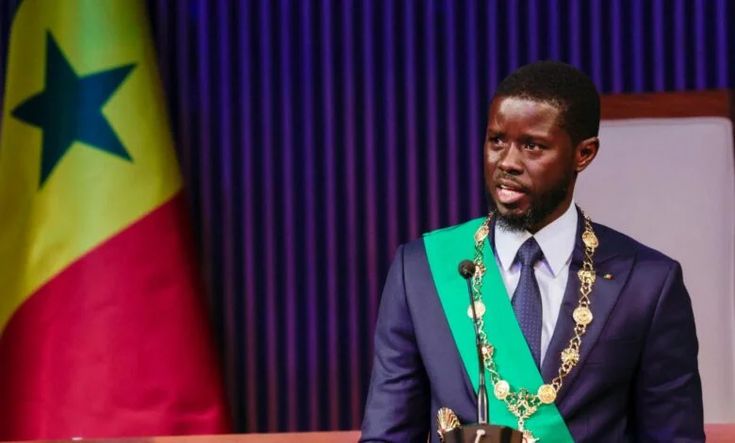
Senagal's President Bassirou Diomaye Faye,
Economic and Social Transformation
Most African debt stories begin with a price shock, a drought or a war. Senegal's begins with a spreadsheet. In 2024 a new government ordered an audit of the public accounts it had inherited, and the audit found that borrowing undertaken between 2019 and 2024 had not been fully reported. When the numbers were restated, end-2023 public debt moved from roughly 74.4 percent of GDP to about 111 percent. Nothing in the real economy had changed. Roughly a quarter of national output in liabilities had simply been sitting outside the published ledger.
Two years later, that accounting event is still the single most important variable in Senegal's economy — more consequential than the oil now flowing from Sangomar or the gas coming ashore from Greater Tortue Ahmeyim. On 1 September 2026 the International Monetary Fund and the Senegalese authorities announced a staff-level agreement on a thirty-six-month Extended Credit Facility of about US$2.2 billion (SDR 1,537.1 million, or 475 percent of quota) to underpin a 2026–29 reform programme. On the same day, Dakar published a plan to seek treatment of part of its external debt. The pairing was not coincidental. It is the price of re-entry.
The hole, and how it was found
The restatement is unusual not for its size but for its provenance. Debt is usually revealed by a creditor, a default or a ratings agency; here it was disclosed by the borrower's own successor administration, and the Fund subsequently confirmed that the underreporting had been deliberate. That finding carries a technical consequence with real teeth: because the misreporting occurred in the context of a previous Fund arrangement, Executive Board approval of the new facility is conditional on corrective actions and on the authorities' request for a waiver in the misreporting case being granted. Approval also depends on receiving the necessary financing assurances from Senegal's partners — which is to say, on creditors agreeing to move.
The African Development Bank's 2026 country outlook puts the resulting stock at 132 percent of GDP at end-2024 and estimates 2026 financing needs at CFAF 6,075 billion, or 26.2 percent of GDP — of which 71 percent is debt service. That last number is the whole problem in a single ratio. A state spending roughly seven-tenths of its gross financing requirement simply rolling over and servicing what it already owes has very little left with which to govern.
An economy that is growing while its balance sheet is not
The strangest feature of the Senegalese case is that the real economy has been performing well throughout. The AfDB records 2025 growth of 8.3 percent, up from 6.9 percent in 2024, driven by a secondary sector expanding 21 percent on hydrocarbons, with the primary sector at 7.4 percent and services at 3.3 percent. Exports grew 22.7 percent. Inflation was 1.4 percent in 2025 against 0.8 percent in 2024, restrained by energy and food subsidies. The banking system was comfortably capitalised, with a capital adequacy ratio of 14.2 percent at end-June 2025 against the regional 11.5 percent minimum.
Consolidation has also been real. The budget deficit fell from 10.9 percent of GDP in 2024 to 8.4 percent in 2025 on the AfDB's measure, and the current account deficit narrowed from 13.8 to 9.2 percent on hydrocarbon exports. The Bank projects growth of 5.2 percent in 2026 and 5.9 percent in 2027 as the initial production surge normalises, with deficits improving to 7.9 and 7.2 percent of GDP respectively and the external gap closing to 8.9 percent in 2026 and 5.7 percent in 2027. Inflation is expected near 3.0 percent in 2026, at the West African Economic and Monetary Union benchmark.
So Senegal is not a country whose output has collapsed. It is a country whose creditworthiness collapsed while its output rose. That distinction matters because it changes what a debt operation is for. The purpose is not to buy time for a broken economy to recover; it is to reconcile a functioning economy with a liability stock that was never properly disclosed to the people who financed it.
A restructuring that will not use the word
The debt plan published on 1 September commits Senegal to seek treatment under an "enhanced" version of the G20 Common Framework, with a compressed implementation timeline, early and expanded information sharing, and parallel consultations with creditor groups rather than the sequential process that made earlier Common Framework cases so slow. The finance ministry has been careful with vocabulary, describing it as a treatment plan rather than a restructuring — a distinction that matters more to market plumbing than to semantics.
Two design choices define the perimeter. First, roughly US$4.8 billion of Eurobonds falls inside it; Senegal has asked the G20 to convene talks with bondholders over about US$5 billion of external claims. Second, CFA franc-denominated domestic debt is explicitly excluded. That exclusion is the most revealing decision in the whole exercise. Senegal is a WAEMU member whose domestic and regional borrowing runs through the same market that funds its neighbours and sits under the supervision of the Central Bank of West African States. Touching those instruments would transmit a national credit event into a shared currency zone. Dakar has chosen to protect the regional plumbing and concentrate the pain on international bondholders.
Those bondholders have organised. An ad hoc creditor group has retained White & Case as legal counsel and has said publicly that any treatment must be "economically justifiable, equitable and sustainable" and grounded in reasonable economic assumptions that incorporate appropriate adjustment effort. That is standard opening language, but it signals the fight to come: whether a country growing at 5 to 6 percent with new hydrocarbon revenues genuinely requires creditor relief, or whether it requires only austerity and time. The answer will set a precedent for every future case in which the trigger is a disclosure failure rather than an economic shock.
Financing in the meantime
With Fund budget support suspended through the negotiation period, Senegal leaned on the regional market. In 2025 it raised CFAF 2,224.6 billion there, some 19 percent of all WAEMU issuance, making it the bloc's second-largest issuer behind Côte d'Ivoire. The presence of foreign institutional investors and the BCEAO's regulatory framework kept the window open. But the AfDB flags the obvious risk: this financing is predominantly short-dated and priced at market, which compresses maturities and raises rollover exposure precisely when the sovereign can least afford a failed auction. The 2026–28 debt strategy accordingly aims to tilt back toward concessional and non-sovereign sources.
Domestically, the government has pursued a self-financed adjustment. The Plan de Redressement Économique et Social (PRES), launched by Prime Minister Ousmane Sonko in August 2025 and running to 2029, is built on three pillars: controlled reduction of public spending, stronger domestic revenue mobilisation, and complementary endogenous financing that does not add debt. Its revenue measures include taxation of online gaming, tobacco, digital advertising, and the land and mining sectors. The early returns are modest against the scale of the problem — CFAF 4.2 billion collected in 2025, rising to a cumulative CFAF 63.4 billion by early 2026 — but the political signal was the point: Senegal wanted to demonstrate it could raise money without the Fund before negotiating with it.
The social ledger
Whatever the outcome in the creditor committee, the constraint that will define this adjustment is social. The AfDB records a poverty rate of 37.5 percent as of 2021 and unemployment of 19.2 percent. Senegal ranked 169th of 193 on the 2025 Human Development Index with a value of 0.53. Nearly four-fifths of the working-age population works informally, without social security of any kind and therefore without a buffer against exactly the sort of shock a fiscal consolidation delivers. World Bank analysis has put the vulnerability rate — the probability of falling into poverty following a shock — at 54 percent.
That is the arithmetic that makes the subsidy question so difficult. Energy and food subsidies held 2025 inflation to 1.4 percent, and they are also among the most obvious line items for a government trying to compress spending. Removing them lowers the deficit and raises the cost of living for a population that is overwhelmingly informal and, on the Bank's numbers, about evenly split between the poor and the nearly-poor. Every adjustment path through the next three years runs through that trade-off.
There is also a generational dimension. Senegal has been one of the principal origin countries for irregular Atlantic migration toward the Canary Islands, and the proximate driver is not famine but the absence of formal-sector work for young people in a fast-growing economy. Hydrocarbon revenue does not solve that; oil and gas are capital-intensive and employ comparatively few people directly. Whether the Senegal 2050 transformation agenda can convert resource rents into labour-absorbing sectors — agro-processing, construction, tradable services — is a separate question from whether the debt gets restructured, and a harder one.
What to watch
Three markers will show whether this works. The first is Executive Board approval of the ECF, which requires the misreporting waiver, the corrective actions and financing assurances all to land. The second is the bondholder negotiation: whether an enhanced Common Framework can deliver a deal in months rather than the years that Zambia and Ghana required, and whether excluding CFA-denominated debt survives creditor scrutiny on comparability-of-treatment grounds. The third is domestic: whether revenue mobilisation under the PRES scales from tens of billions of CFA francs to the hundreds needed to change the fiscal trajectory, and whether it does so without pushing the vulnerable half of the population below the line.
Senegal's case is being watched well beyond Dakar because of what it tests. The international debt architecture has decent machinery for countries hit by commodity prices, pandemics or wars. It has almost none for a country that turns out to owe far more than it said — especially when the disclosure comes from the debtor itself, and the economy underneath is growing. If honesty proves more expensive than concealment, that lesson will be learned quickly across the continent. If it does not, Senegal will have established something genuinely useful: that a government can restate its own books, take the downgrade, and still be financed.



