Written By | Staff Writer
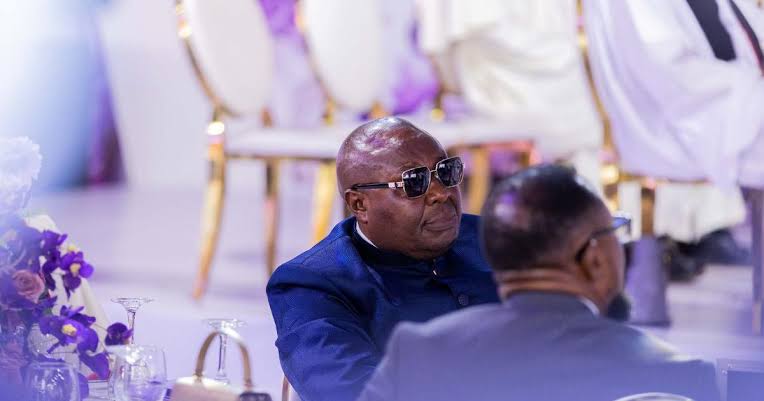
Committee members say a search conducted with the Uganda Registration Services Bureau (URSB) confirmed that Philadelphia Trade and Industry Limited is owned by members of the Kirumira family.
Uganda Politics
A parliamentary probe into how one of Uganda's best-known business tycoons came to control a valuable plot of state railway land has become one of the sharpest political stories in Kampala this week, feeding into a much larger and more explosive question hanging over the government: how did Uganda Railways Corporation (URC) lose track of thousands of acres of its own land, and hundreds of freight wagons, without anyone being held accountable?
The immediate trigger is a summons. Parliament's Committee on Physical Infrastructure has directed businessman Godfrey Kirumira to appear before it and explain how a company linked to his family, Philadelphia Trade and Industry Limited, secured a 99-year lease over a 1.3-acre plot that URC says belongs to it. The land is not some obscure parcel in a distant upcountry town — it sits directly in front of URC's own headquarters in Kampala, across the road from Victoria University, making its alleged loss especially embarrassing for a corporation that is supposed to be the custodian of the very land in question.
Committee members say a search conducted with the Uganda Registration Services Bureau (URSB) confirmed that Philadelphia Trade and Industry Limited is owned by members of the Kirumira family. That finding has hardened MPs' resolve to summon Kirumira personally rather than accept written submissions from lawyers or company representatives, with legislators saying they want a direct account of how the long-term interest in the property was acquired and under what terms the lease was granted.
The land dispute did not emerge in isolation. It surfaced during a broader and increasingly uncomfortable set of hearings into the state of Uganda Railways Corporation, a once-dominant state enterprise that has spent decades in decline. During a July 23 sitting, the committee — led by transport state minister Julius Maganda Wandera alongside URC managing director Benon Kajuna — heard that 395 railway wagons have effectively gone missing, with the corporation unable to give a clear account of their whereabouts. MPs gave URC one week to account for the wagons and directed Kajuna to record a formal statement with the Criminal Investigations Directorate (CID), a significant escalation that moves the matter from an internal management failure toward a potential criminal inquiry.
Taken together, the missing wagons and the disputed land plot have crystallised into a single narrative for many observers: that URC, entrusted with railway corridors and assets that are strategically important to Uganda's transport and logistics ambitions, has for years been unable — or unwilling — to protect what it owns. Committee members have gone so far as to raise the possibility of URC's disbandment, arguing that repeated cycles of mismanagement, encroachment and unaccountable leadership call into question whether the corporation in its current form can be salvaged at all.
The scale of the encroachment problem is not limited to the one plot linked to Kirumira. URC has itself identified more than 24,600 cases of encroachment along its railway corridors nationwide, a staggering figure that points to a systemic failure of land governance rather than an isolated incident. Investigative reporting has traced part of the problem back to a 2007 decision by government to list a number of URC properties for sale as a cost-cutting measure; of the 15 properties advertised at the time, only about ten buyers ultimately acquired stakes, a process that has long been criticised as opaque and favourable to a small, well-connected circle of buyers. URC has also said it wrote repeatedly to the Ministry of Finance, Planning and Economic Development asking for the return of land titles retained after that privatisation-era sell-off, without receiving a response — evidence, MPs say, of an accountability vacuum that has persisted across successive governments and corporation leaderships.
Godfrey Kirumira himself is not a marginal figure in Ugandan public life. Born in 1962, the day Uganda gained independence, Kirumira has built what is now estimated as a business empire worth roughly $350 million, spanning fuel retail, real estate, security services and foreign exchange, organised loosely under the Godfrey Kirumira Kalule (GKK) Group of Companies. He chairs Kwagalana Group, an association of some of Uganda's wealthiest business figures, controls a chain of Gelp-branded petrol stations through Bargary Company Limited, and owns landmark commercial buildings in central Kampala including Kirumira Towers and the Royale Complex. He also holds the position of honorary consul of Namibia to Uganda and has previously been publicly honoured by government as a 'Uganda Development Champion.' That profile — a politically connected, high-net-worth businessman with diplomatic standing — is precisely why the URC land case has attracted outsized attention: it is being read by many Ugandans as a test of whether Parliament's oversight committees can hold well-connected tycoons to the same standard as ordinary citizens.
The URC probe also lands at a politically sensitive moment. It comes roughly seven months after Uganda's bitterly contested January 2026 general election, in which President Yoweri Museveni was declared winner with 71.65 percent of the vote against opposition leader Bobi Wine's 24.72 percent, extending Museveni's nearly four-decade rule into a seventh term. That election was followed by a wave of post-poll violence and mass arrests, an internet blackout, and international criticism over the fairness of the process — developments that left many Ugandans and outside observers questioning the independence and effectiveness of state institutions, Parliament included. A visible, sustained parliamentary probe into asset mismanagement at a state corporation, especially one that touches a prominent businessman, offers Parliament a chance to demonstrate a degree of institutional teeth at a time when its credibility on other fronts — including election oversight — has been heavily questioned.
What happens next will be closely watched. If Kirumira appears before the committee as summoned, MPs are expected to press him on the exact chain of title, whether due diligence was done on URC's ownership claims before the lease was granted, and who within URC or the land registry approved or facilitated the transaction. A finding of impropriety could trigger a recommendation for the lease to be nullified, for the matter to be referred to the CID or the Inspectorate of Government, or for individual URC or land-registry officials to face disciplinary or criminal proceedings. Given the committee's broader frustration with URC's management, the wagons scandal and the land case could also feed into a wider push to restructure or even disband the corporation altogether — an outcome some MPs have already floated openly.
For ordinary Ugandans, the significance of the story extends beyond one plot of land or one businessman. It speaks to a familiar and recurring frustration: that state assets meant to serve the public good are vulnerable to being quietly absorbed by the politically or financially powerful, often with little consequence. Whether this particular probe ends in real accountability, or fades the way many past land-grabbing scandals have, will be an early signal of how much appetite the current Parliament — freshly elected under conditions many still consider tainted — actually has for confronting entrenched interests. In a country where URC's own count of encroachment cases runs into the tens of thousands, one high-profile hearing will not fix the underlying problem, but it may determine whether the political will exists to even try.



