Written By |
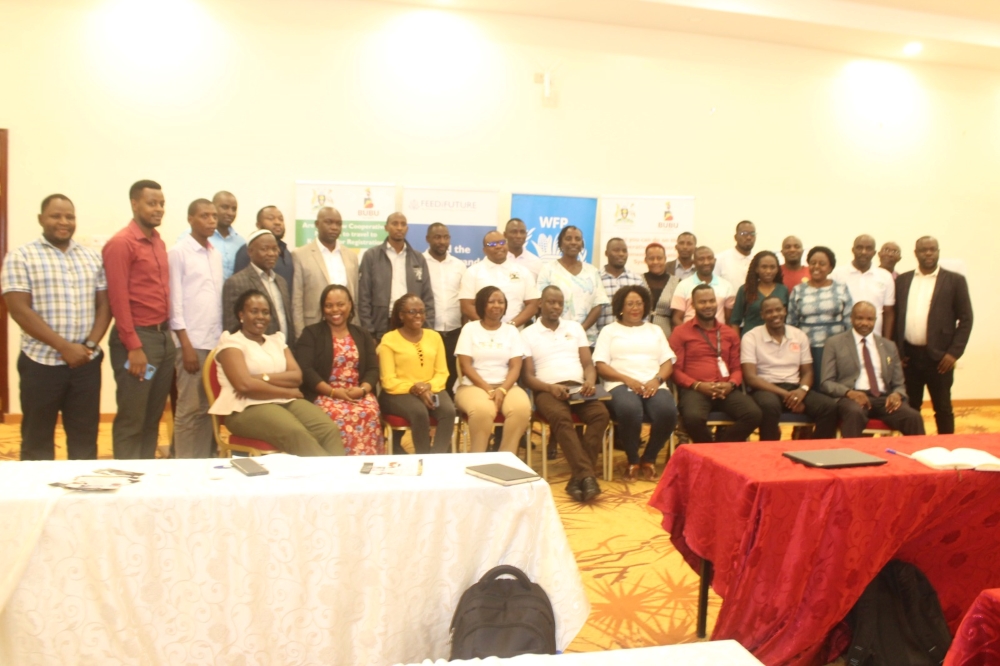
Officials from the Ministry of Trade, accompanied by commercial officers, participated in a training session held at Hotel Triangle in Mbarara City on Friday (Photos by Stuart Twinomujuni)
By Stuart Twinomujuni
In an effort to enhance service delivery in the cooperative sector, the Ministry of Trade, Industry, and Cooperatives (MTIC) will begin using the Cooperative Registry Management Information System (CRIMAS) next year. This initiative is set to replace the outdated system for registering cooperatives and filing their returns. Under the old system, cooperative leaders had to register and file returns on paper, delivering them by hand to Kampala for approval—a frustrating and time-consuming process. 
Ministry of trade official at the closure of the training at Hotel Triangle in Mbarara city on Friday
The new online registration system, which was launched in March this year, is set to function fully by next year, according to Mary Amumpaire Mwesigwa, the Head of IT at the Ministry’s Cooperatives Unit.
Mwesigwa disclosed this during a three-day training session for district, municipal, and city commercial officers, held at Hotel Triangle in Mbarara City, focused on rolling out the new online system. The training concluded on Friday.
“This system is designed to manage the way cooperatives are registered and how stakeholders interact with us at the Ministry. It covers the entire value chain—from registration and filing annual returns to making payments, certifying documents, and fulfilling all other obligations,” Mwesigwa stated.
She further noted that the Ministry has embarked on a sensitization and training campaign because numerous stakeholders are involved in the process, and they need to understand how the system works for proper implementation.
“Our district commercial officers are our focal points at the district level. They are the first line of contact and approve cooperatives before forwarding them to the Ministry,” she emphasized.
Mwesigwa also revealed that some cooperatives were registered nearly 60 years ago, and their physical files had to be scanned and uploaded into the new system. “All these cooperatives need to be included in the system so that they can access their scanned files and continue interacting with the Ministry,” she explained.
Mary Amumpaire Mwesigwa speaks with journalists during an interview at Hotel Triangle in Mbarara City on Friday about CRIMAS
Mwesigwa is confident that the new system will make it easier for cooperatives to file returns by providing them access to their scanned files. She pointed out that the old system was frustrating, especially since Uganda has over 145 districts. Cooperatives had to physically visit the Ministry in Kampala, often facing delays due to the absence of responsible personnel.
“Of course, you know the frustrations of having to visit an office, only to find that the officer is unavailable, or your task isn’t completed that day. With the new system, you simply track the progress online and see when your application is being processed,” Mwesigwa explained.
Karakure Allan Buhanda, the Mbarara City commercial officer, expressed optimism that the new system will improve service delivery. He added that the government has always been interested in better serving its citizens.
“In this era, everyone expects real-time services. People want to apply and get a response without waiting. Registering a cooperative should be the quickest and cheapest process, but because services were centralized at the Ministry headquarters, people had to spend time and money traveling to Kampala,” Buhanda said.
Allan Buhanda, the Mbarara city commercial officer speaking during the training
Under the new system, every commercial officer at the district, municipal, and city levels will serve as the official registrar of cooperatives and will be responsible for training others on how to use the digitized system.
Buhanda praised the Ministry’s efforts to roll out the digital system, noting that it will save time and resources for cooperatives and individuals who previously had to travel to Kampala for services.
“It used to take us three weeks to get a certificate, and more than three days to register resolutions. Now, with the new system, it will take only three days from the start of the process to obtain a certificate. This will allow commercial officers to focus on other tasks during the time previously spent on travel,” Buhanda stressed.
Torch Media Africa